Accounts Snapshot · Competitive Landscape · Peripheral Inspiration
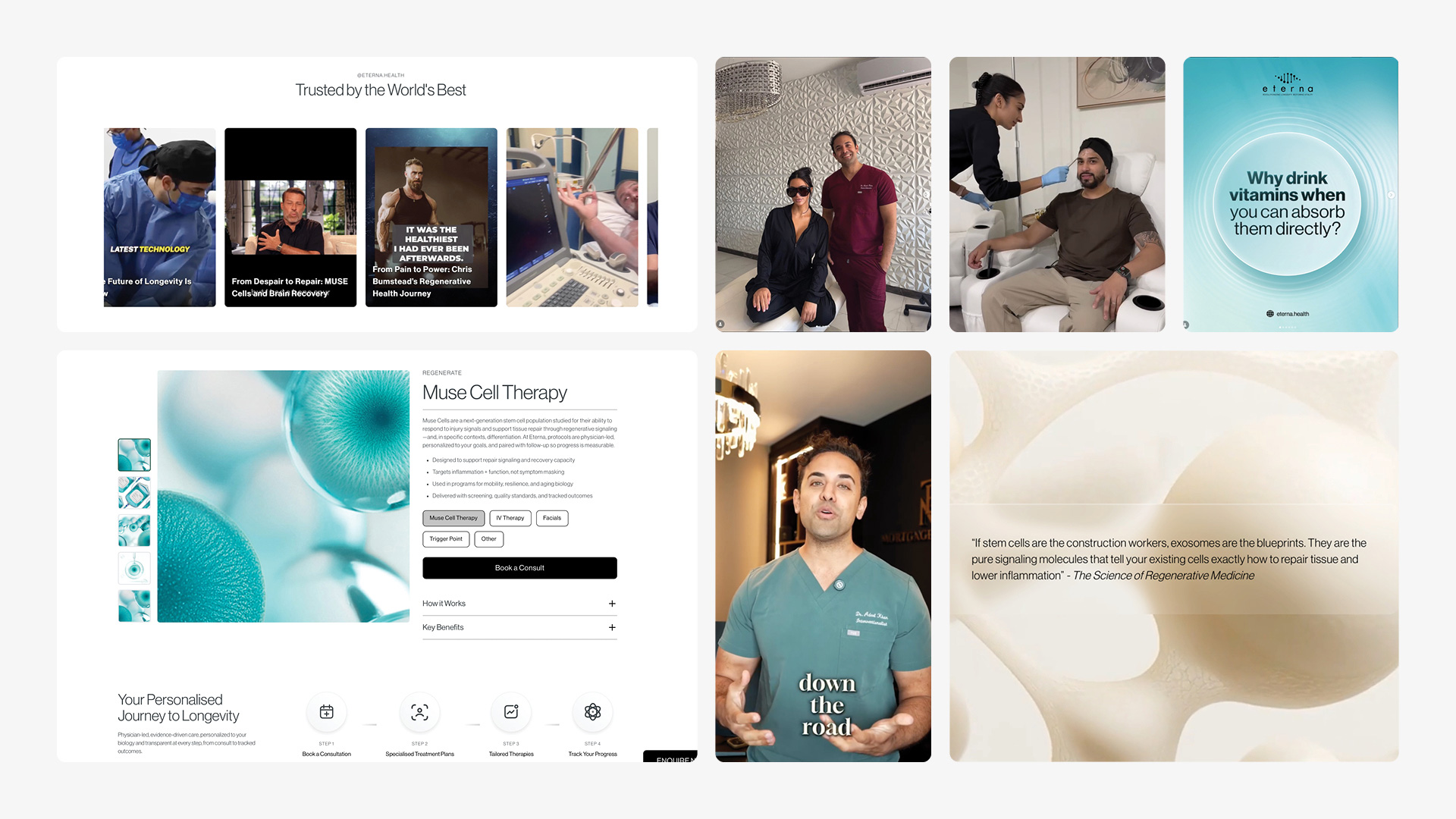
May 2026@dr.akhan · Dr. Adeel Khan, MD · 212K followers · Verified
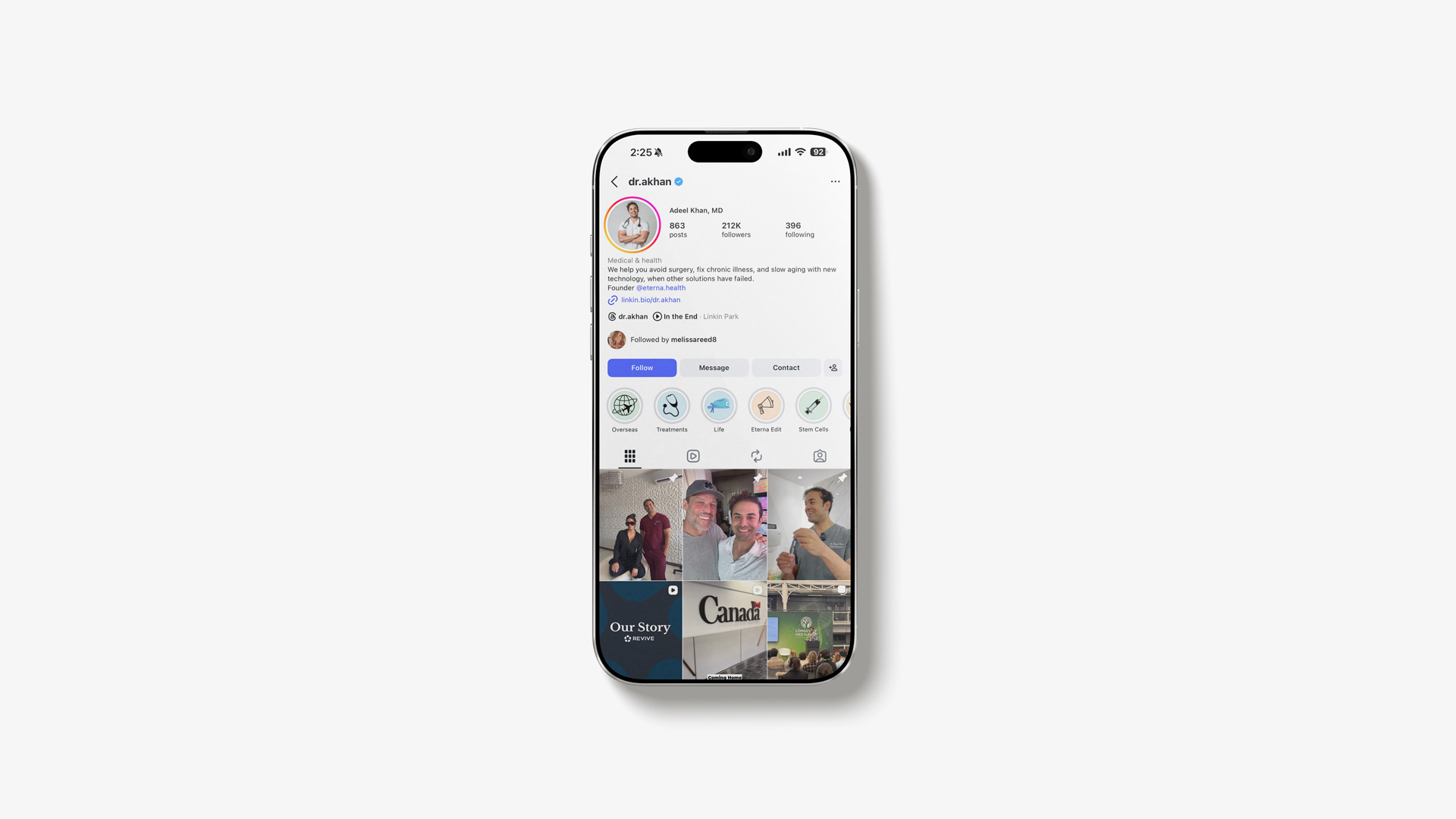
"We help you avoid surgery, fix chronic illness, and slow aging with new technology, when other solutions have failed." This is a masterclass in patient-problem framing — it leads with the patient's failure state, positions the clinic as the last resort worth trying, and communicates clinical sophistication without using clinical language. The doctor IS the brand: the entire @dr.akhan account is built around Dr. Khan's personal identity, making his credibility and charisma the primary competitive moat.
212K followers dwarfs every other Mexico-based competitor in this audit — the gap is not incremental, it's categorical. Content blends clinical education with aspirational lifestyle photography at high production values; the personal brand approach creates an emotional proximity that clinical brand accounts rarely achieve. The Highlights structure (Overseas, Treatments, Life, Eterna Edit, Stem Cells) deliberately mixes the professional and the personal — "Life" as a Highlight tells the audience there's a human being here, not just a brand page.
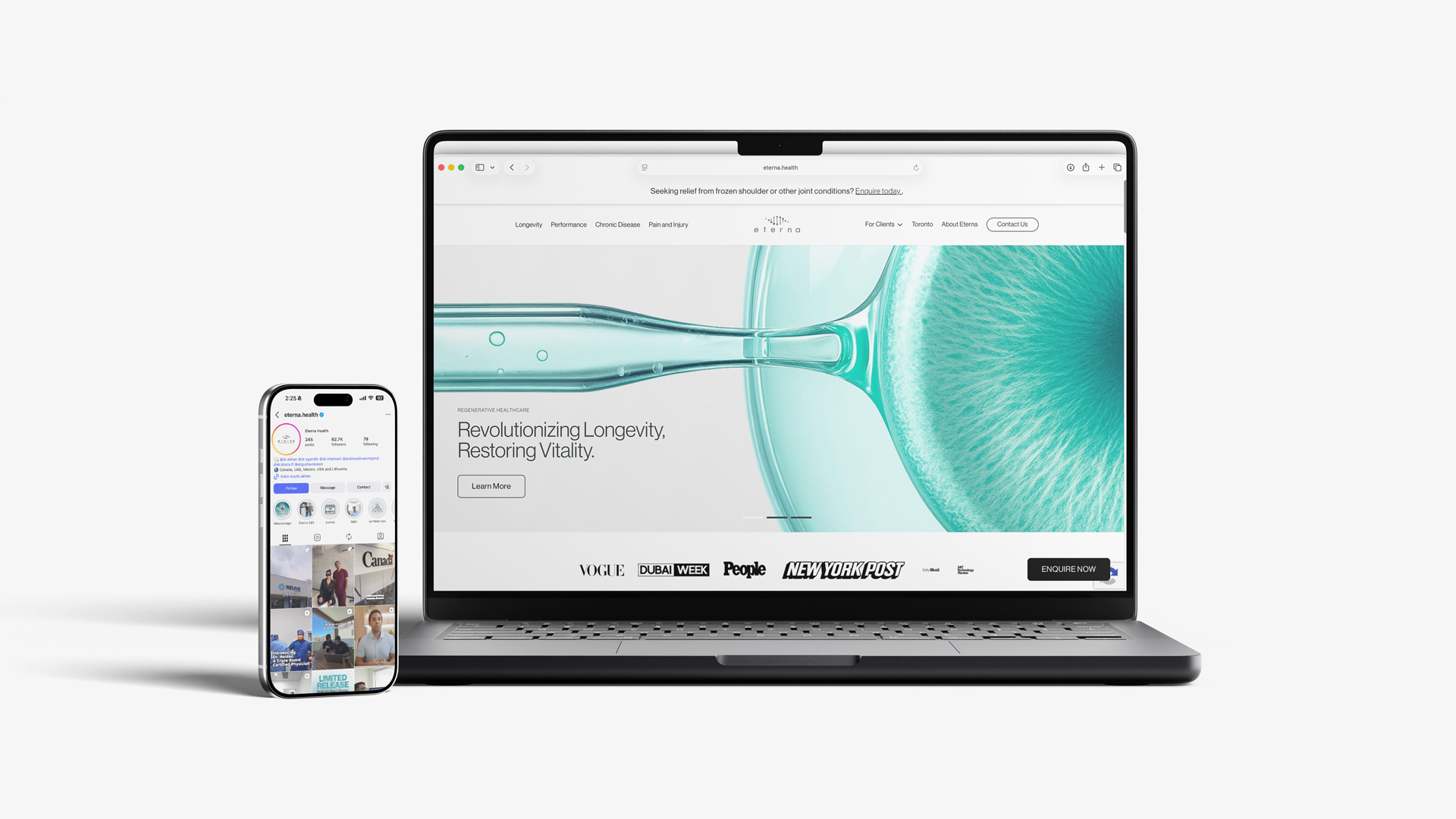
Eterna.health positions around precision medicine and outcomes with a strong "when other solutions have failed" message — a patient acquisition frame that targets self-paying patients who've exhausted conventional options and are both motivated and research-literate. The site likely functions as a confirmation layer for an audience already pre-sold by the Instagram account. The personal brand drives traffic; the website converts it.
The personal brand is the moat. Rehealth's scientific team, particularly Dr. González, represents an untapped version of this same asset — a credentialed, articulate voice that could build a comparable authority platform if given the creative support and editorial consistency that @dr.akhan has clearly invested in. The question isn't whether to build a personal brand; it's how quickly to start.


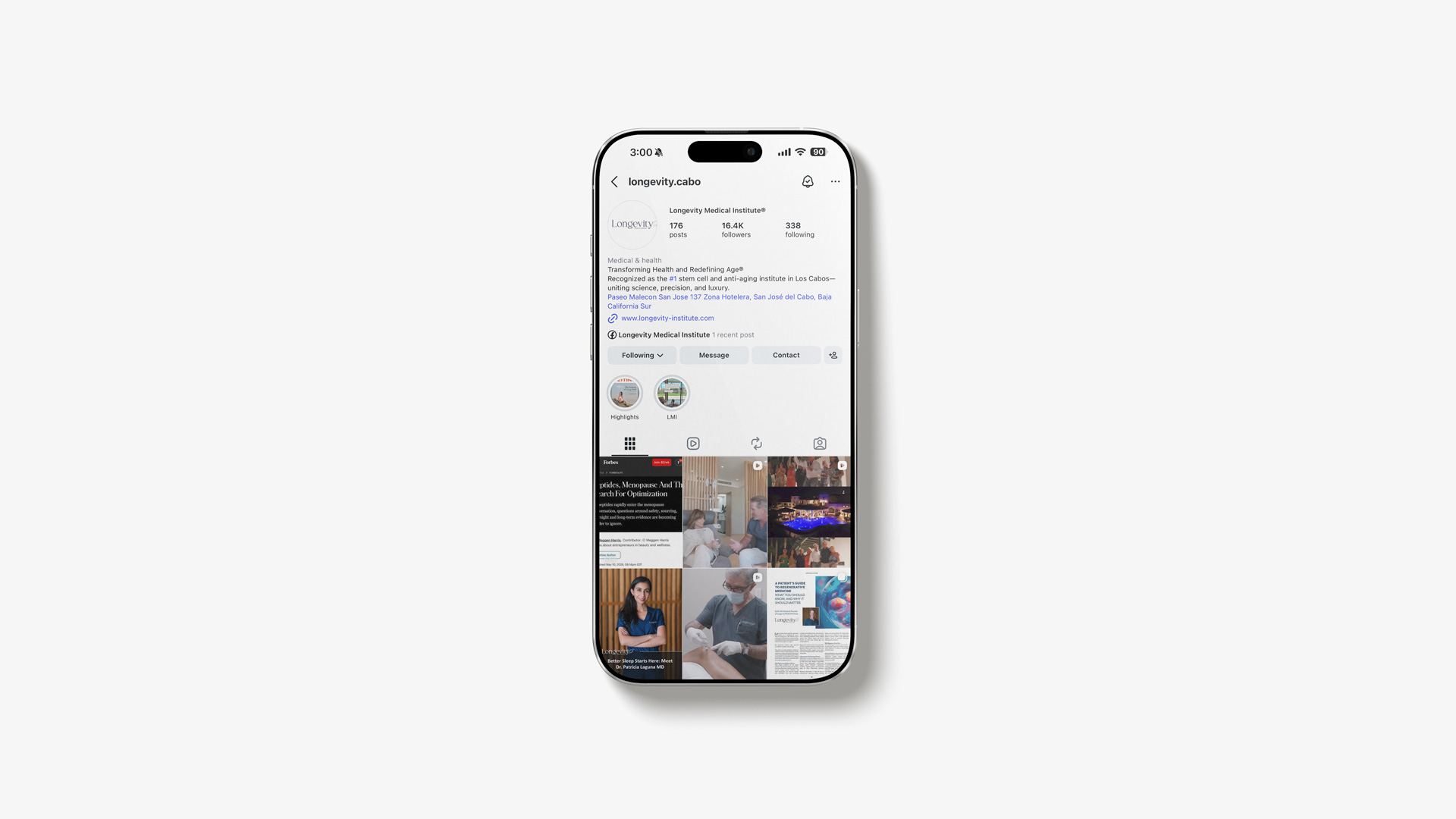
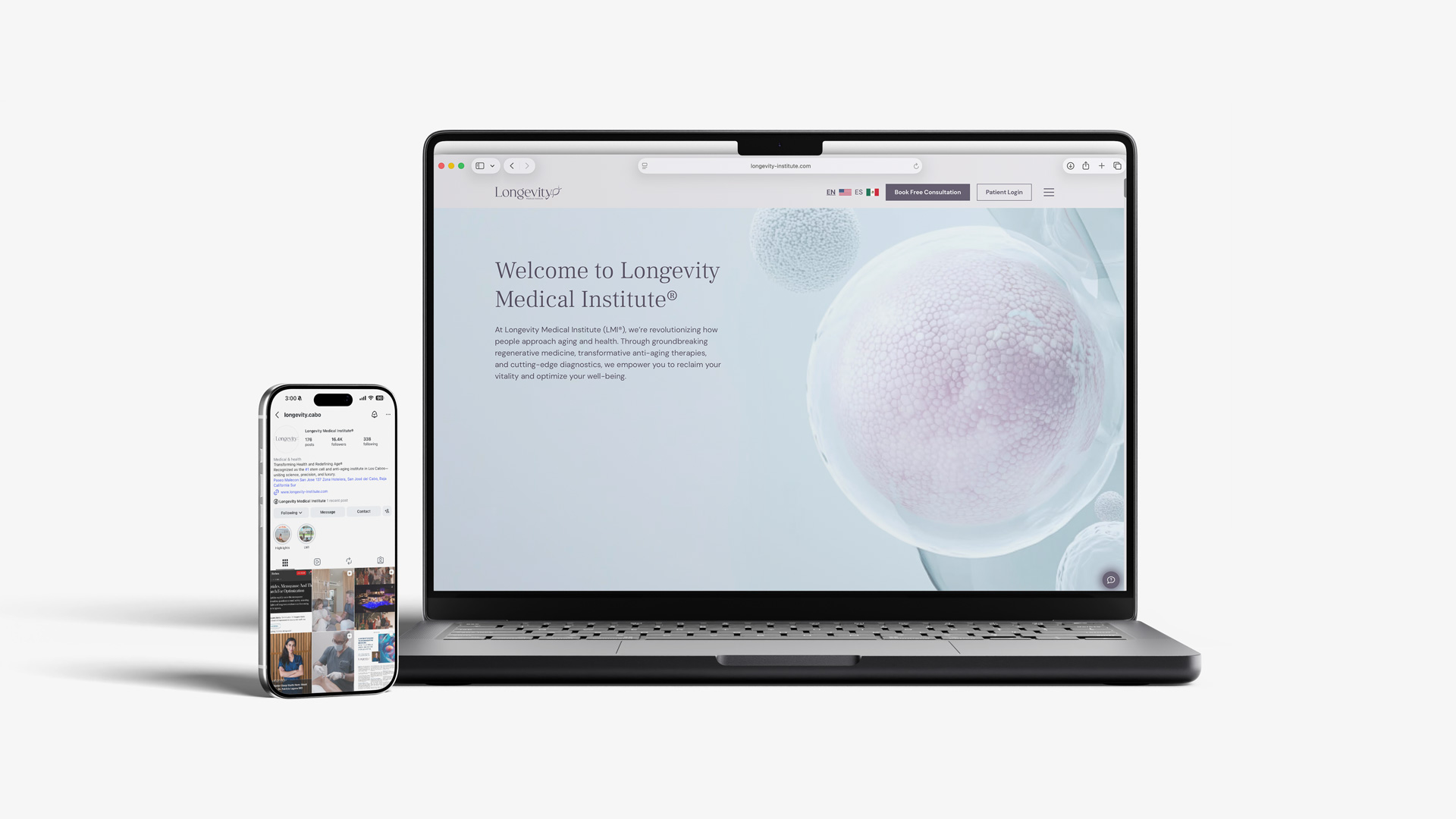
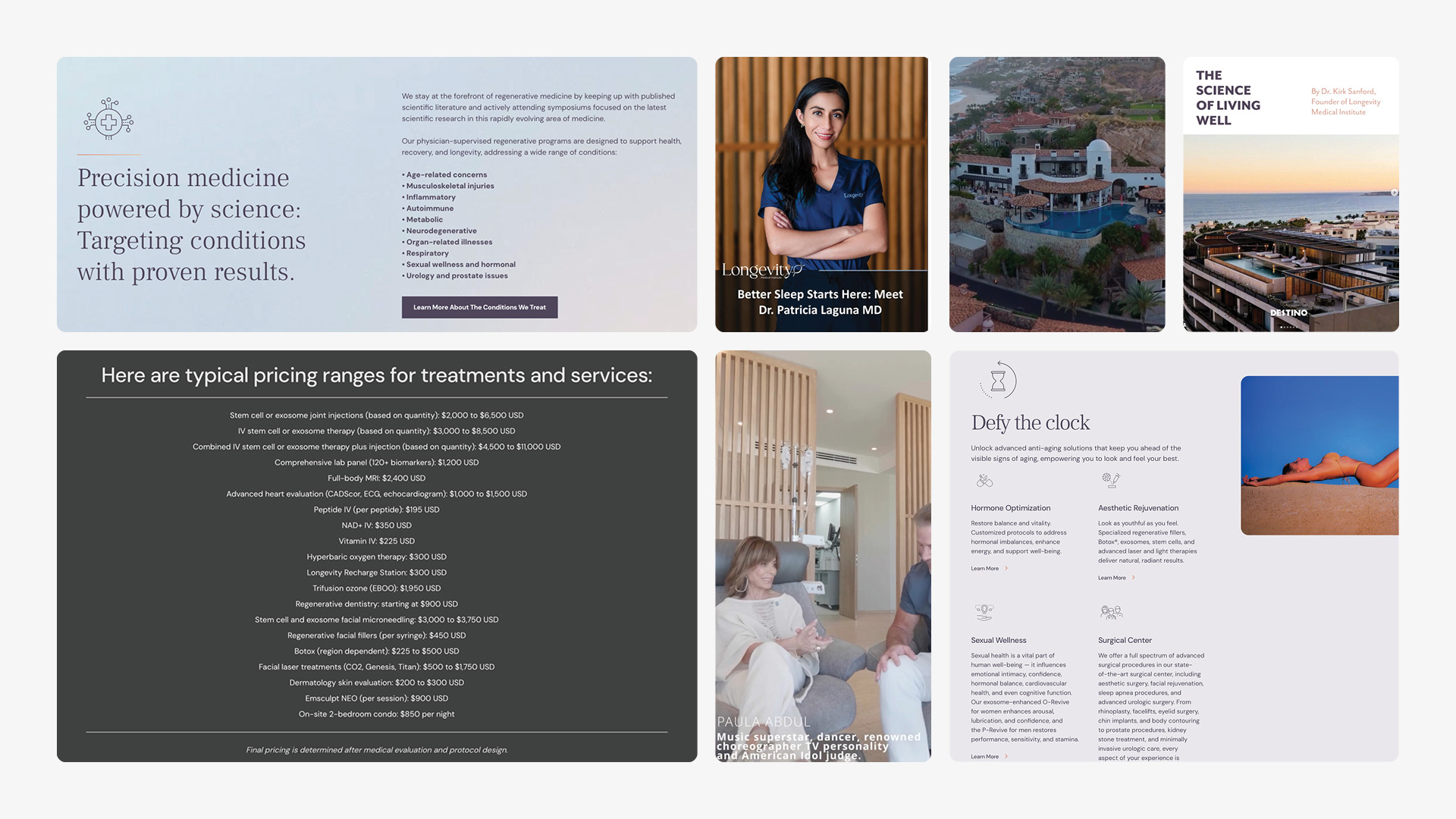
Longevity Medical Institute positions itself around the premium Cabo setting as both a destination and a credibility signal — the clinic embeds its services within a luxury medical tourism frame. The breadth of screenshots captured (25+) suggests significant investment in website content, with condition-specific pages and patient education architecture that likely serves both SEO and conversion objectives. The brand emphasizes scientific rigor within an experiential wellness context — clinical legitimacy paired with the aspirational language of the longevity movement.
Social investment appears secondary to the website as a primary acquisition channel — consistent with a clinic that relies on search-driven patient acquisition rather than follower-driven organic social. The volume of website screenshots suggests this is a content-depth play: patients researching regenerative medicine online are likely to encounter LMI's educational pages before competitors with lighter content infrastructure, giving them a disproportionate share of high-intent organic search traffic.
The site appears to function as a patient education engine as much as a marketing asset — extensive condition-specific content and treatment protocol pages signal a long-form content strategy designed for organic search performance. Content depth at this level serves multiple functions simultaneously: it builds SEO authority, answers patient objections before the consultation, and positions the clinic as a thought leader in the category rather than simply a service provider.
Content depth wins trust before the first call. A thorough website that functions as a patient education resource is a long-term acquisition asset. Rehealth's site currently prioritizes aesthetics and brand statement over depth — investing in condition-specific content pages would simultaneously build SEO authority and reduce the patient's hesitation cost before booking a consultation.


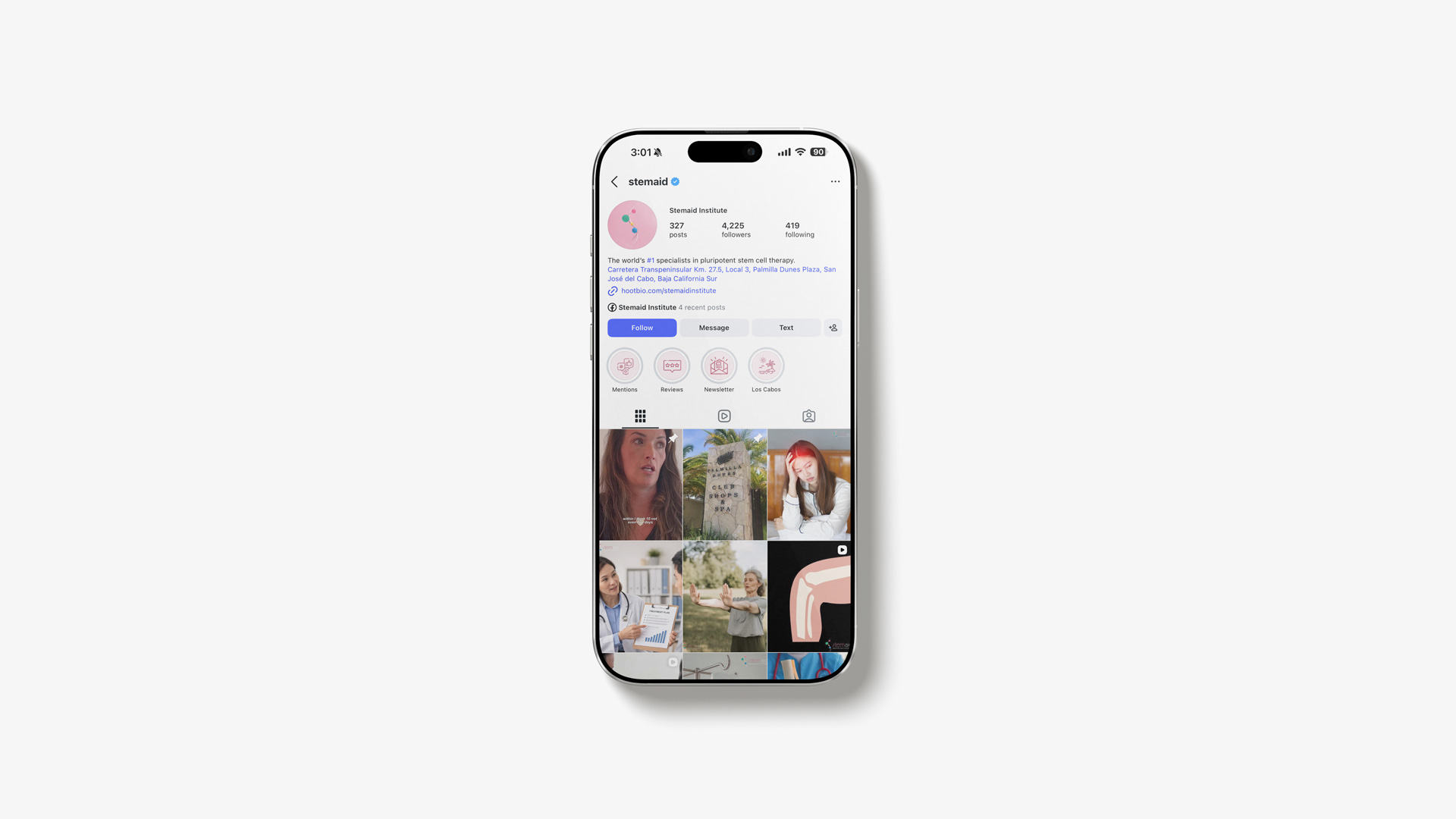
@stemaid · 327 Posts · 4,225 Followers · Verified
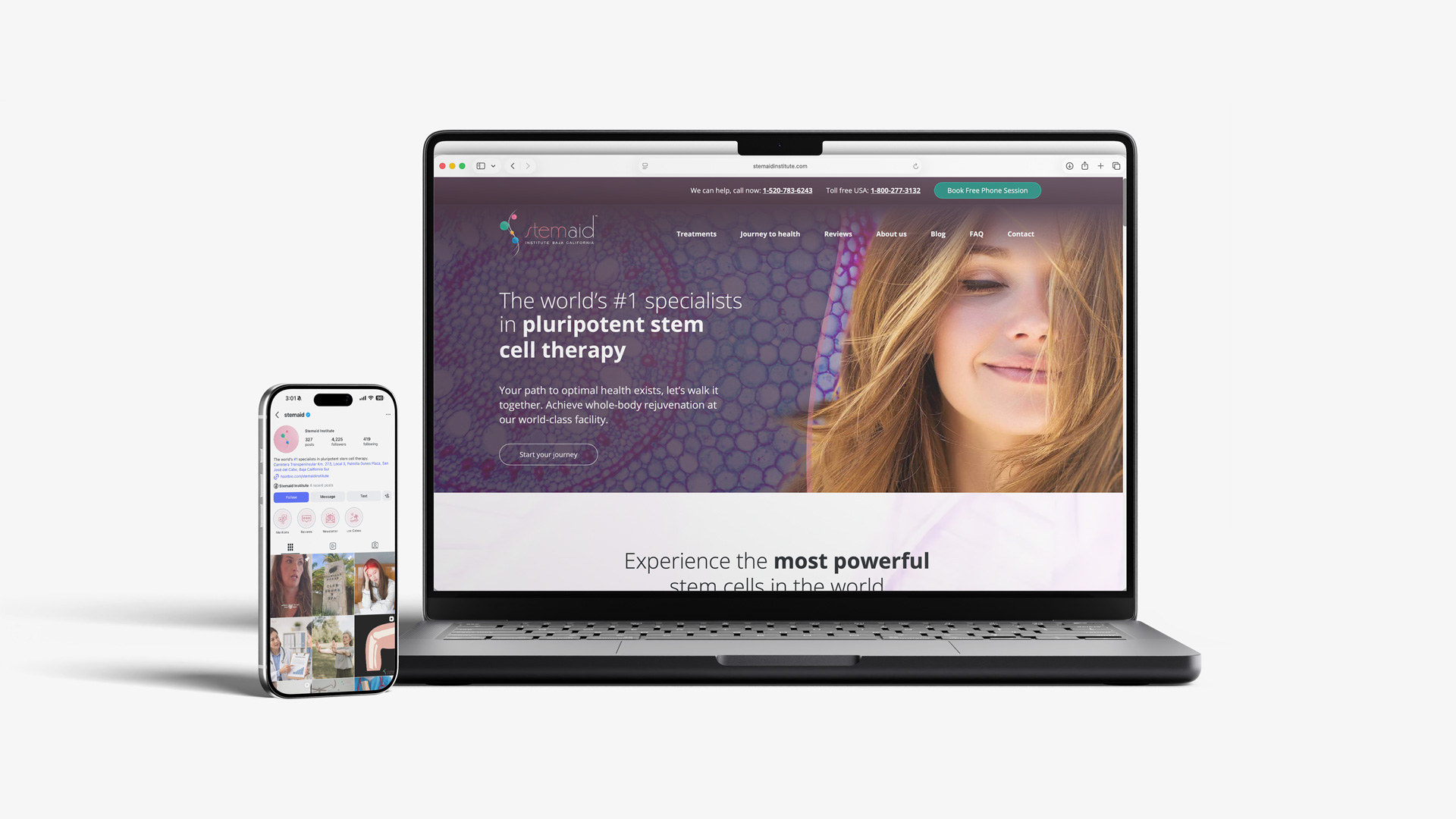
"The world's #1 specialists in pluripotent stem cell therapy" — a bold, specific scientific claim anchored in the most scientifically advanced cell type in the field. Pluripotent stem cells represent a genuinely different clinical proposition from the more common adult stem cell therapies offered by most competitors, and Stemaid leads with this distinction explicitly. The verified Instagram badge paired with a scientific niche claim creates a credibility signal that broad-market competitors cannot easily replicate.
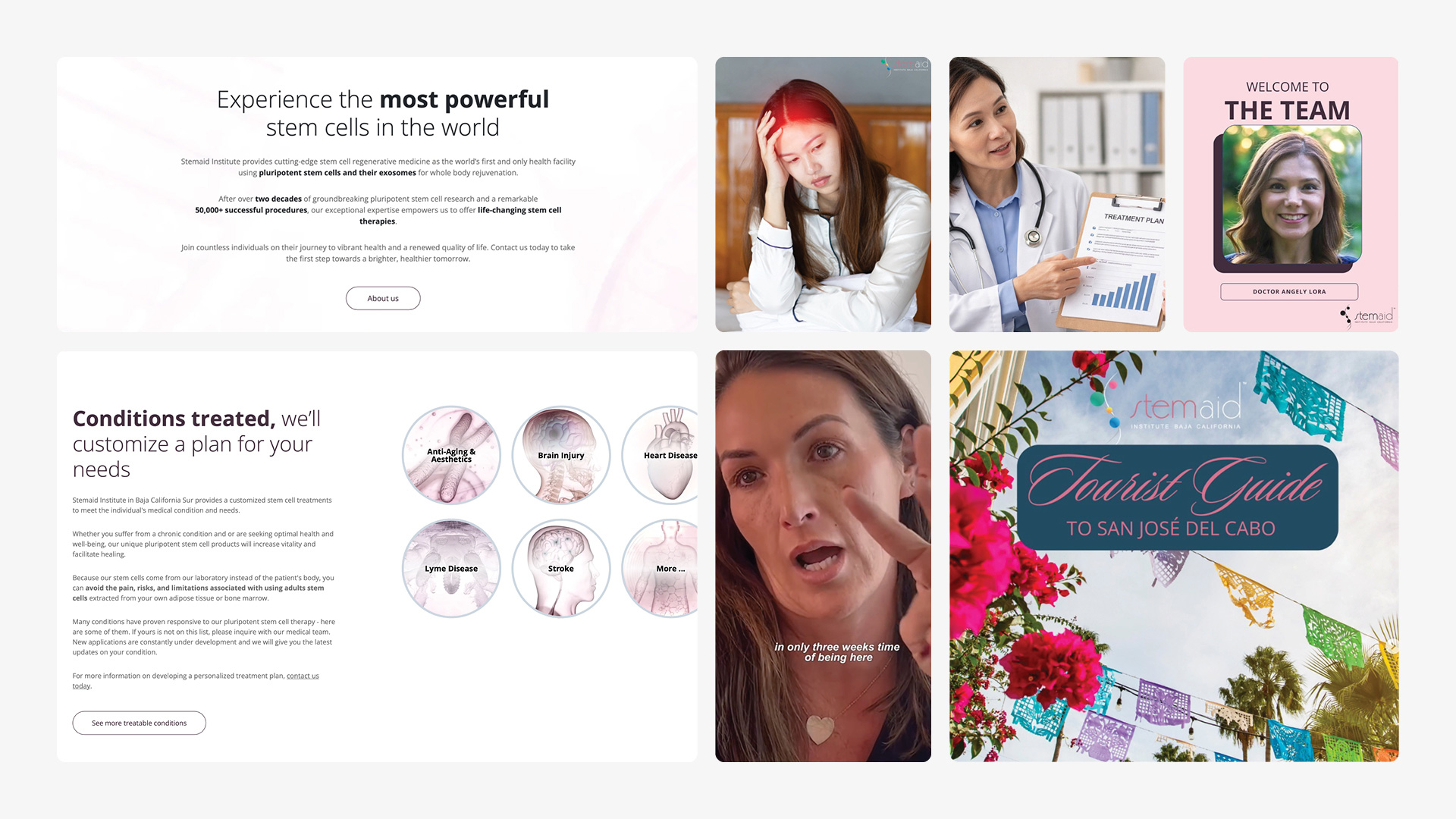
4,225 followers with a verified account signals credibility rather than mass reach — the audience is likely highly targeted and research-literate. Content mixes clinical photography, patient lifestyle imagery, and medical illustration, creating a visual register that positions the brand at the intersection of science and outcome. The verification badge, rare for clinics in this category, lends authenticity that organic growth alone cannot manufacture.
Stemaid addresses a sophisticated patient audience who already understands the distinction between cell types — the messaging assumes baseline scientific literacy and uses it to filter for high-intent patients. Located in San José del Cabo (Palmilla Dunes Plaza), the brand benefits from Cabo's established luxury medical tourism infrastructure. The "#1 specialists" claim requires ongoing scientific validation to sustain — it creates high expectations that the clinical experience must meet or exceed.
Own the science niche. Stemaid's pluripotent positioning demonstrates that clinical specificity is a competitive moat — not despite the narrow focus, but because of it. Rehealth's NK cell and exosome therapy programs represent comparable scientific differentiators that could be positioned with the same niche authority if marketed with equivalent specificity and confidence.


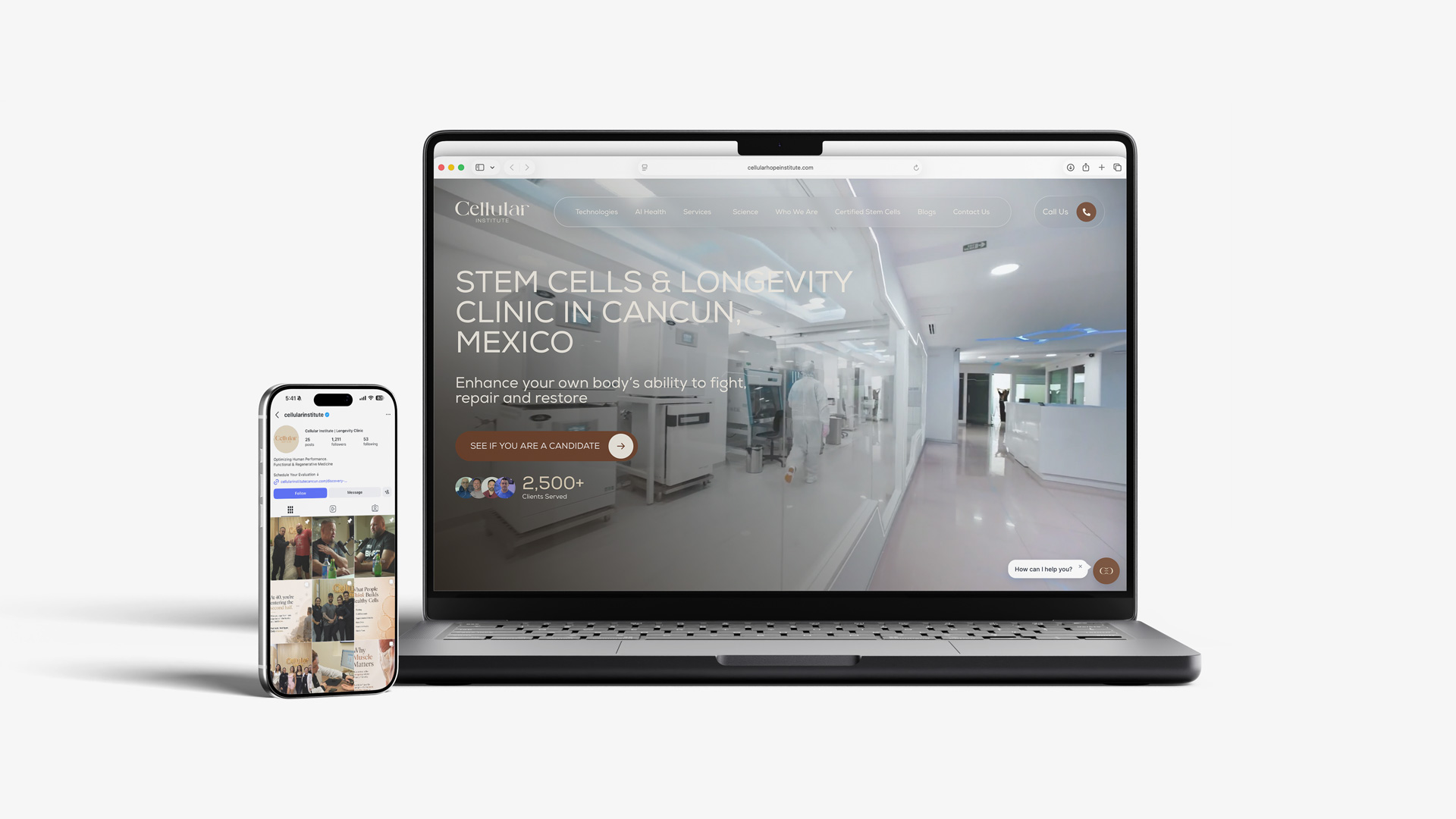
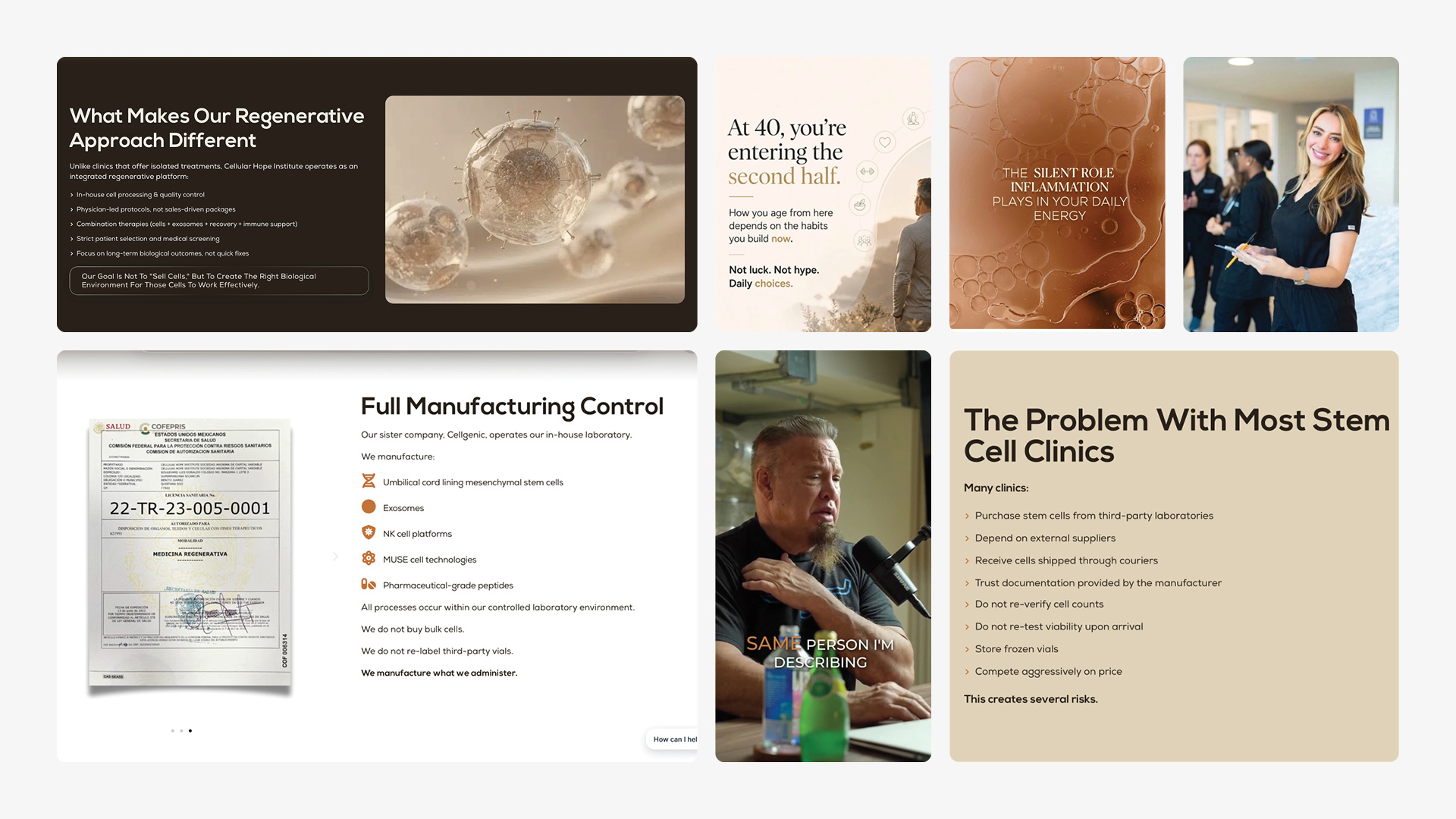
Cellular Hope Institute positions around the patient's emotional journey — the "hope" in the name is doing significant brand work, speaking directly to the patient demographic most likely to seek regenerative therapy: those who've been told conventional medicine has no further answers. The brand's most distinctive differentiator is a professionally produced PDF welcome package — physical/digital patient onboarding collateral that signals a premium concierge experience from before the first clinical interaction.
An active social presence in Cancun's competitive medical tourism market, with content that reflects both clinical credibility and patient experience. The welcome package artifact suggests the brand thinks beyond the digital touchpoint — patient journey design that extends into real-world preparation materials. This signals a patient experience investment that most competitors in the category don't make visible at the marketing layer.
The extensive screenshot capture (25+ pages) suggests a content-rich website with patient education depth comparable to Longevity Medical Institute. The PDF welcome package is a notable differentiator — it implies that onboarding begins before arrival, reducing patient anxiety and establishing trust through preparation. The combination of content depth and branded collateral creates a patient experience that feels curated rather than clinical.
The welcome package transforms a transaction into an experience. Producing branded patient onboarding collateral — a downloadable guide, a pre-arrival checklist, a "what to expect" video series — is a replicable investment that signals commitment and reduces the psychological distance between a hesitant prospect and a confirmed patient. Rehealth's Cancun-adjacent positioning makes this a direct competitive gap to close.


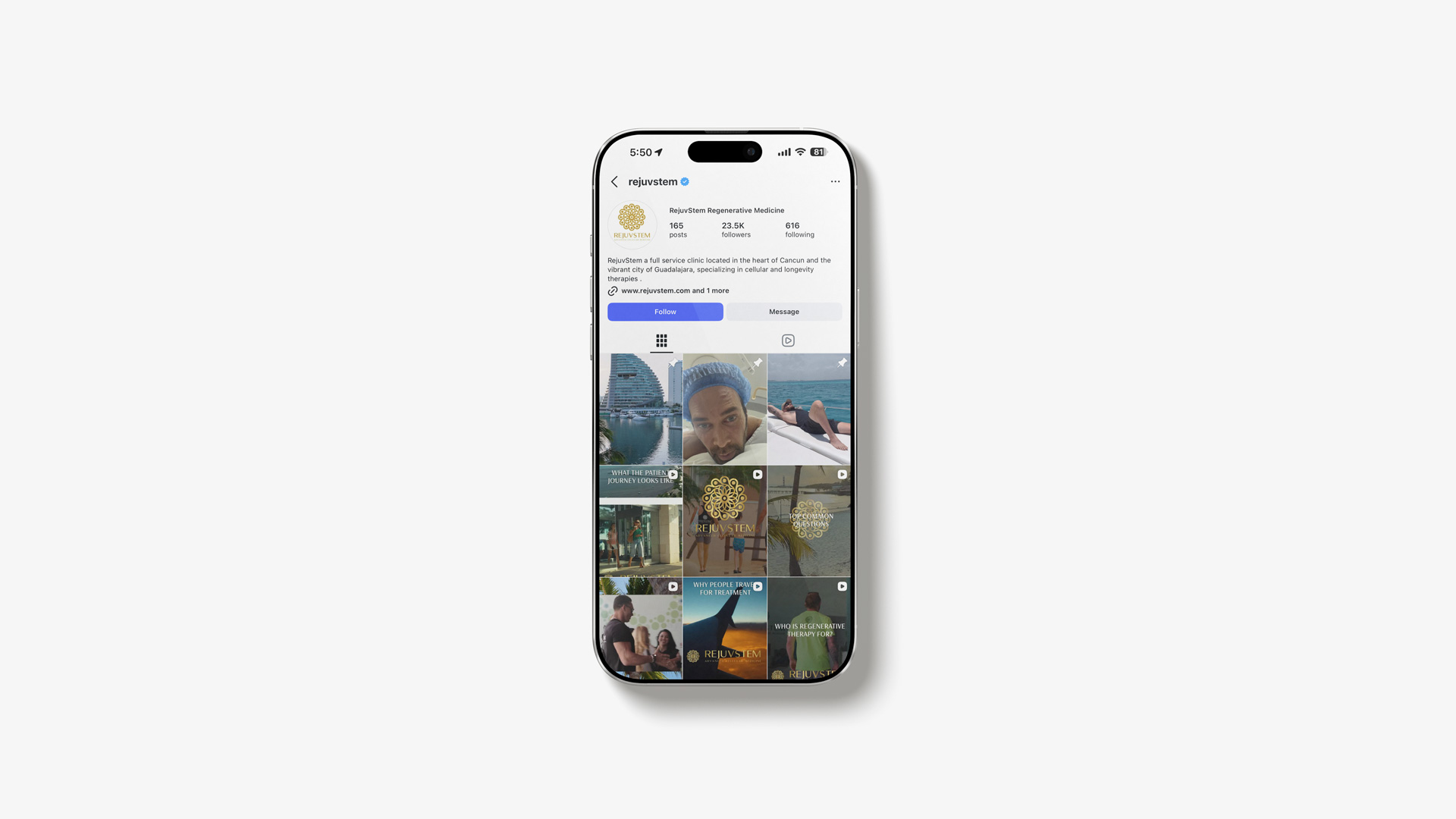
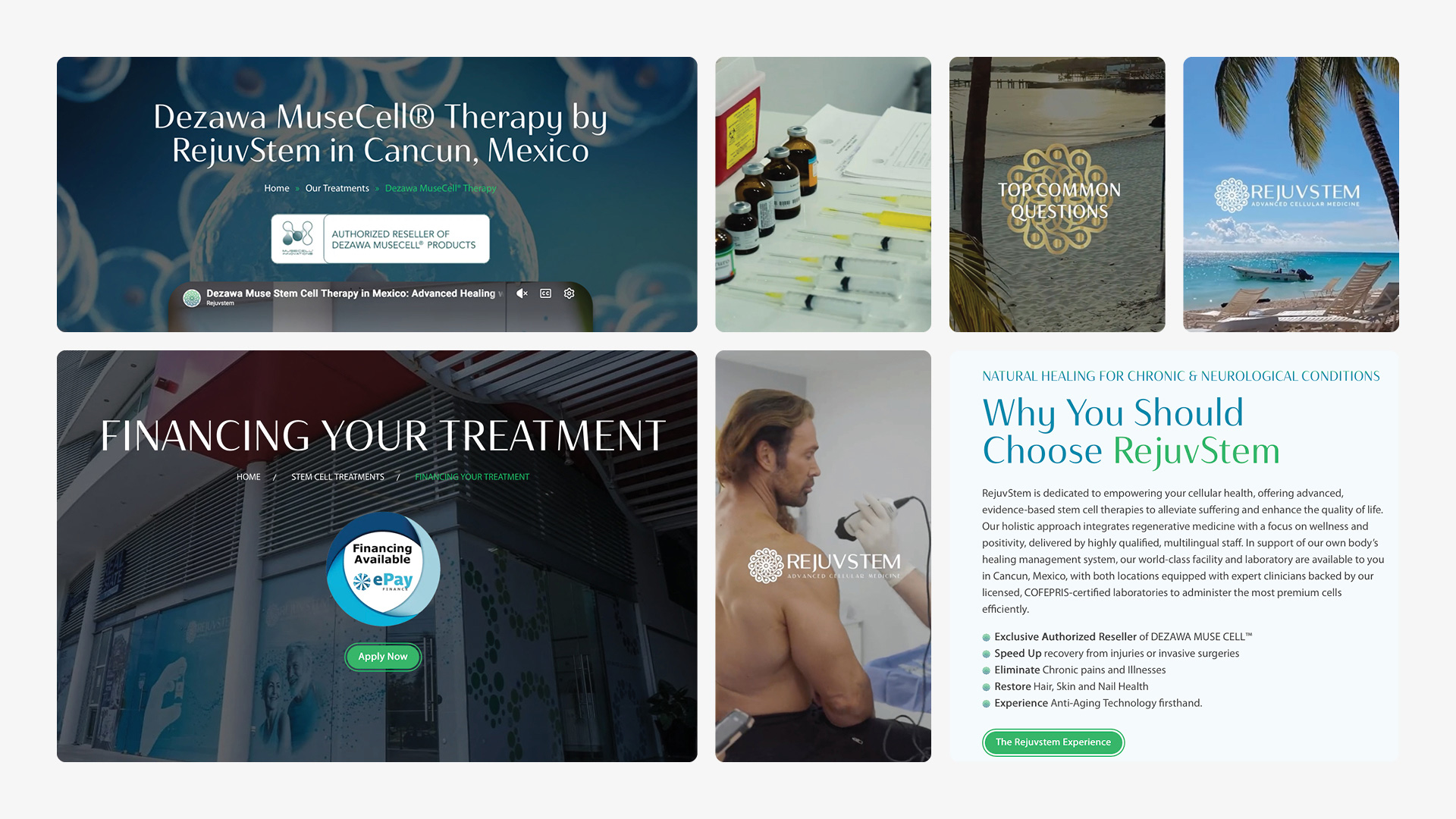
RejuvStem positions as an accessible, comprehensive regenerative medicine provider in the Cancun market — the brand targets a patient audience seeking a familiar, reassuring brand experience in what can feel like an unfamiliar clinical landscape. The brand name itself (Rejuv + Stem) collapses the category into a single memorable compound, prioritizing recall over scientific precision. This is a market-access positioning strategy rather than a scientific authority play — it captures volume rather than premium patients.
The 24-screenshot capture suggests a moderately active digital presence across platforms. Content mix likely emphasizes patient accessibility and treatment variety, calibrated for a broad patient demographic rather than a research-literate niche. The brand's social footprint appears designed to build familiarity and reduce hesitation rather than establish scientific leadership — which is a coherent strategy for a market-facing clinic competing on accessibility.
Messaging focuses on treatment breadth and geographic accessibility, competing on range of conditions treated rather than depth of scientific differentiation. This breadth-over-depth approach is a defensible middle-market position but leaves the premium patient segment underserved. The patient who wants the most scientifically advanced clinic in Cancun will look past RejuvStem's messaging toward brands that lead with research specificity.
Breadth signals accessibility; depth signals authority. RejuvStem's approach serves patients who want to feel comfortable and covered. Rehealth's response should position in the opposite direction — not a clinic for every patient, but the definitive clinic for the discerning patient who has done their research and wants the most scientifically rigorous option in the region.


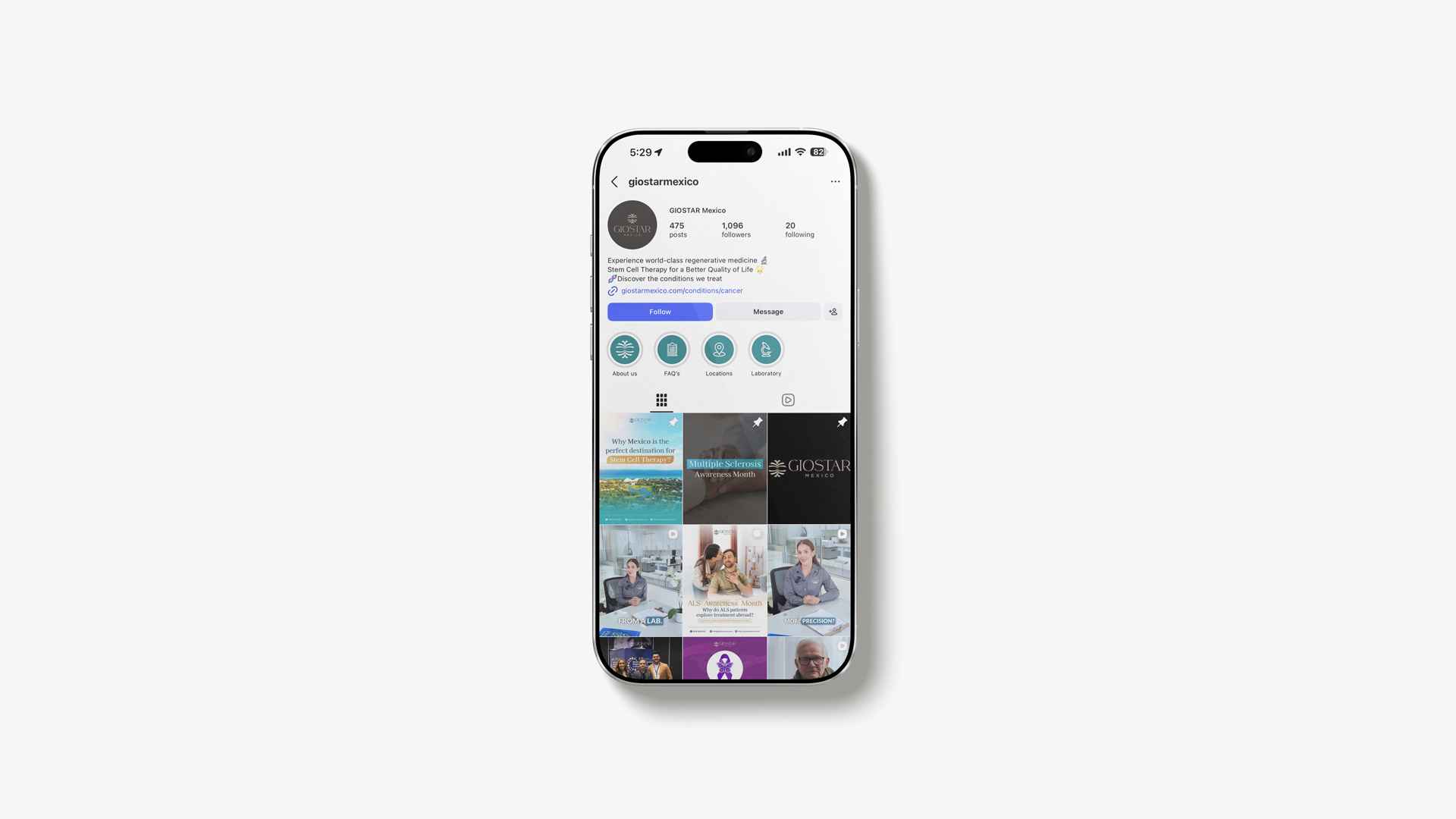
giostarmexico.com · Multiple locations: Cancun, Los Algodones, Playa del Carmen
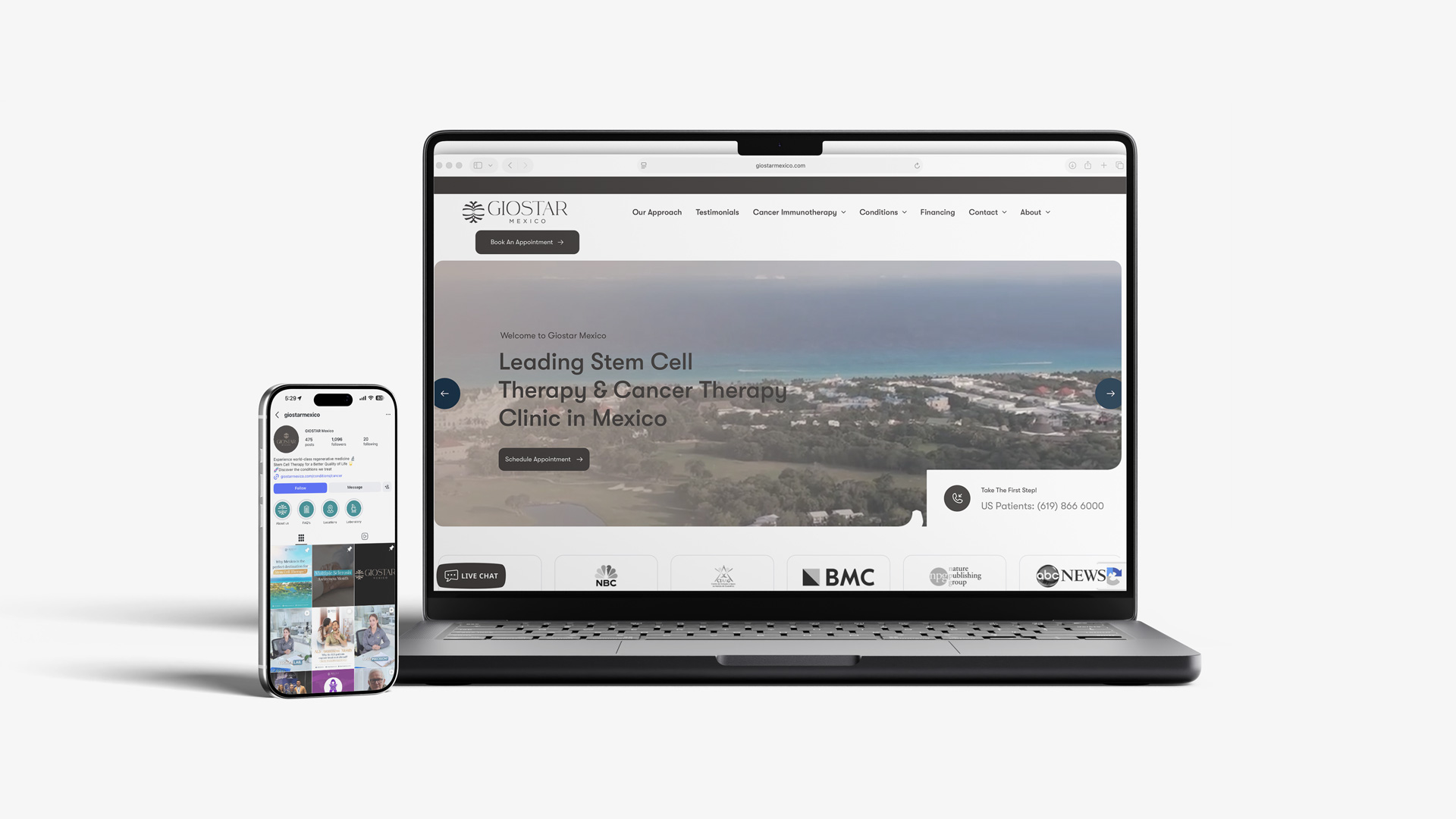
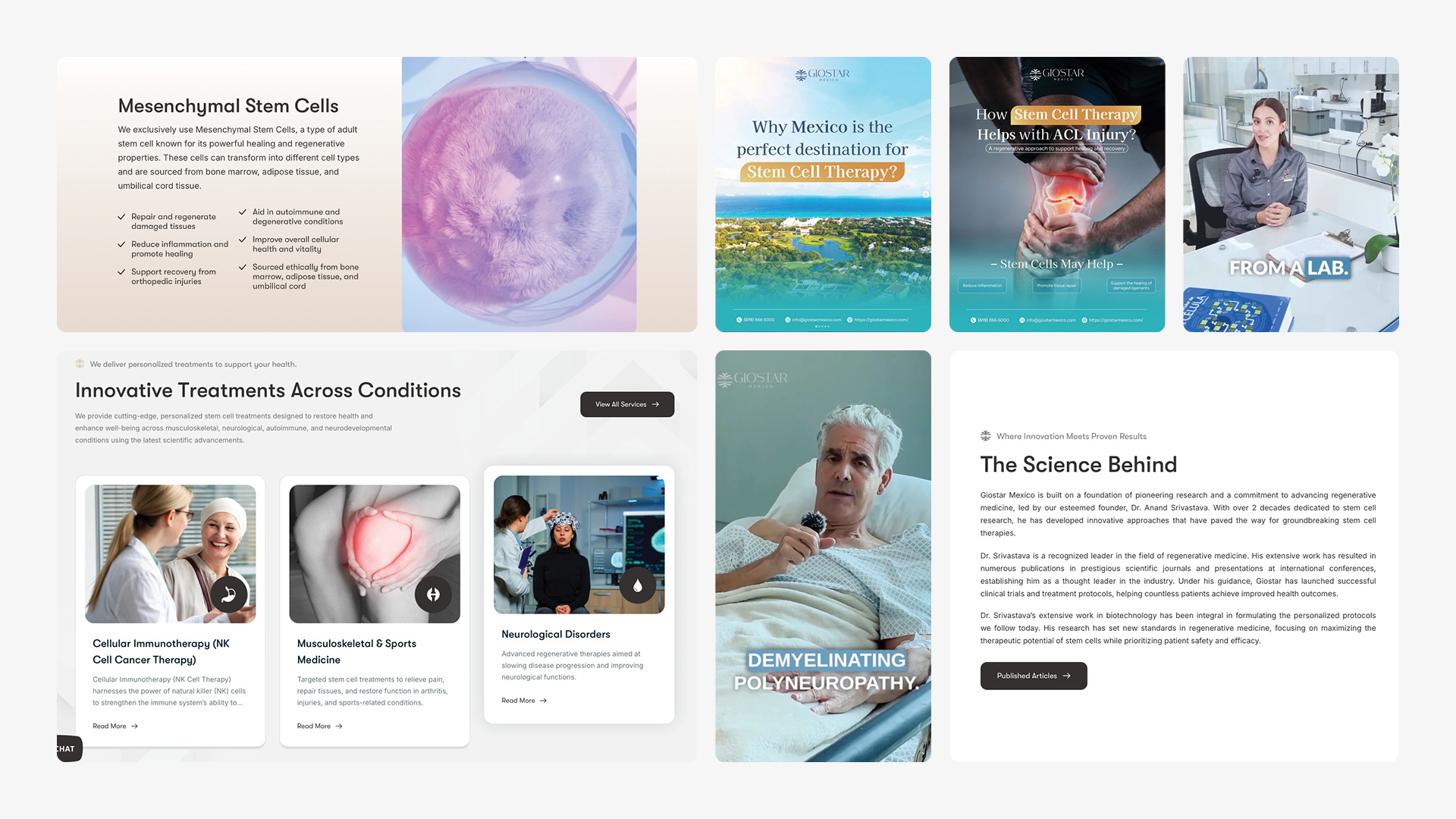
"Leading Stem Cell Therapy & Cancer Therapy Clinic in Mexico" — a dual-category claim that broadens reach at the cost of focus. GIOSTAR's multi-location presence and media trust logos (NBC, BMC, ABC NEWS) signal a brand that has invested significantly in PR and US-market credibility. The explicit "Financing" nav item is the standout strategic differentiator — no other competitor in the Mexico set addresses financial accessibility this directly and prominently.
Operating across three major Mexican medical tourism markets implies significant marketing infrastructure. Social content likely mirrors the website's broad, trust-signal-heavy approach — media logos, patient testimonials, and accessibility messaging calibrated for a price-sensitive North American audience. The multi-location model creates multiple distinct social assets, diluting brand coherence but expanding geographic coverage.
The website functions as a conversion architecture around trust and accessibility. US phone number ((619) 866-6000) signals that GIOSTAR actively courts the Southern California/San Diego patient market with localized phone infrastructure. "Book An Appointment" and "Schedule Appointment" CTAs suggest A/B tested conversion copy. The Financing nav item directly addresses the objection that most competitors refuse to acknowledge — that the cost barrier is real and needs a solution, not just a free consultation offer.
Financing as CTA is conversion infrastructure. No other competitor in the Mexico set leads with financial accessibility as explicitly as GIOSTAR does. This removes a critical objection point before it can stall the decision. Rehealth should consider whether a visible payment plan or financing partnership could convert hesitant prospects who have the motivation but are deterred by perceived cost before they ever reach a consultation.


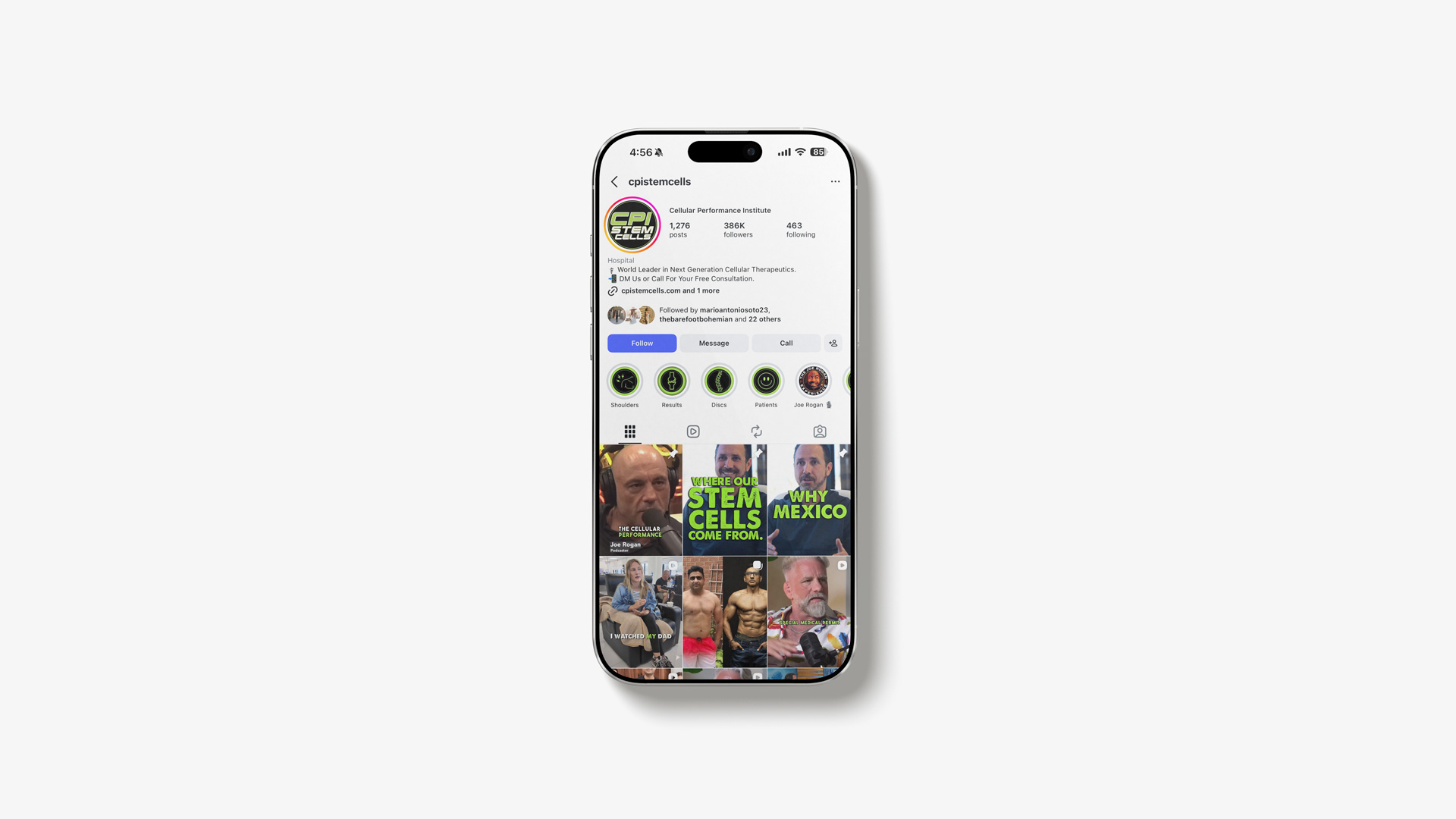
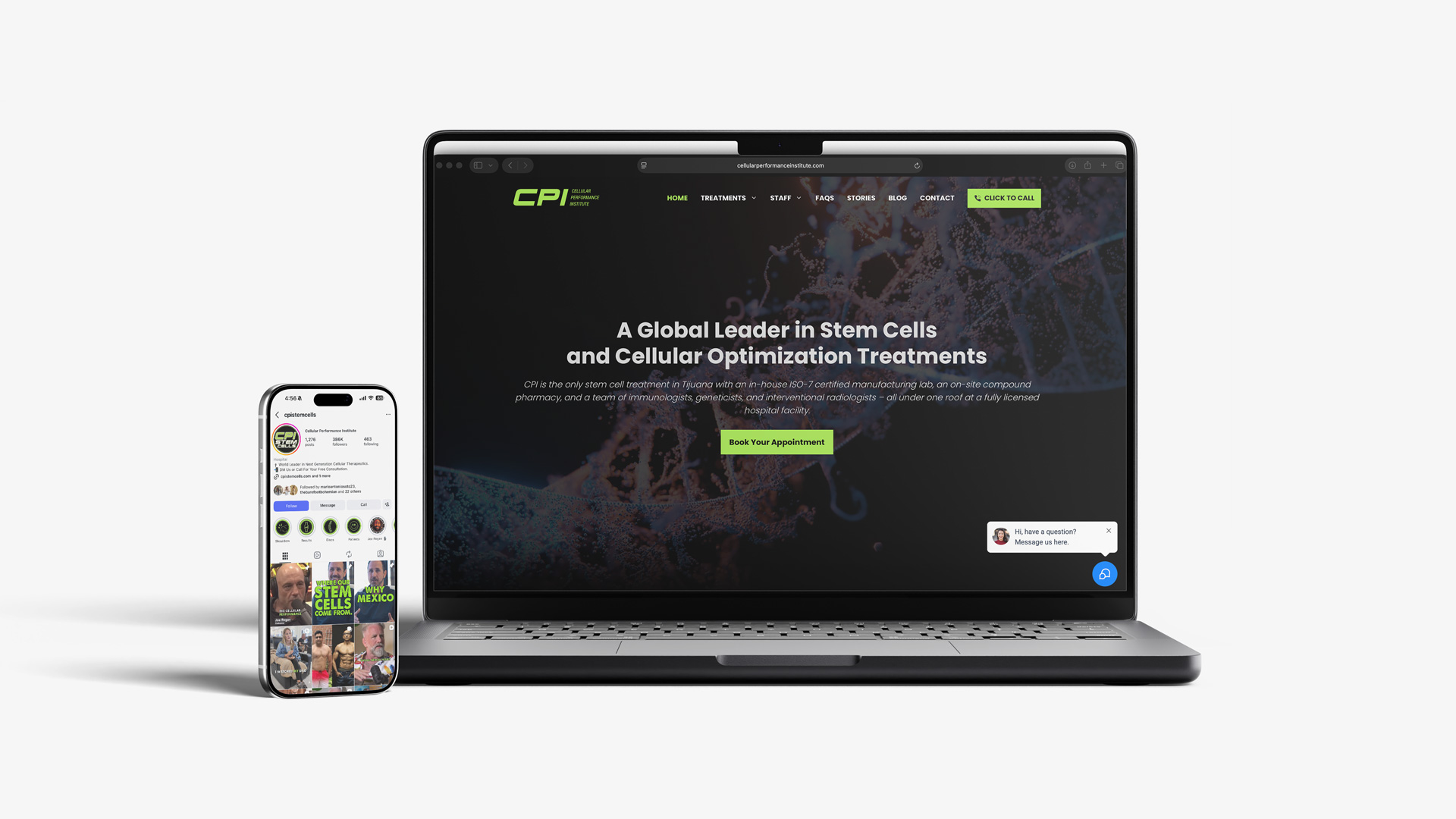
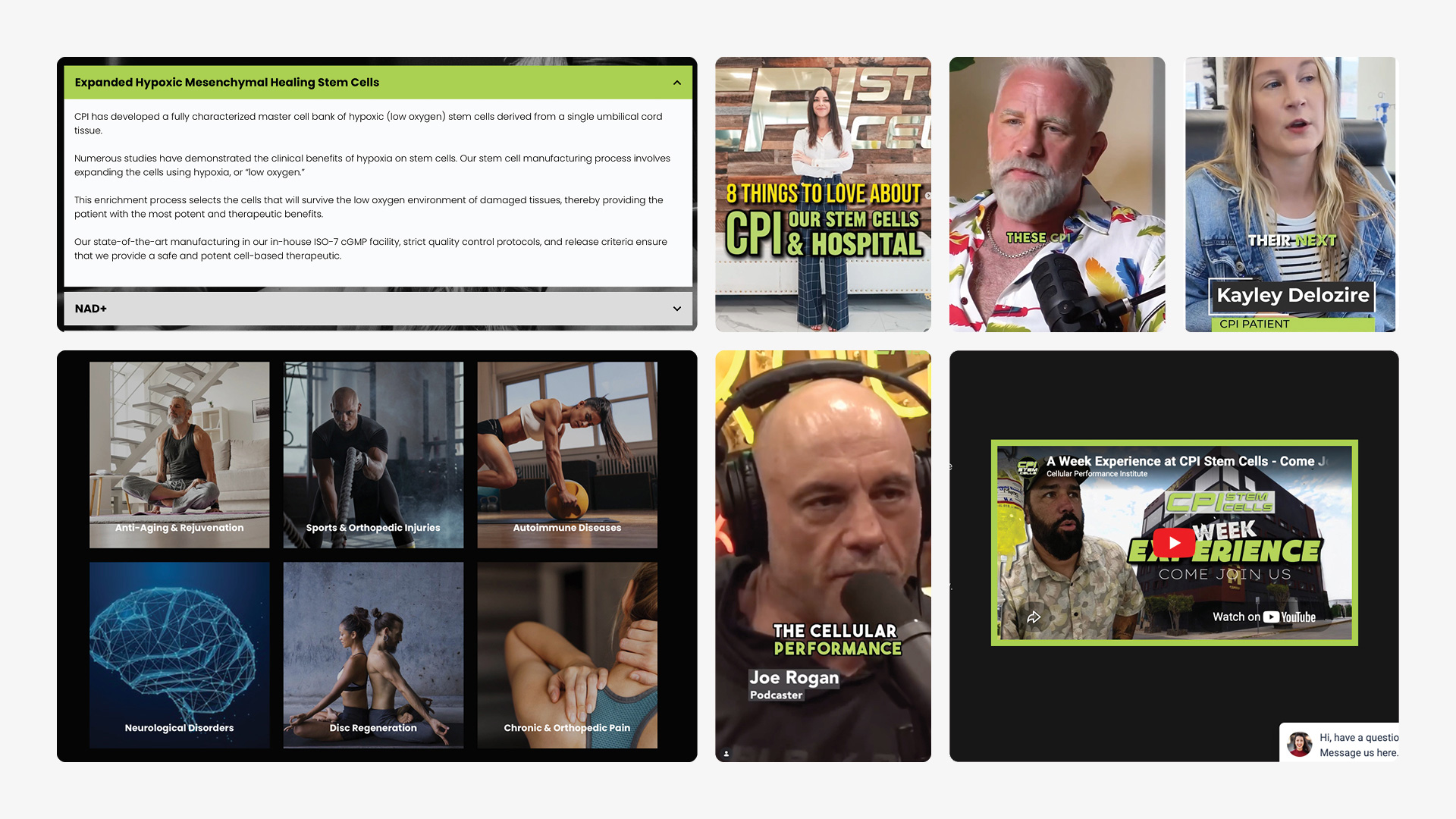
The "Performance" framing shifts the category from medical treatment to optimization — a subtle but significant repositioning that speaks to the high-functioning patient seeking enhancement rather than disease management. CPI effectively bridges the gap between sports medicine and regenerative therapy, capturing a patient psychographic that treats stem cells the way they treat a high-performance trainer or nutritionist. This frame makes regenerative therapy aspirational rather than remedial — a positioning distinction that expands the potential patient audience considerably.
Content likely skews toward athletic performance, injury recovery, and optimization narratives — the visual language of sport and physical achievement rather than clinical recovery. This content strategy attracts a different, often younger and more affluent patient than the chronic illness-focused clinics in this competitive set. The performance frame generates shareable, aspirational content that competes for attention in wellness and fitness feeds rather than medical decision feeds.
Website messaging prioritizes the optimization narrative over the treatment narrative — "CPI" positions as a performance partner, not just a clinic. This has implications for the entire patient journey: the language, the intake process, the follow-up protocols, and the metrics patients use to evaluate success. Performance-framed clinics can charge premium pricing because they're competing against personal coaching and elite sports medicine, not just other stem cell clinics.
Performance is a distinct market with premium pricing logic. CPI's positioning captures a patient segment Rehealth could address through targeted content — the optimization-seeking patient who uses stem cells as a performance investment. A dedicated content vertical around performance, longevity optimization, and biohacking could open a parallel acquisition channel without cannibalizing Rehealth's existing chronic illness positioning.


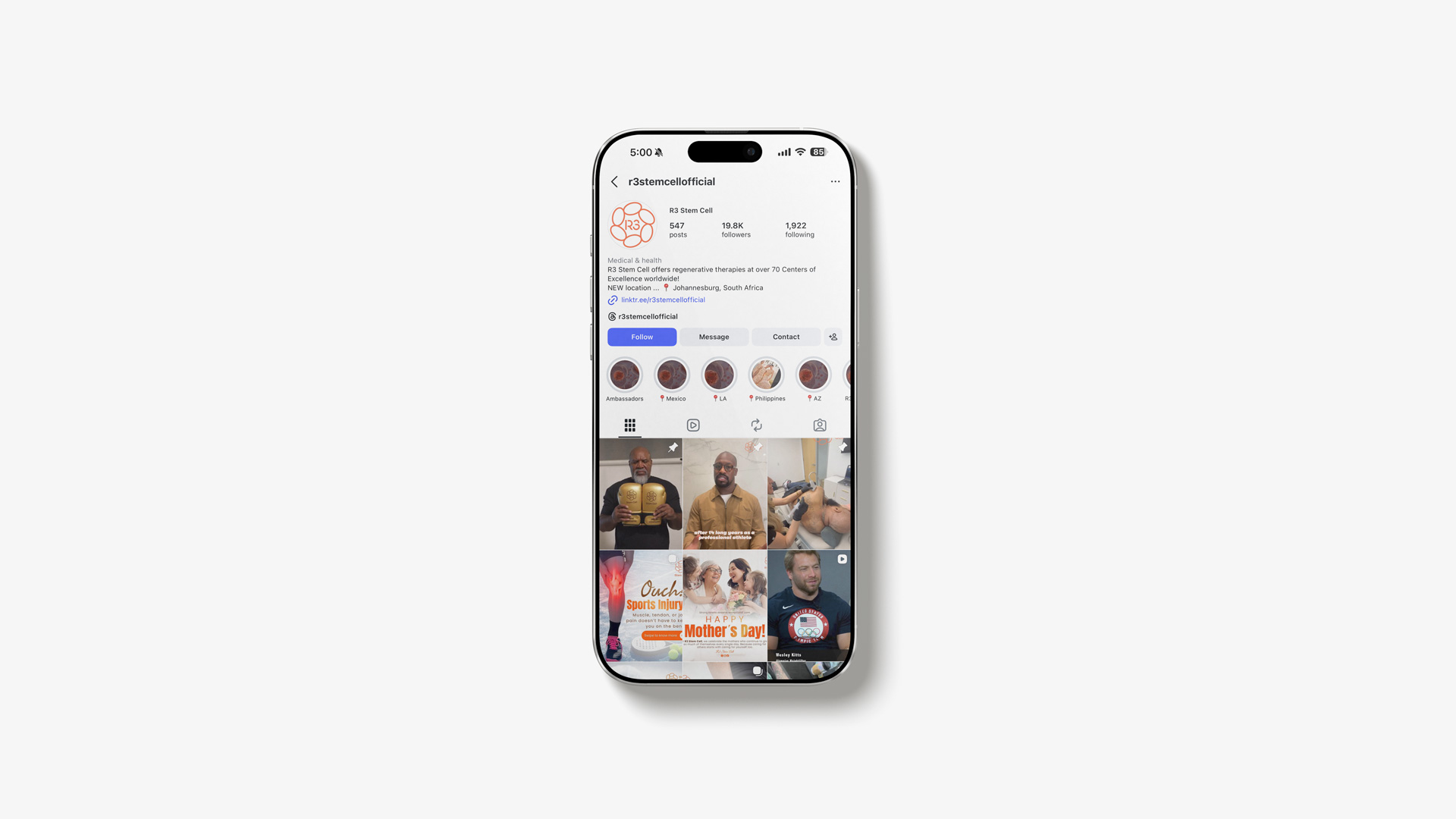
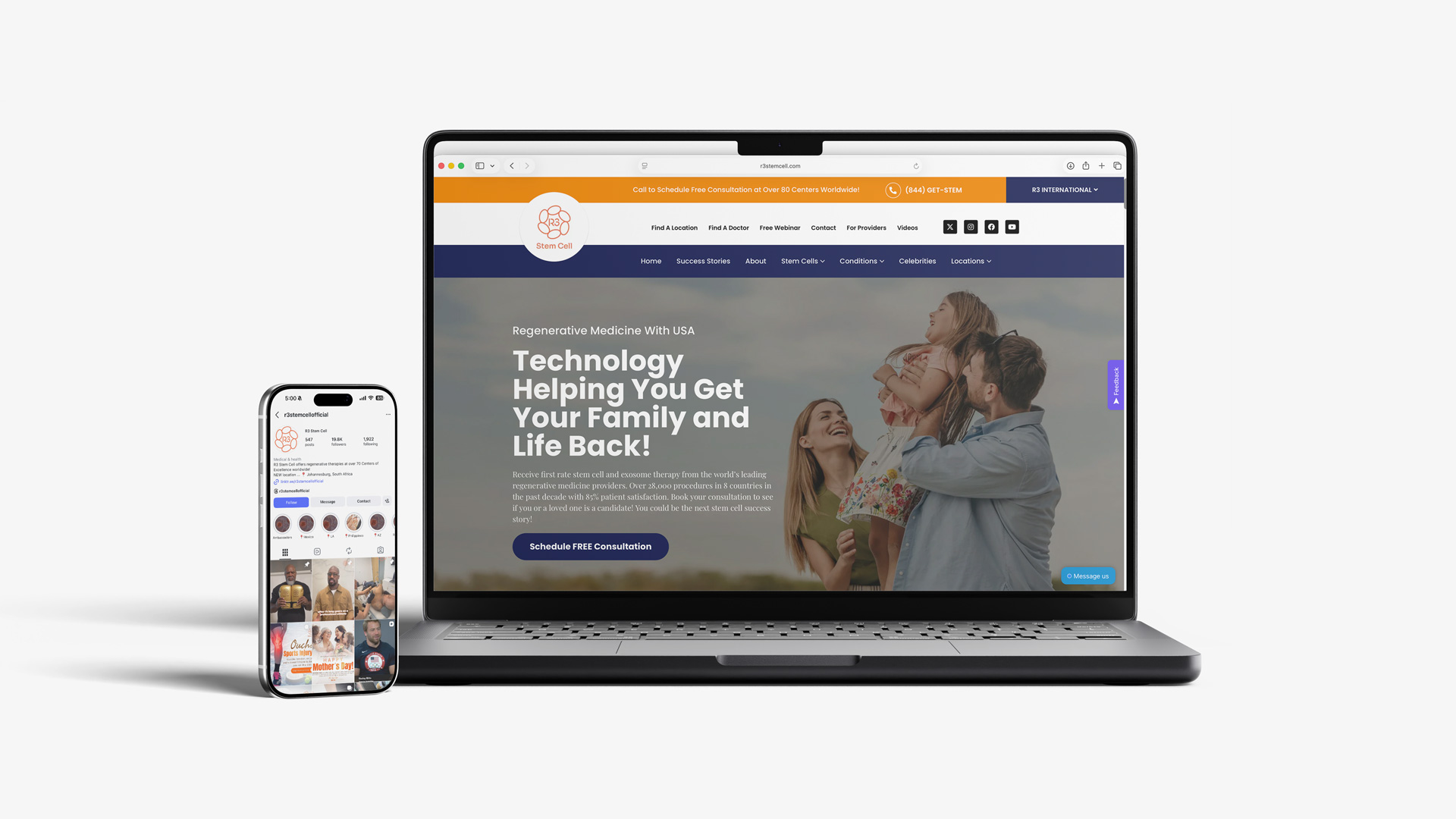
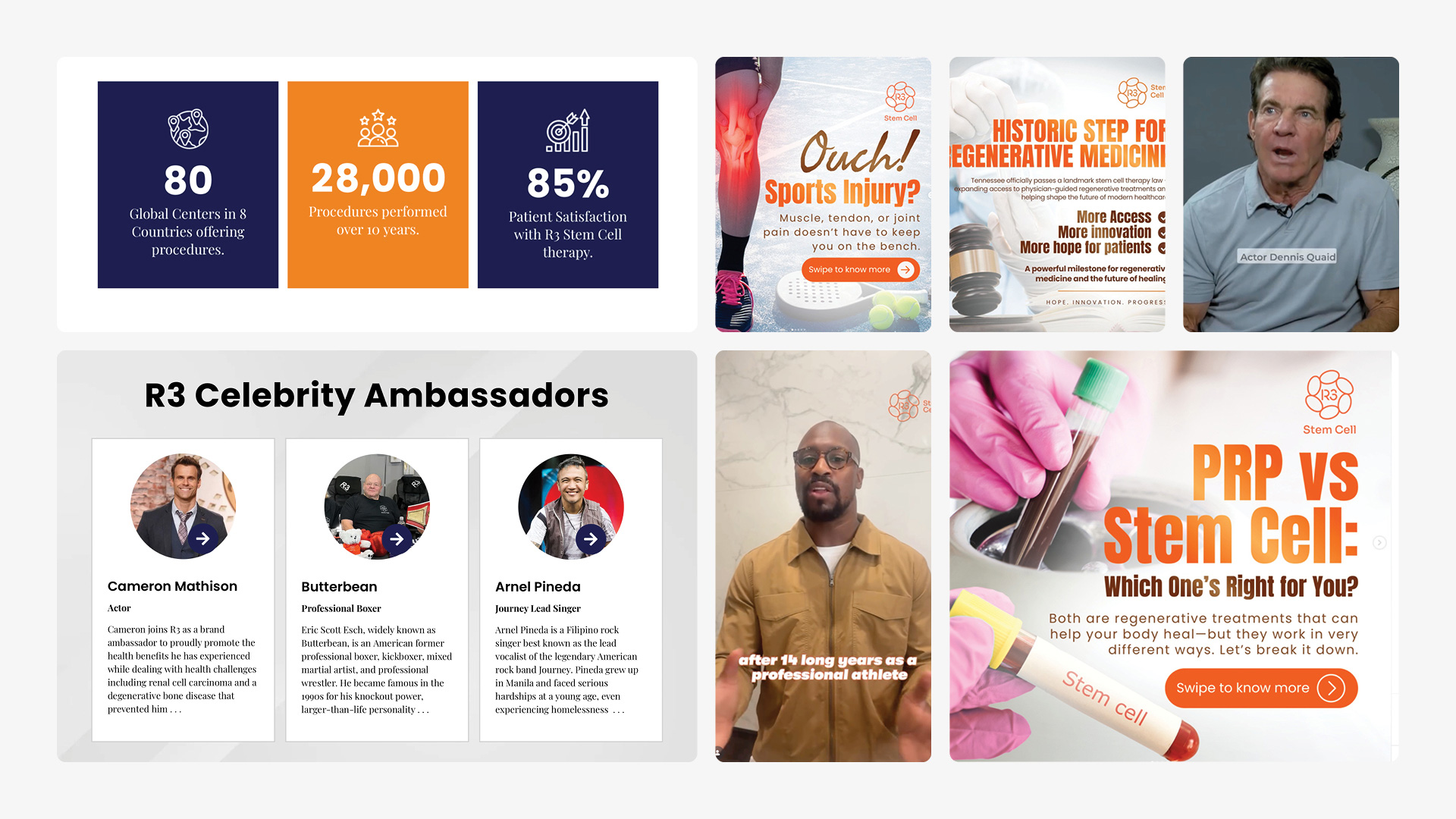
R3's multi-location presence across three major Mexican medical tourism markets positions the brand as the most geographically accessible competitor in this audit. The tri-city model signals operational scale and market validation — a clinic in three distinct patient markets implies sufficient demand to sustain parallel operations. Scale itself becomes the positioning claim: volume of patients, breadth of locations, and operational infrastructure communicate stability to the hesitant North American patient.
Operating across Tijuana, Cancun, and Puerto Vallarta implies significant marketing infrastructure across regions, likely with location-specific social assets feeding a central brand account. The breadth of geographic presence generates multiple content streams — local events, facility showcases, regional patient stories. The marketing machine required to sustain three locations is a structural competitive advantage for patient acquisition volume, if not for premium positioning.
The franchise/scale model means messaging is broad and market-facing — depth of science yields to accessibility and geographic convenience as the primary value propositions. This is a coherent strategy for volume, but it creates an opening for scientifically focused competitors to own the premium tier. R3's broad presence is the competitive floor, not the ceiling — it demonstrates market viability without defining what the best possible experience looks like.
Scale is its own signal, but not a sufficient one. R3's multi-city presence communicates stability and volume — and for some patients, that's enough. Counter-program by leaning into what scale cannot provide: depth of clinical relationship, site-specific expertise, and the personalized scientific rigor of a clinic that isn't managing three simultaneous operational contexts.


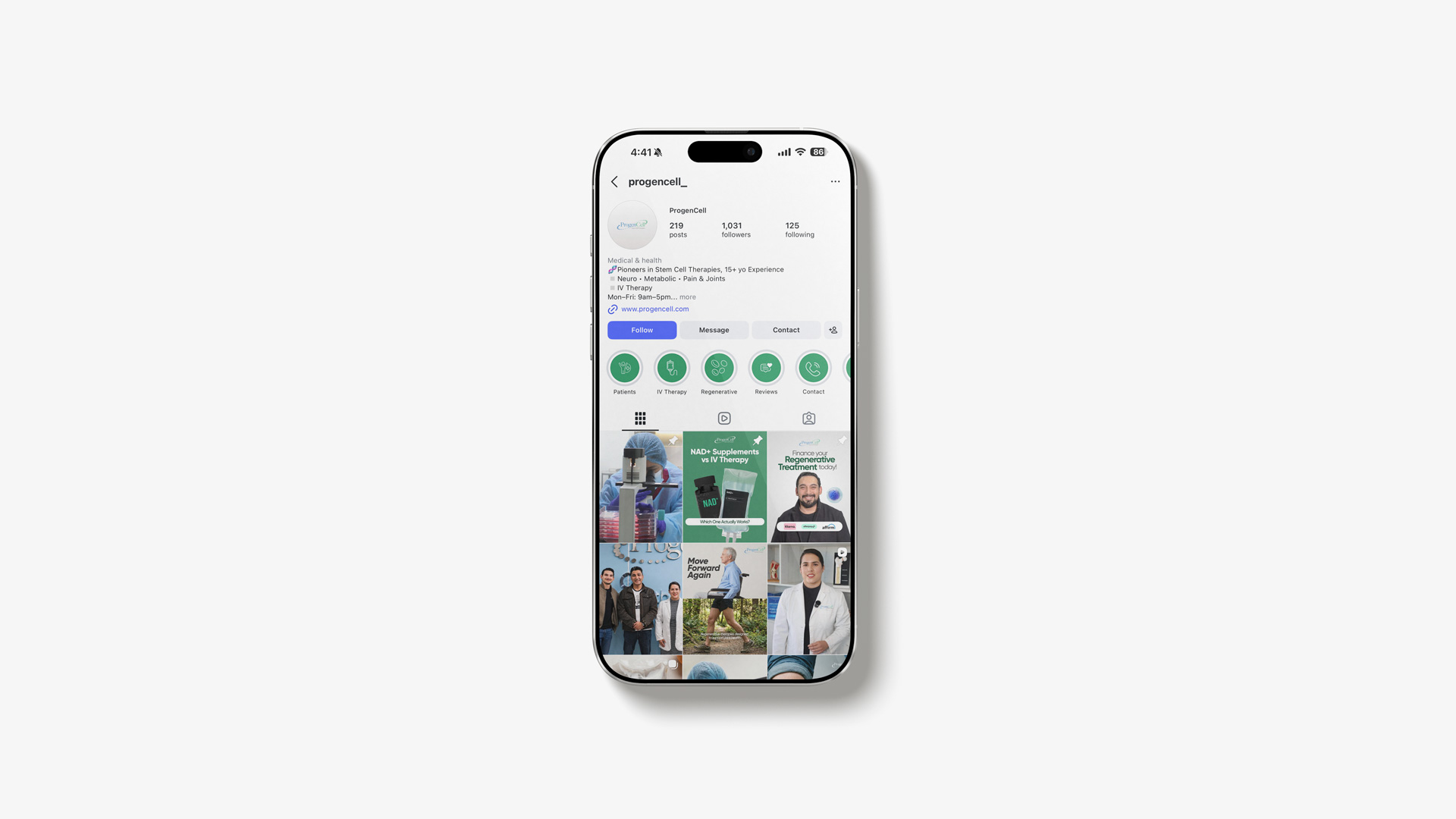
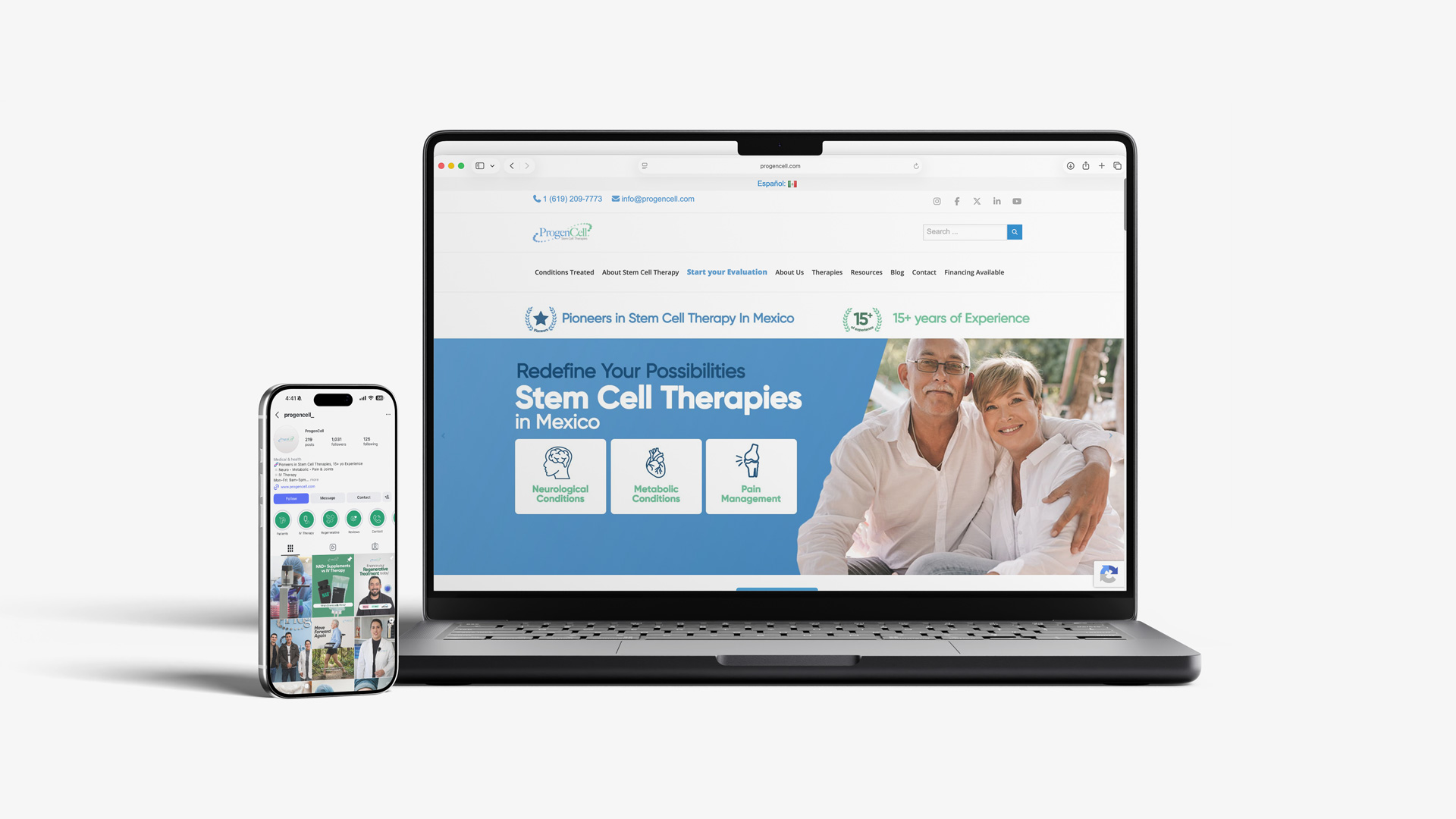
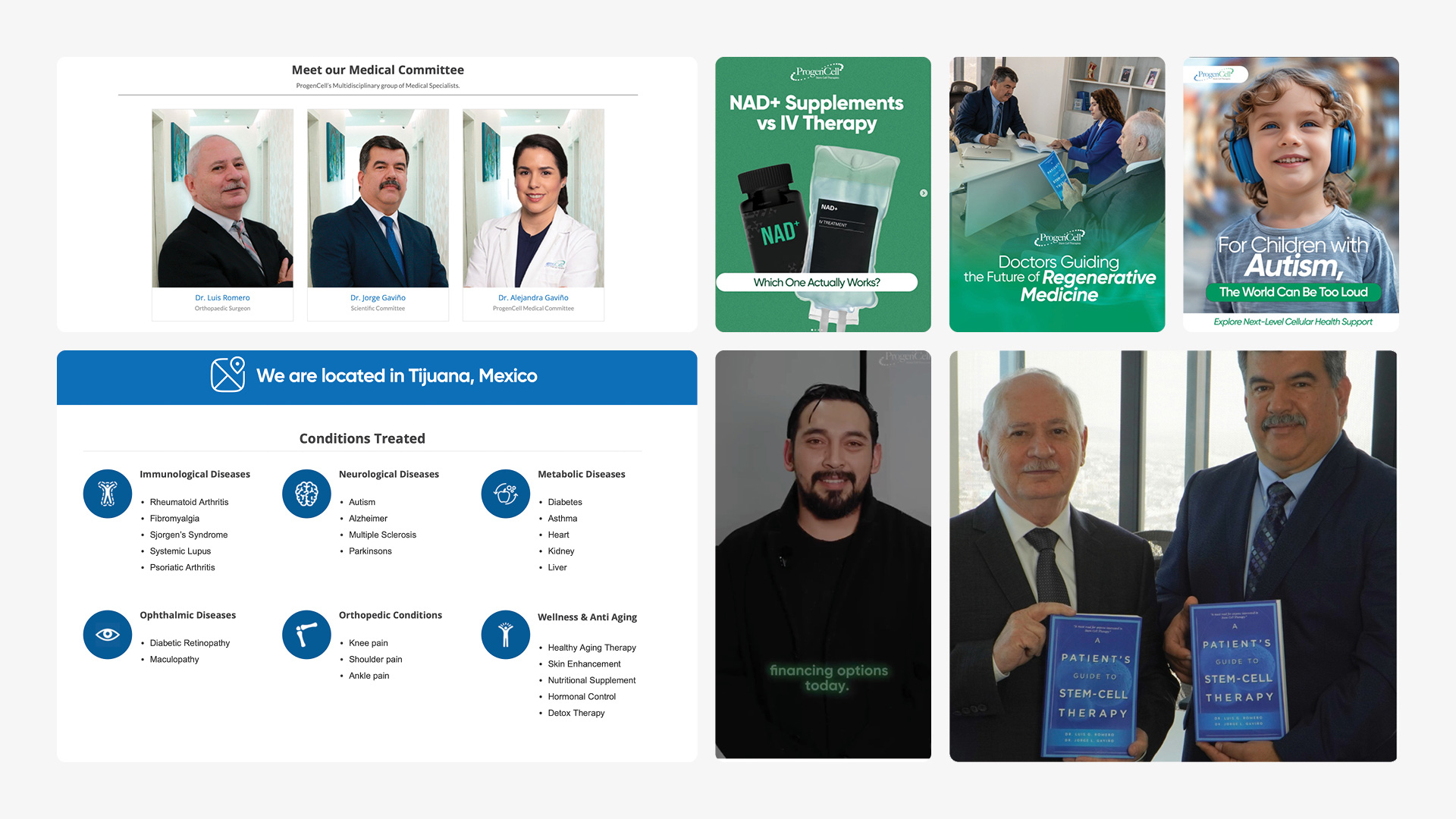
ProgenCell is one of the longest-established stem cell clinics in Tijuana, with deep roots in the US patient pipeline from San Diego and Southern California. The brand's positioning is anchored in longevity and clinical heritage — the implicit argument being that a clinic that has been operating successfully for years in a competitive market must be doing something right. For skeptical North American patients, institutional age is itself a trust signal in a category where newer entrants have no comparable track record to point to.
Longevity in the market implies an established patient review presence and word-of-mouth referral base that predates social media. Social performance is likely secondary to direct referral and search-based acquisition. The brand's digital presence functions as validation infrastructure for patients who've already heard about ProgenCell through another channel, rather than as a primary discovery mechanism.
Website messaging leverages the clinic's tenure as a central credibility claim — years of operation, patient volume, and accumulated clinical experience are the primary trust signals. The Tijuana location gives ProgenCell structural pricing advantages relative to US clinics while maintaining proximity to the Southern California patient corridor. The combination of established reputation and geographic access creates a defensible patient acquisition position that newer entrants cannot easily replicate.
Heritage creates trust in medical tourism — make it visible. ProgenCell's tenure in Tijuana anchors its credibility. Rehealth's 10+ year operating history is a comparable asset that is currently underleveraged in its messaging. The number of patients treated, the years in operation, and the clinical experience accumulated are not footnotes — they should be among the first trust signals a prospective patient encounters on the website and in social content.


The name itself is a positioning strategy — "US Mexico" does dual-market work, bridging the North American patient's trust in US medical standards with the pricing and regulatory flexibility of a Mexican clinic. This framing directly addresses the primary anxiety a US patient carries when considering care across the border: that Mexican healthcare is somehow less rigorous or legitimate than what they're used to. By embedding "US" in the brand name, the clinic preemptively neutralizes that objection before a single piece of content is consumed.
Social investment appears operationally focused — patient acquisition likely depends primarily on US-facing search and referral channels rather than organic social growth. The digital presence functions as a validation layer for patients who arrive through other means rather than as a primary discovery channel. A brand anchored in cross-border reassurance benefits more from review platform presence (Google, Trustpilot, Healthgrades) than from Instagram follower counts.
Website messaging likely emphasizes the dual-standard positioning throughout — US technology and oversight combined with Mexican access and pricing. This is a coherent and defensible market position that speaks directly to the cautious patient demographic. The brand's greatest vulnerability is that "US Mexico" is a geographic descriptor, not a scientific claim — once a patient moves past the trust question, the brand has limited scientific differentiation to offer versus research-credentialed competitors.
Name as strategy. The dual-market positioning speaks directly to North American patient hesitation about seeking care abroad. Rehealth's own Cancun location, US-licensed technology, and international clinical credentials are equivalent assets that should be foregrounded much more explicitly — not buried in an "About" page, but stated as a primary trust signal on the homepage and in all social bios.


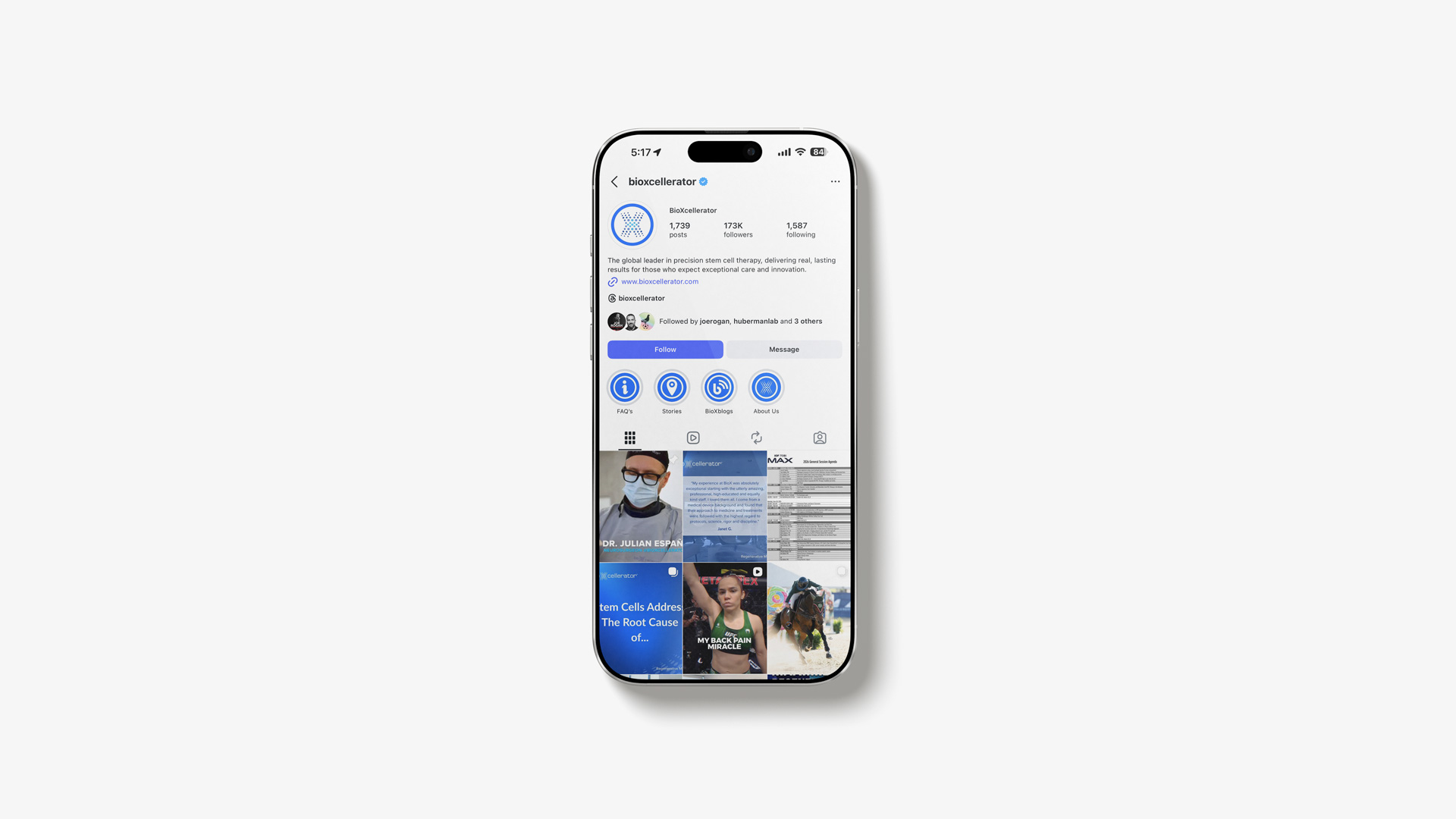
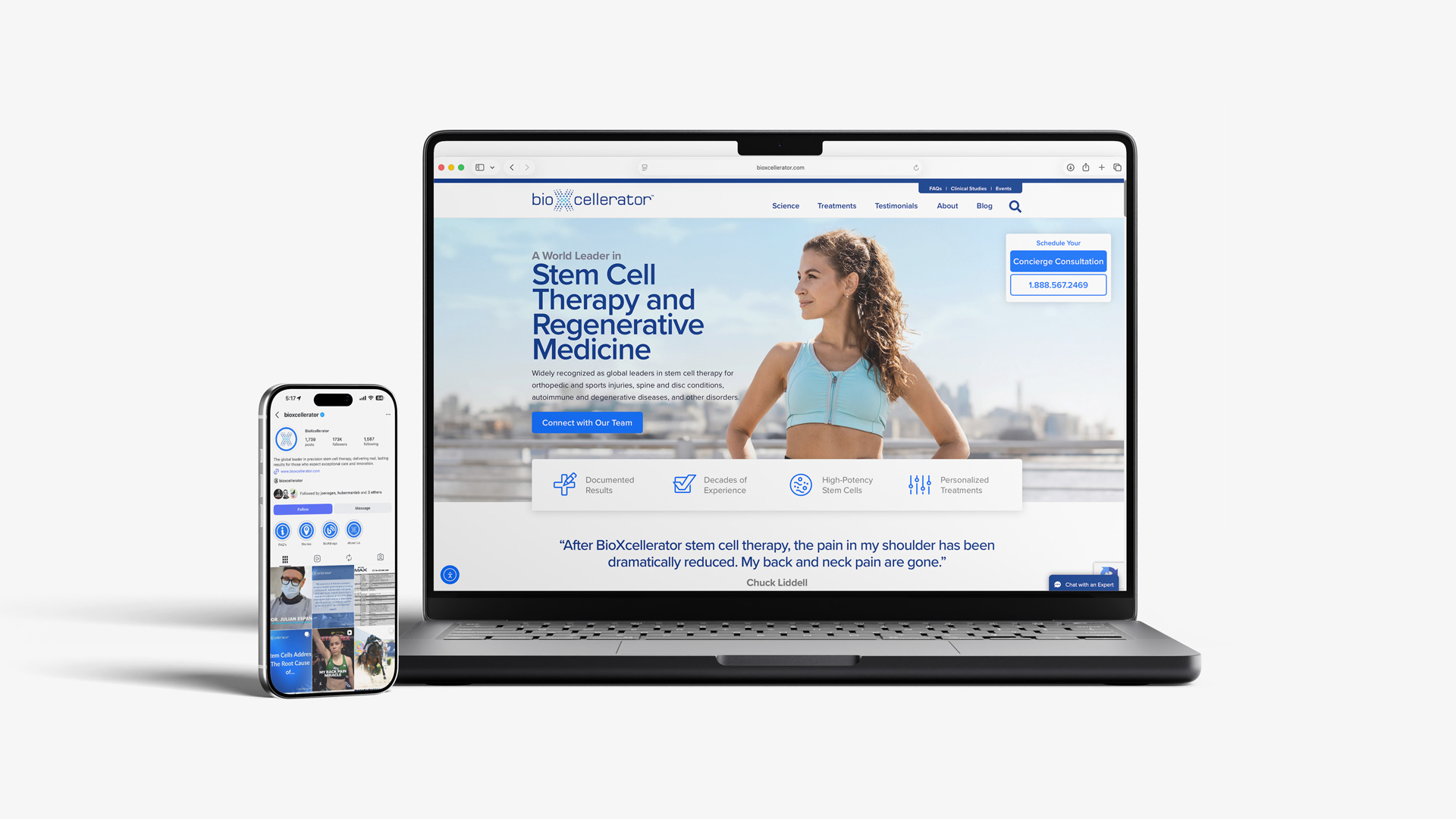
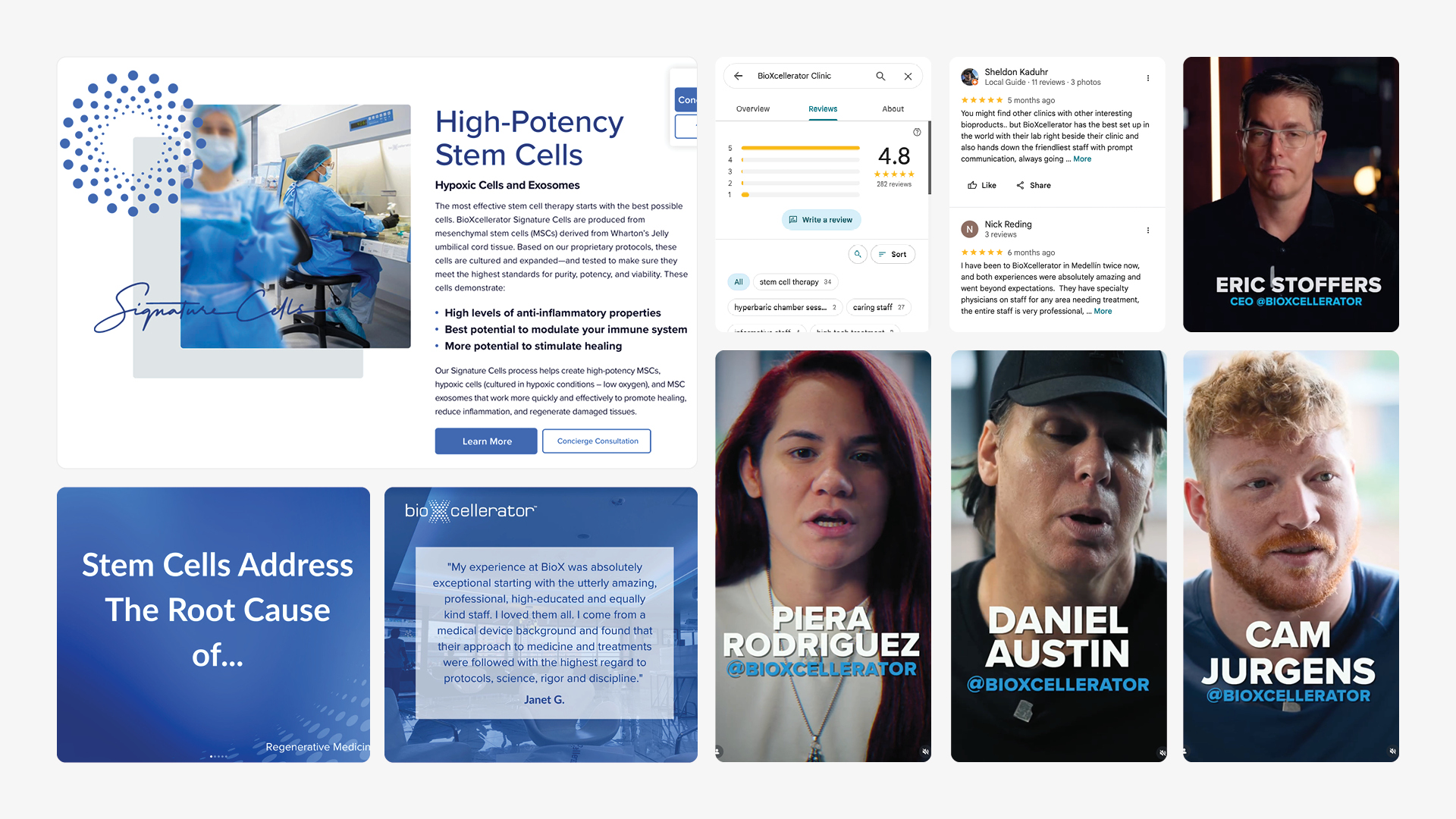
"A World Leader in Stem Cell Therapy and Regenerative Medicine. Widely recognized as global leaders in stem cell therapy for orthopedic and sports injuries, spine and disc conditions, autoimmune and degenerative diseases." The sports/performance aesthetic (athletic photography, Chuck Liddell celebrity endorsement), concierge consultation CTA, and polished US-market-facing design create a brand that competes visually and tonally with the most sophisticated players in this category globally — not just in Latin America. BioXCelerator is the best-designed brand in this entire competitive set outside of the luxury international benchmarks.
Design quality signals price point. BioXCelerator's production level demonstrates that a Latin American stem cell clinic can project a premium US-market aesthetic without sacrificing credibility. The trust badges ("Documented Results," "Decades of Experience," "High-Potency Stem Cells," "Personalized Treatments") offer a replicable template for Rehealth's homepage trust signal architecture.


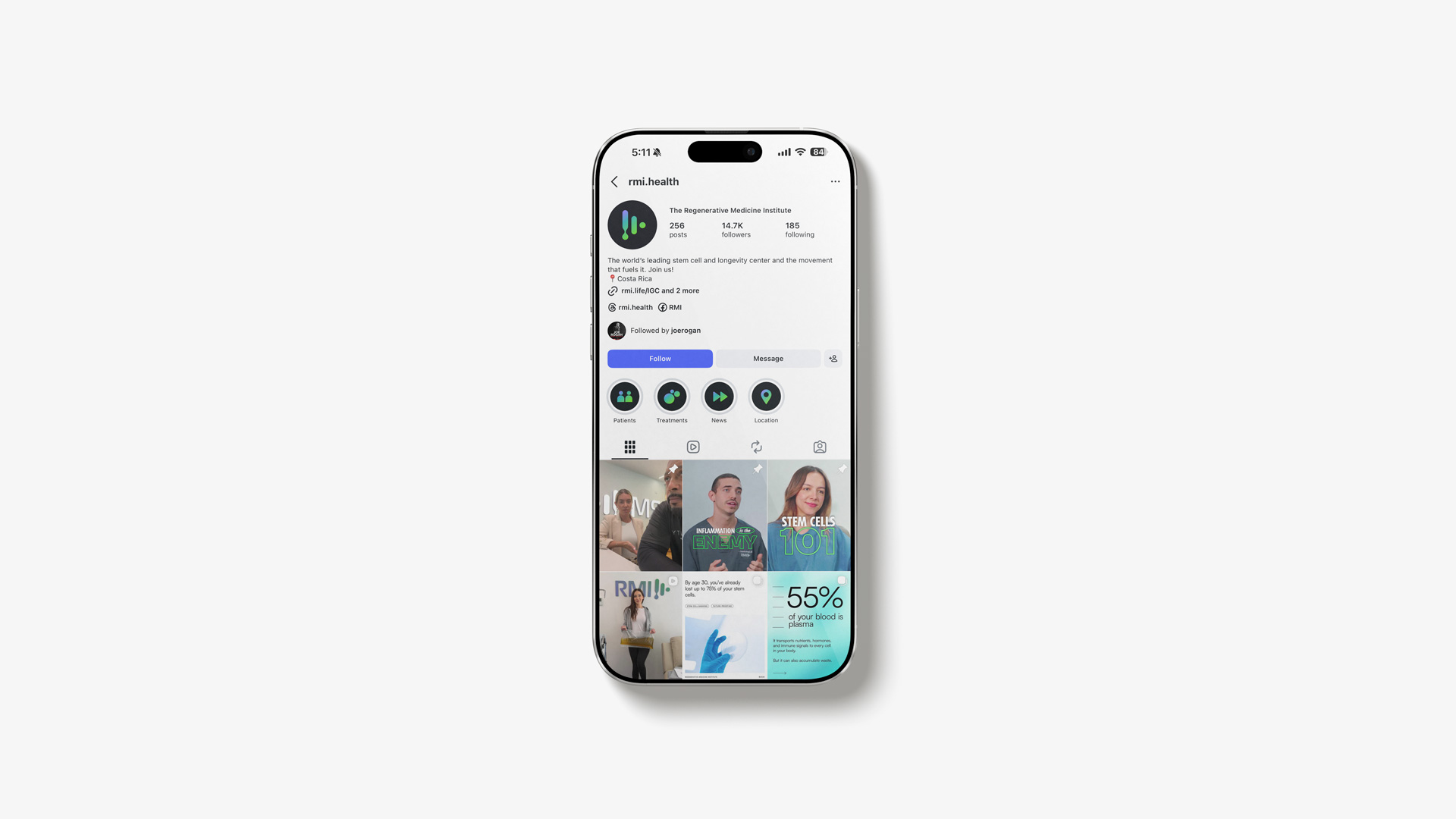
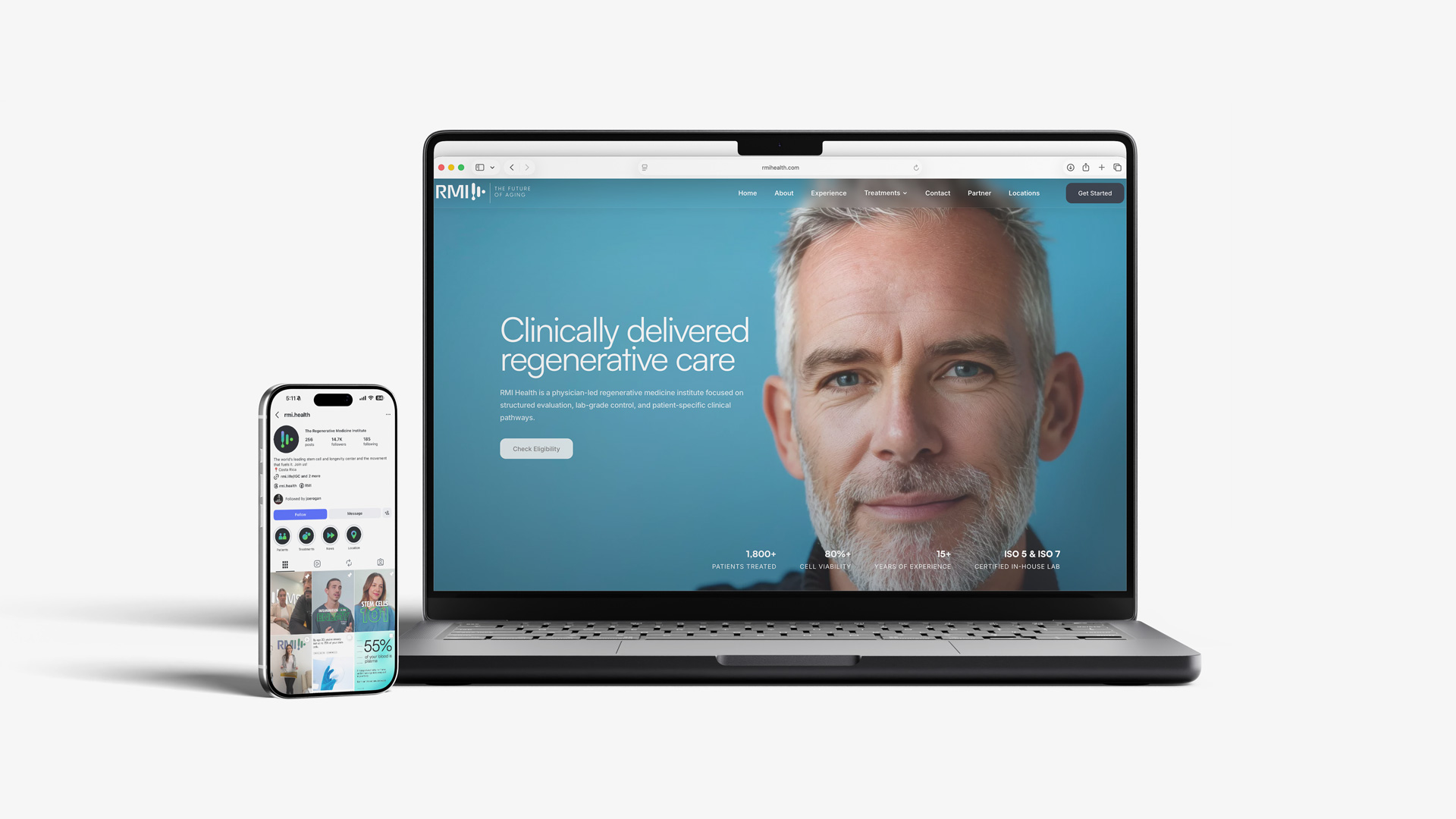
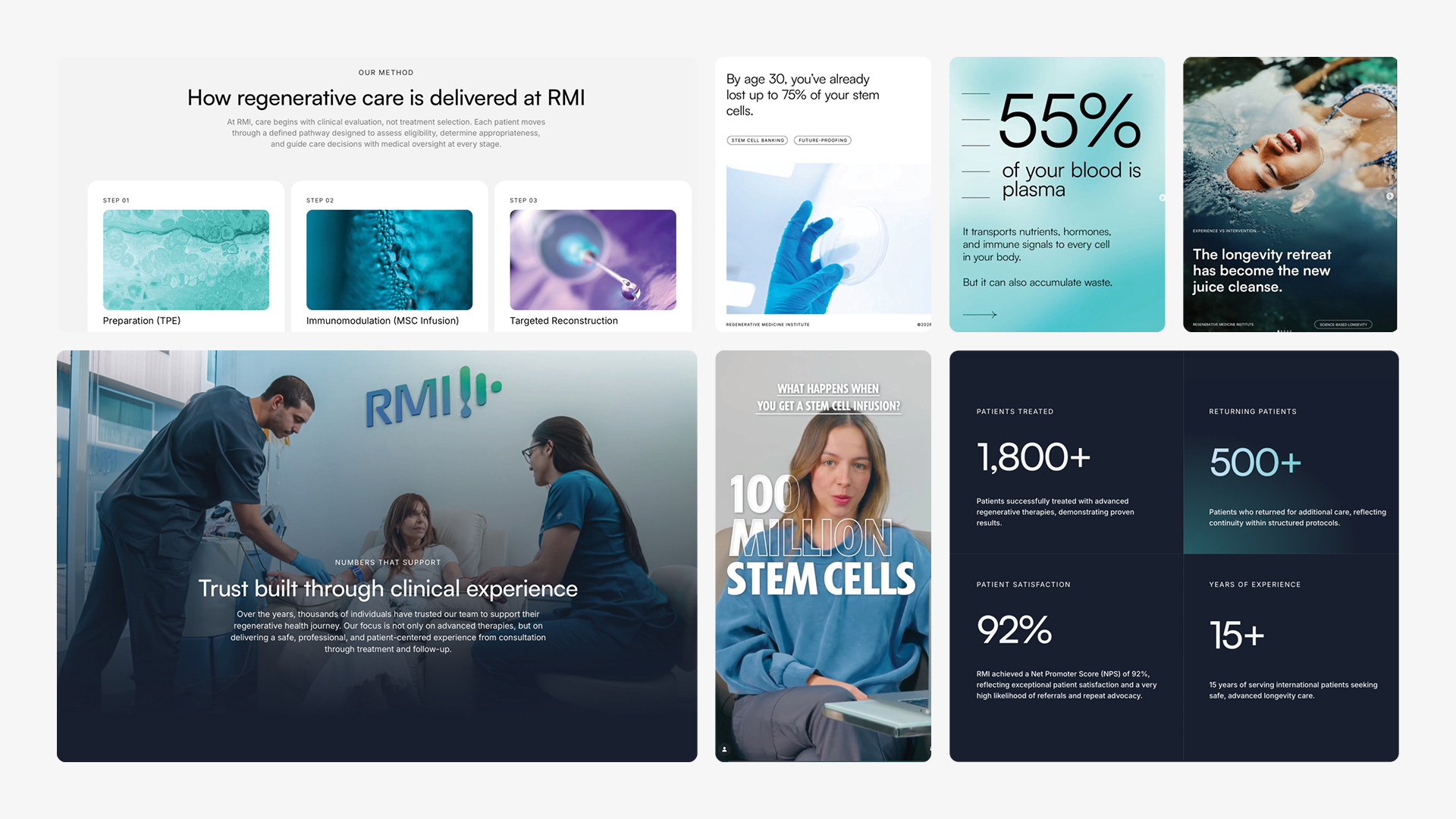
RMI Health positions Costa Rica as an accessible, "safe" alternative to US healthcare costs — a medical tourism frame that leverages the country's established reputation as a destination for North American patients seeking dental, cosmetic, and now regenerative procedures. The brand targets the cautious, research-oriented US patient who wants the reassurance of a familiar medical tourism corridor before venturing to Mexico or Colombia. Costa Rica's long-established medical tourism infrastructure gives RMI a geographic credibility advantage that newer market entrants cannot quickly replicate.
Geography shapes perceived safety. RMI competes for the same cautious North American patient who might choose Rehealth. Rehealth should foreground Cancun's established international airport access, proximity to the US, and Quintana Roo's growing reputation as a destination for medical tourism alongside its existing beach resort infrastructure — location is a competitive differentiator that can and should be communicated more aggressively.


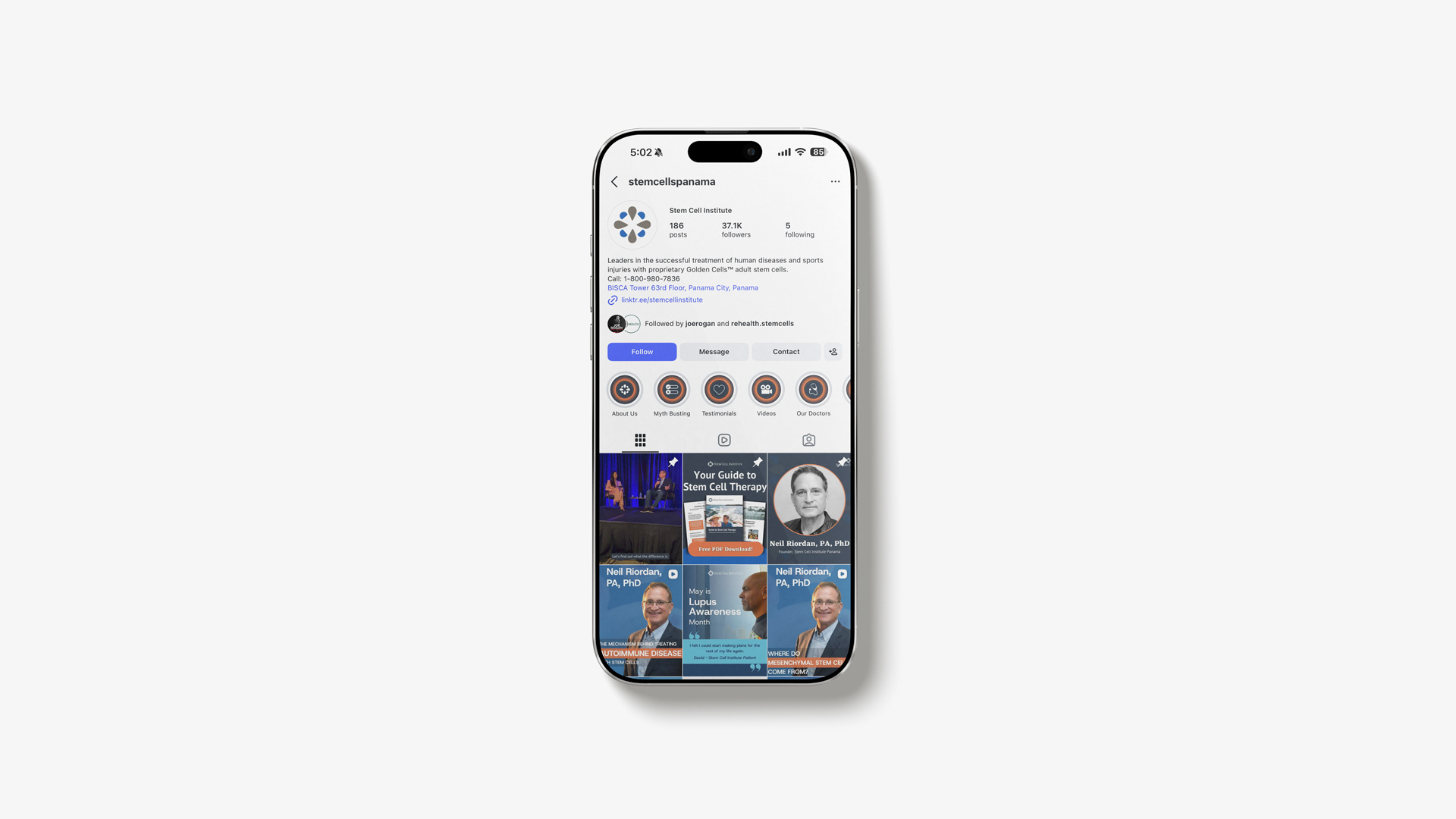
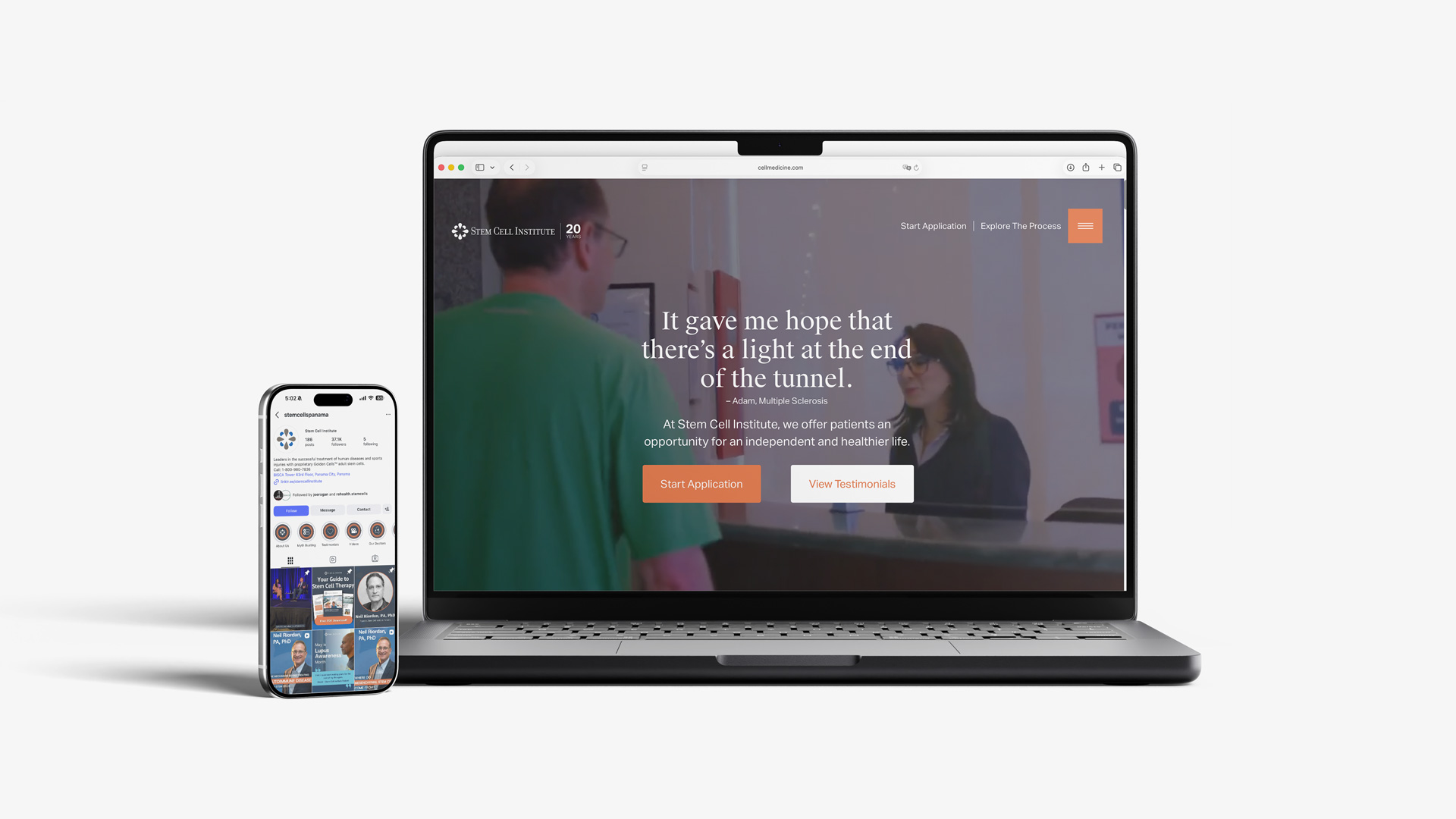
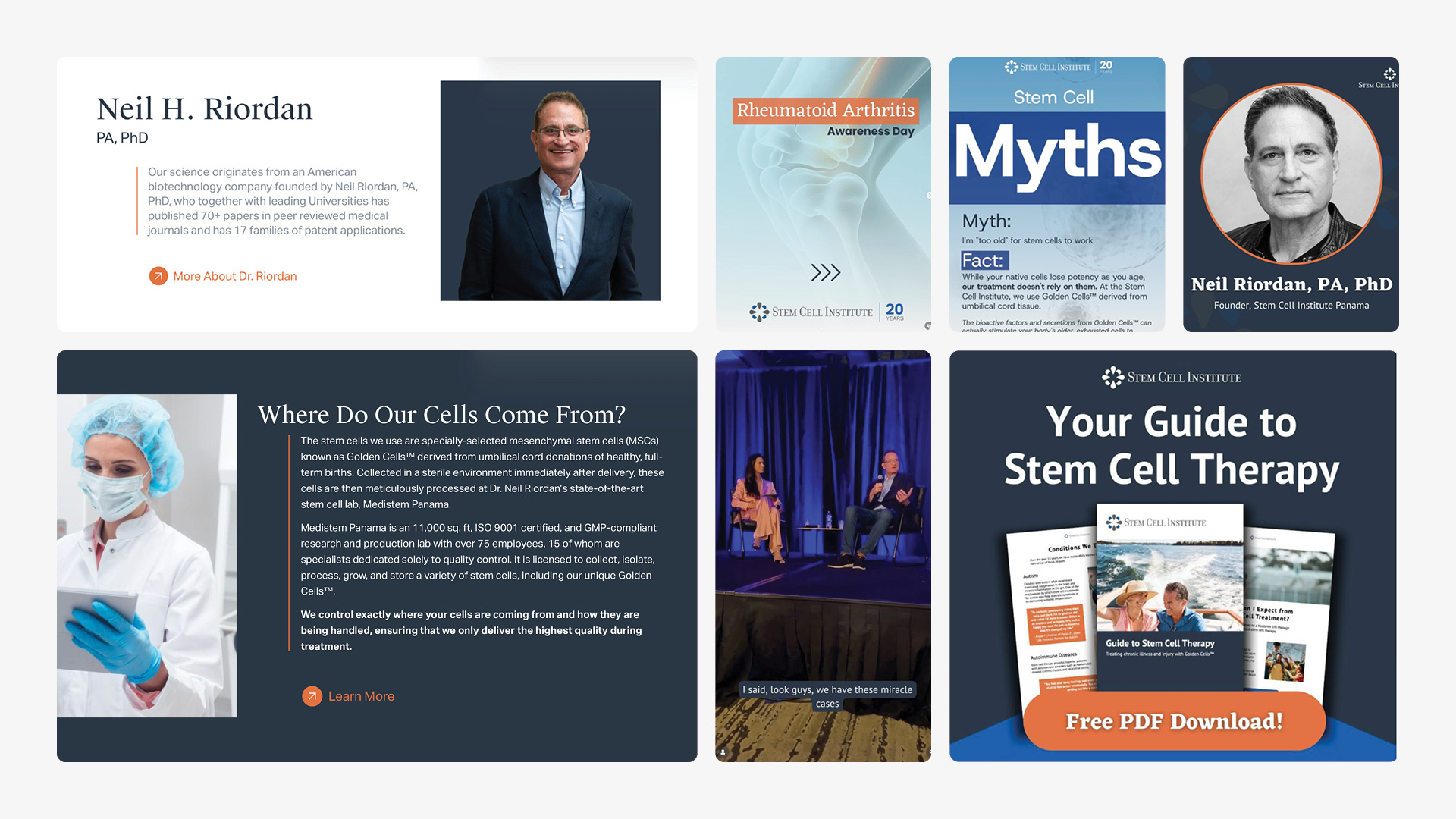
One of the most established stem cell clinics in Latin America, with a content marketing investment that includes a downloadable patient guide PDF — "Your Guide to Stem Cell Therapy." This patient guide is a meaningful differentiator: it functions simultaneously as a trust signal, a lead magnet, and a pre-sale educational resource that reduces objections before a consultation ever occurs. The clinic's longevity in the Panama market and its content depth both signal an organization that treats patient education as a core business function, not a marketing afterthought.
Education as trust infrastructure. The downloadable patient guide demonstrates that SCI treats content marketing as a patient conversion tool — a model Rehealth could replicate with a branded "Guide to Cellular Therapy at Rehealth" or a condition-specific resource series. PDF guides generate leads, establish authority, and create shareable assets that travel through the patient's research process long after the initial download.


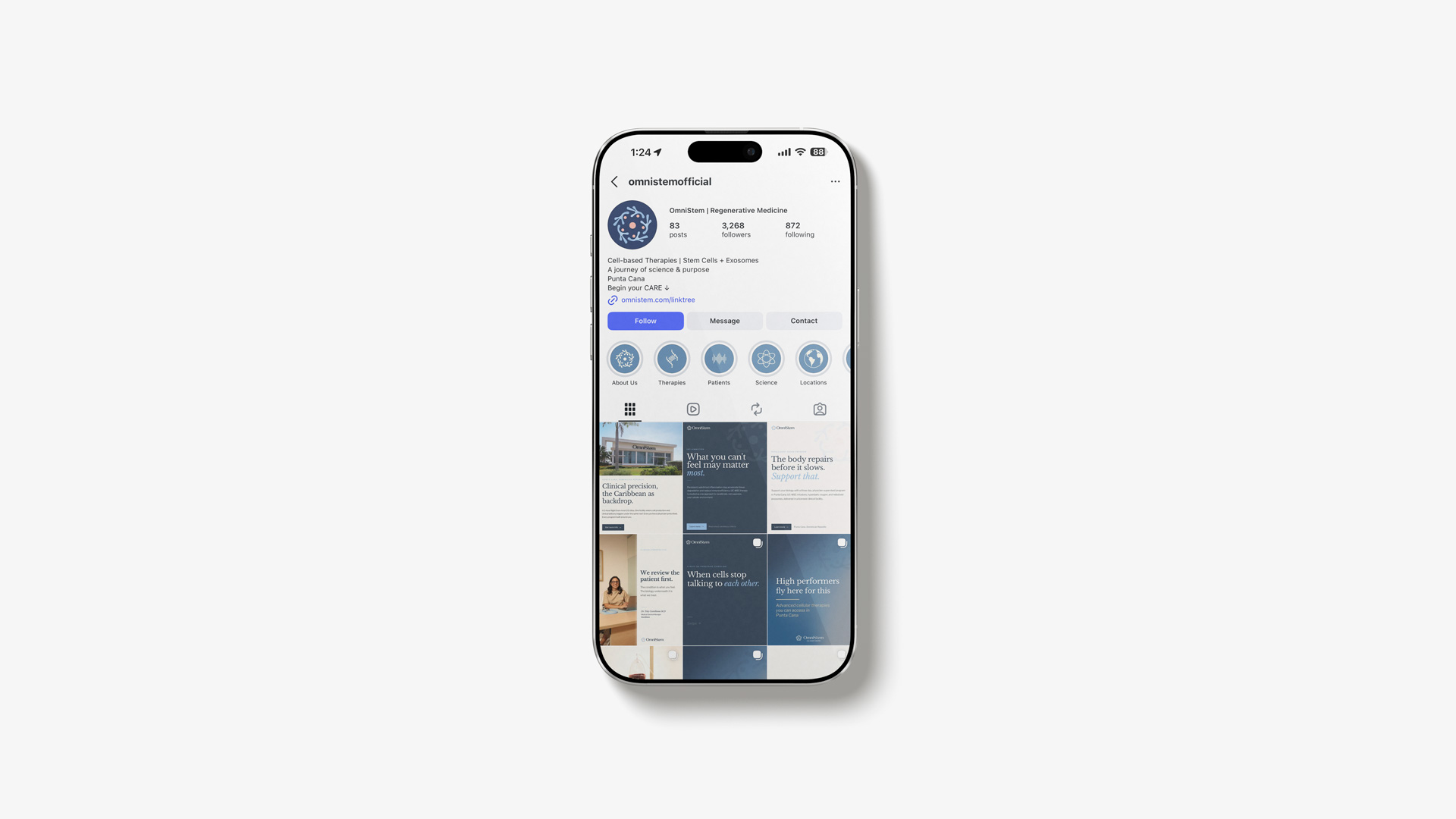
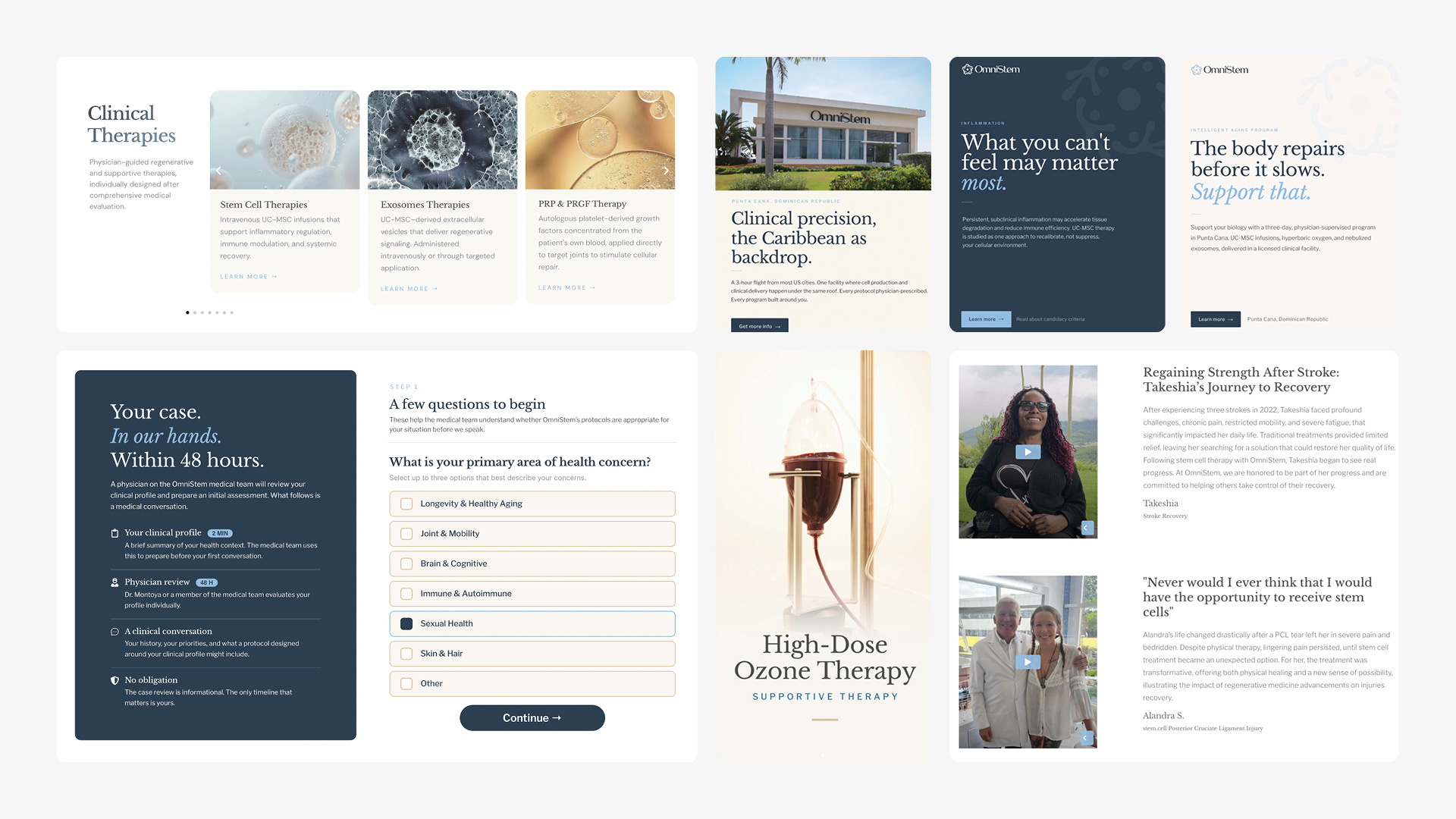
OmniStem serves the Caribbean and US patient market with a regenerative medicine offering from the Dominican Republic — a smaller geographic footprint but a presence in an emerging Caribbean medical tourism market. The brand targets North American patients who favor a Caribbean destination over Mexico or Central America, likely appealing to patients already familiar with the DR as a leisure destination. OmniStem's existence signals that demand for stem cell therapy is expanding beyond the established Mexico corridor into adjacent Caribbean markets, reflecting the category's overall growth trajectory.
Regional proliferation expands the competitive map. OmniStem's emergence in the Dominican Republic indicates that the patient base for regenerative medicine is growing and diversifying geographically. Rehealth's response should be to accelerate differentiation on scientific depth and patient experience quality before the market becomes further commoditized across destinations that compete primarily on price and location convenience.


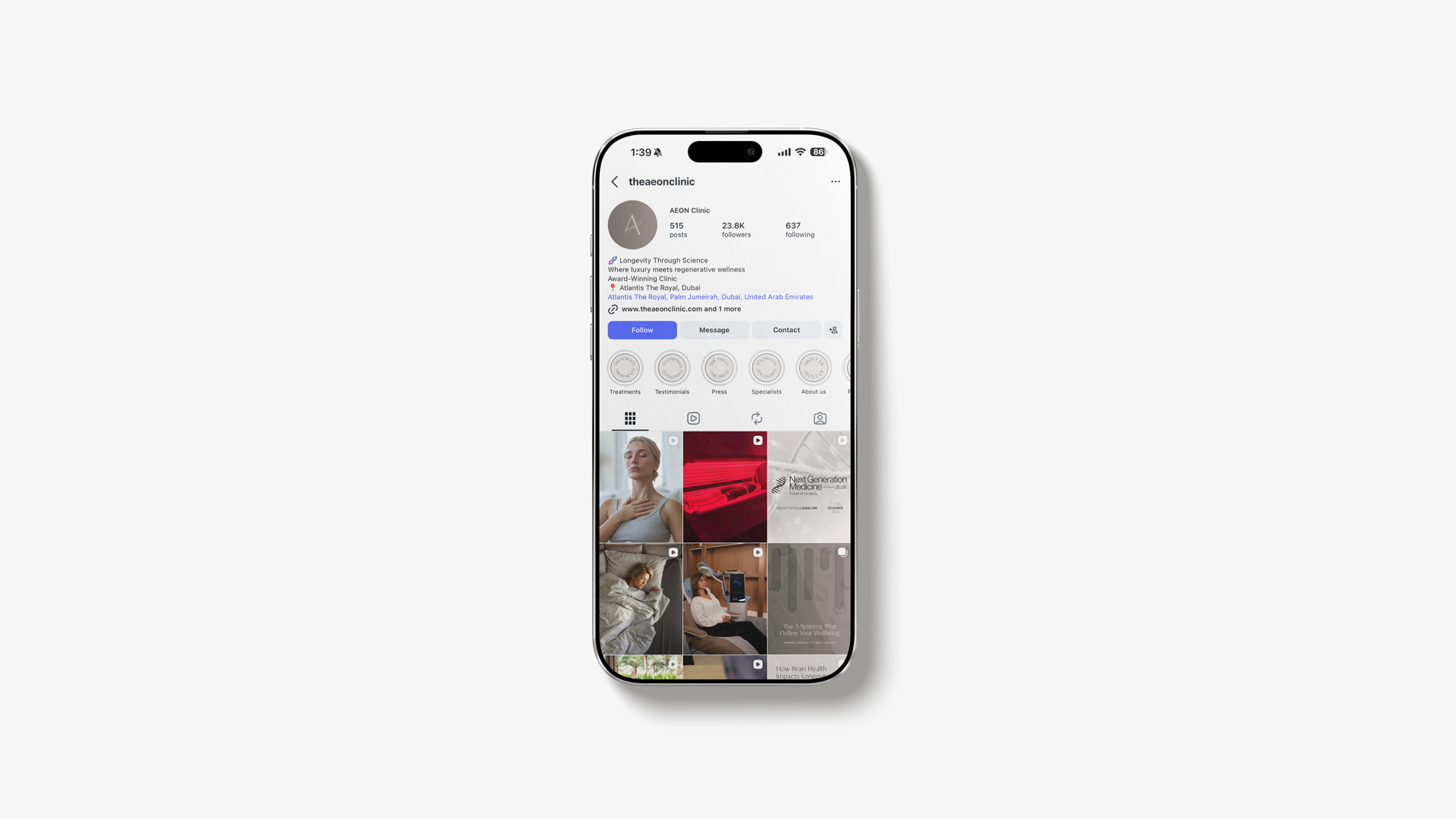
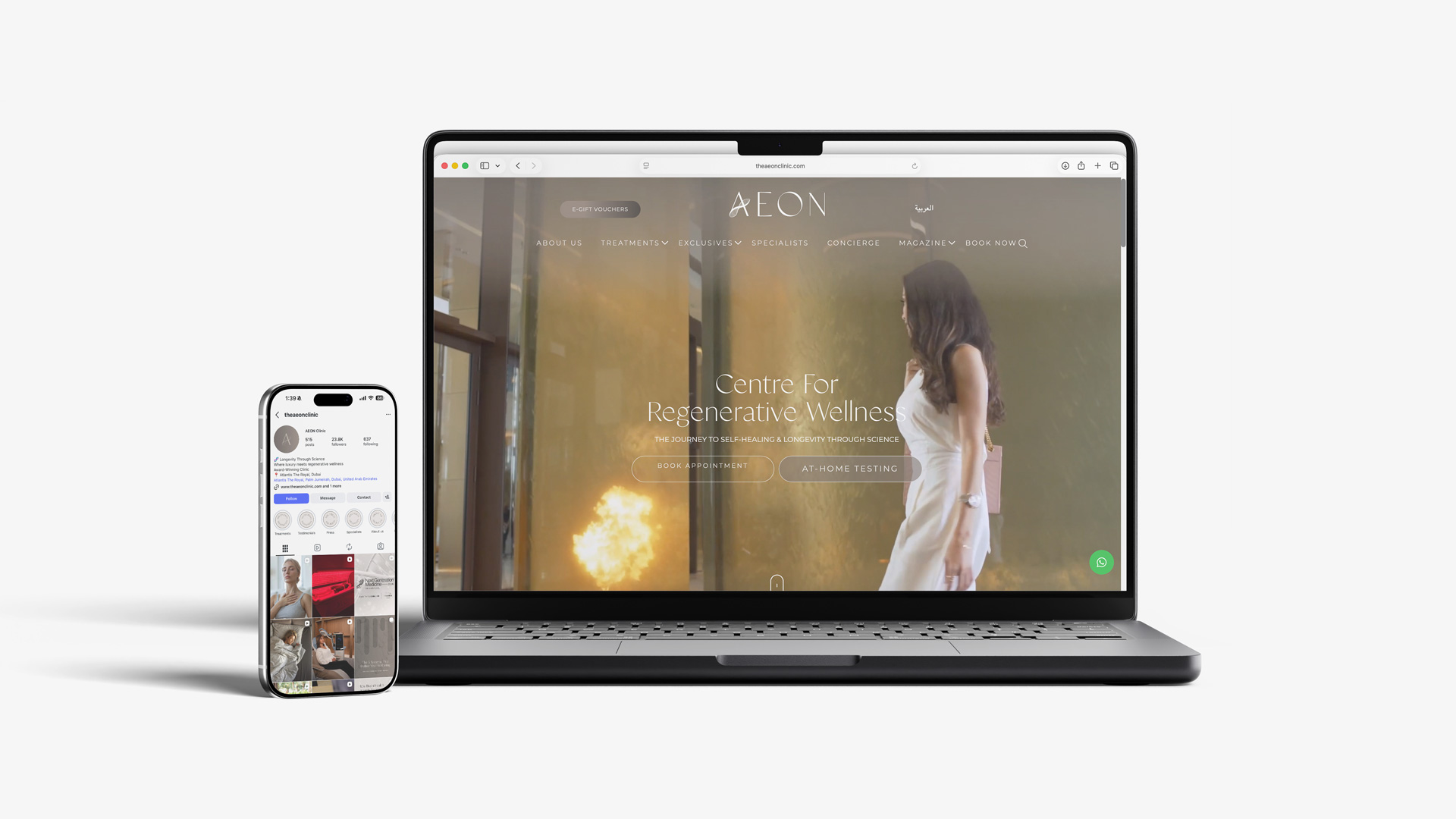
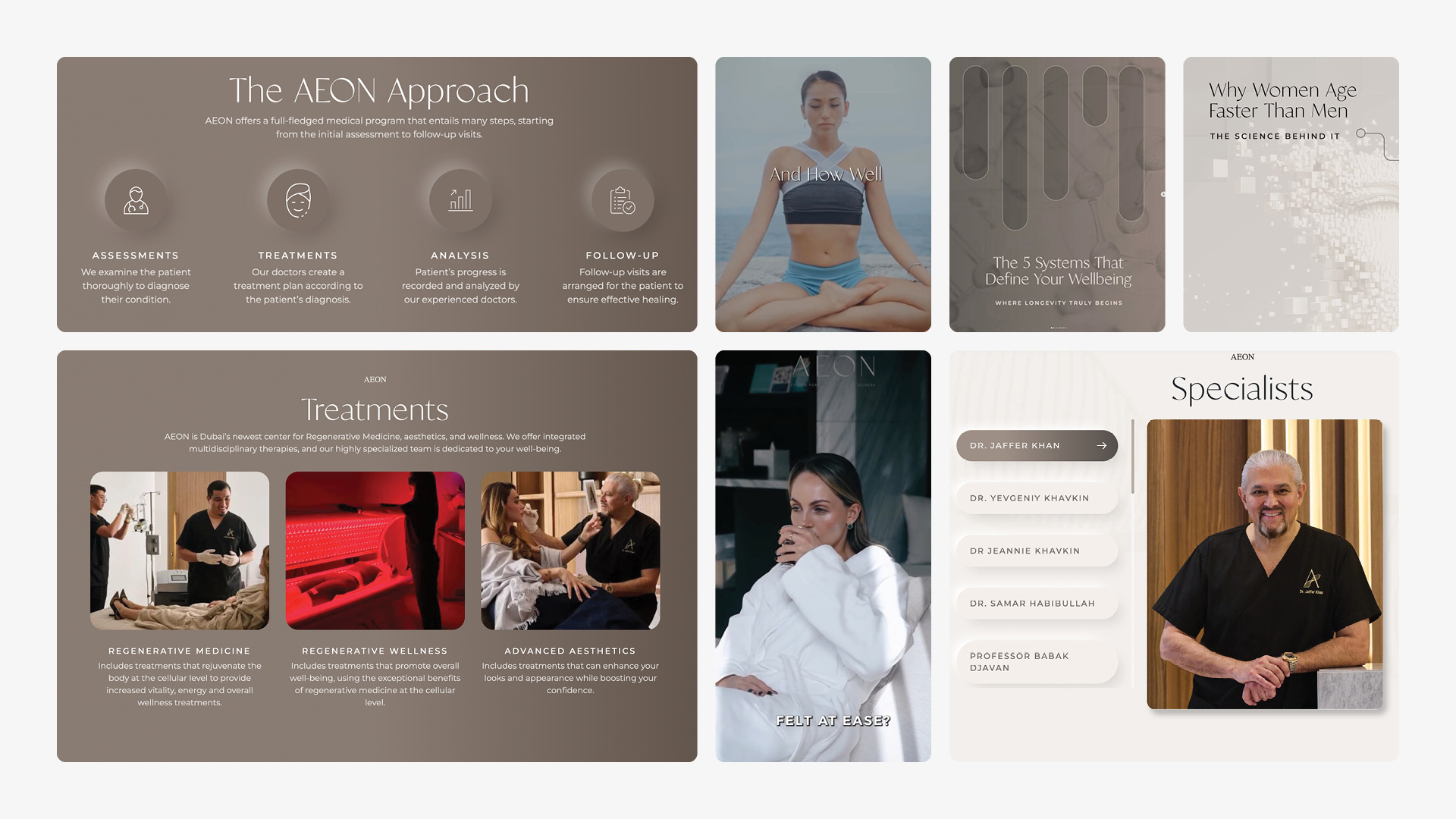
"Centre For Regenerative Wellness — THE JOURNEY TO SELF-HEALING & LONGEVITY THROUGH SCIENCE." Ultra-luxe design language: gold tones, minimal text, cinematic photography of a woman in white. The navigation structure itself communicates the positioning — "Concierge" and "Magazine" as nav items signal white-glove service and editorial brand authority. "At-Home Testing" as a CTA is a genuine differentiator — taking the clinic to the patient rather than the reverse is an experiential premium that most competitors cannot or do not offer. The design is the aspirational ceiling for the regenerative medicine category.
This is the category ceiling. AEON's design and service architecture defines what the ultra-luxury end of regenerative medicine looks and feels like. Rehealth doesn't need to replicate it — but every visual, copy, and UX decision should be made with awareness of this benchmark. The question isn't "how do we look like AEON?" but "where on the spectrum between AEON and a functional medical website do we want to land, and are we there?"


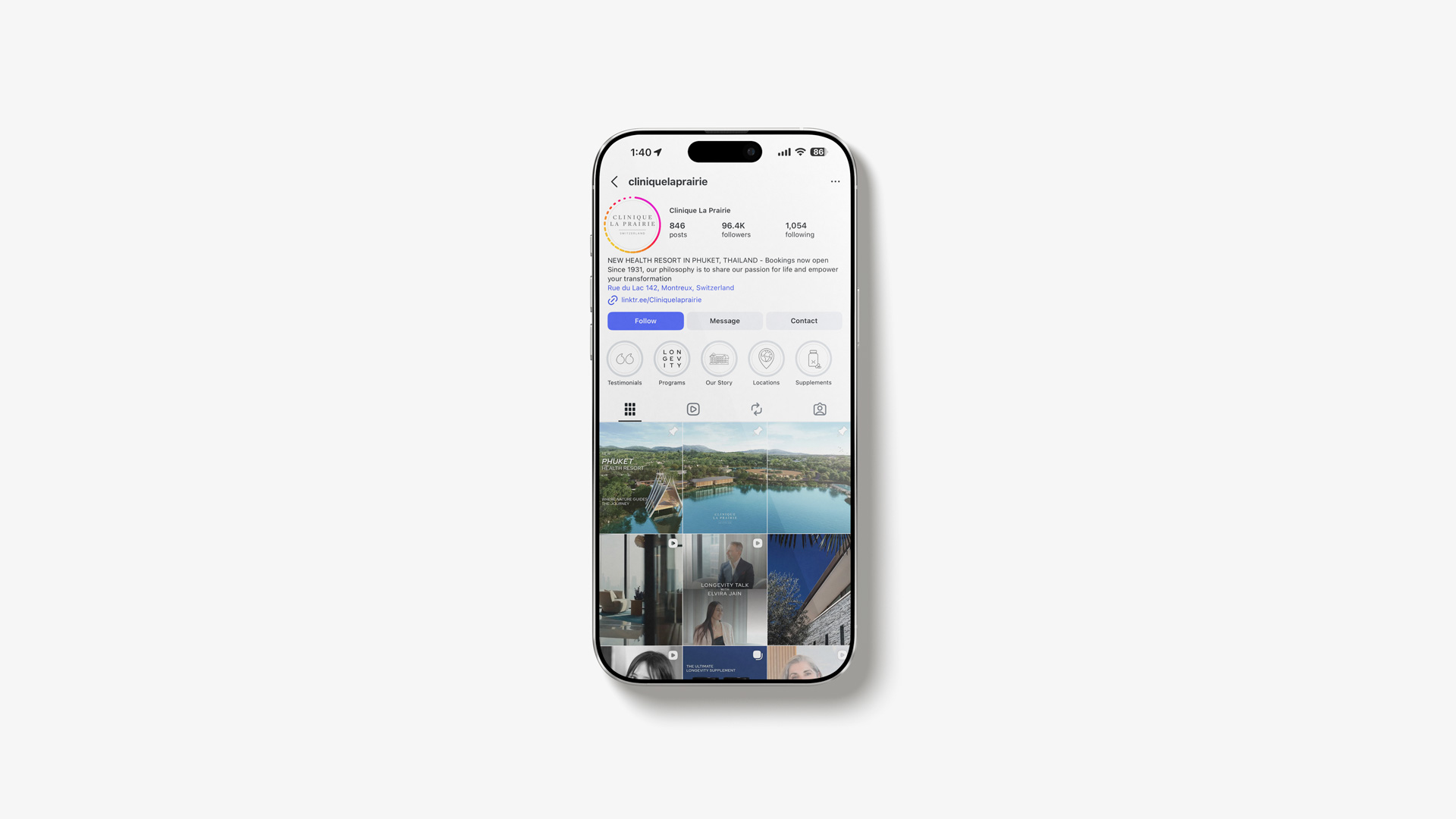
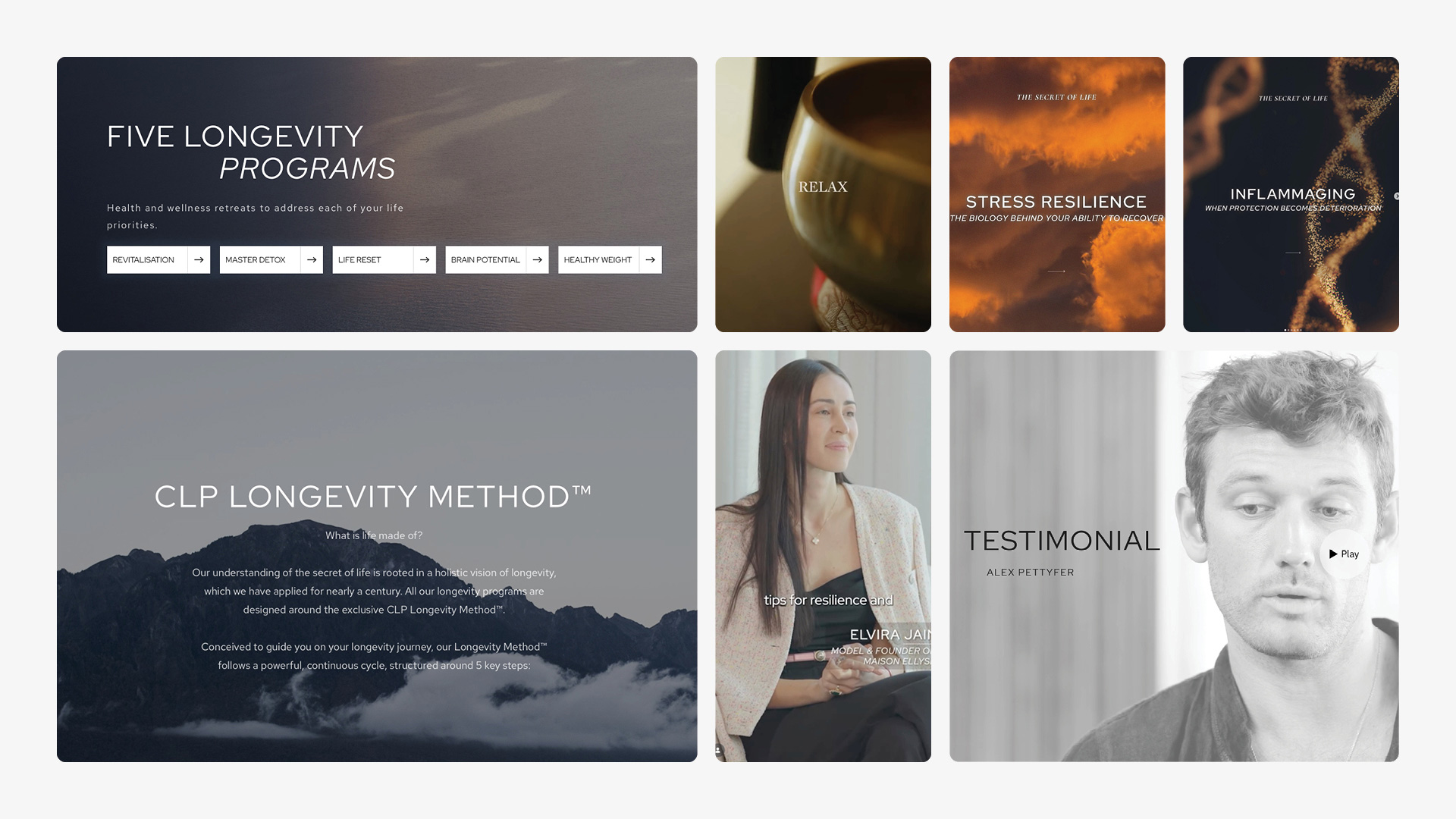
"THE MOST PROGRESSIVE, LONGEVITY CLINIC IN THE WORLD — AT THE HEART OF THE SECRET OF LIFE." Full-screen black, cinematic, a single serif headline, almost no UI chrome — pure brand confidence expressed through restraint. "BOOK YOUR PROGRAM" (not "consultation") — a language choice that elevates the offering from a medical appointment to a curated lifestyle investment. Clinique La Prairie earns its premium position through what it chooses not to say — no testimonials, no bulleted feature lists, no CTAs to "learn more." The design communicates that the brand doesn't need to explain itself.
Confidence is a design choice, and restraint signals authority. CLP demonstrates that the highest-end wellness brands communicate premium positioning through absence: fewer words, less explanation, more visual authority. Rehealth's current site works hard to explain and justify itself — the aspiration is a site that lets design, imagery, and a single powerful headline do the convincing, while the interior pages handle the depth.


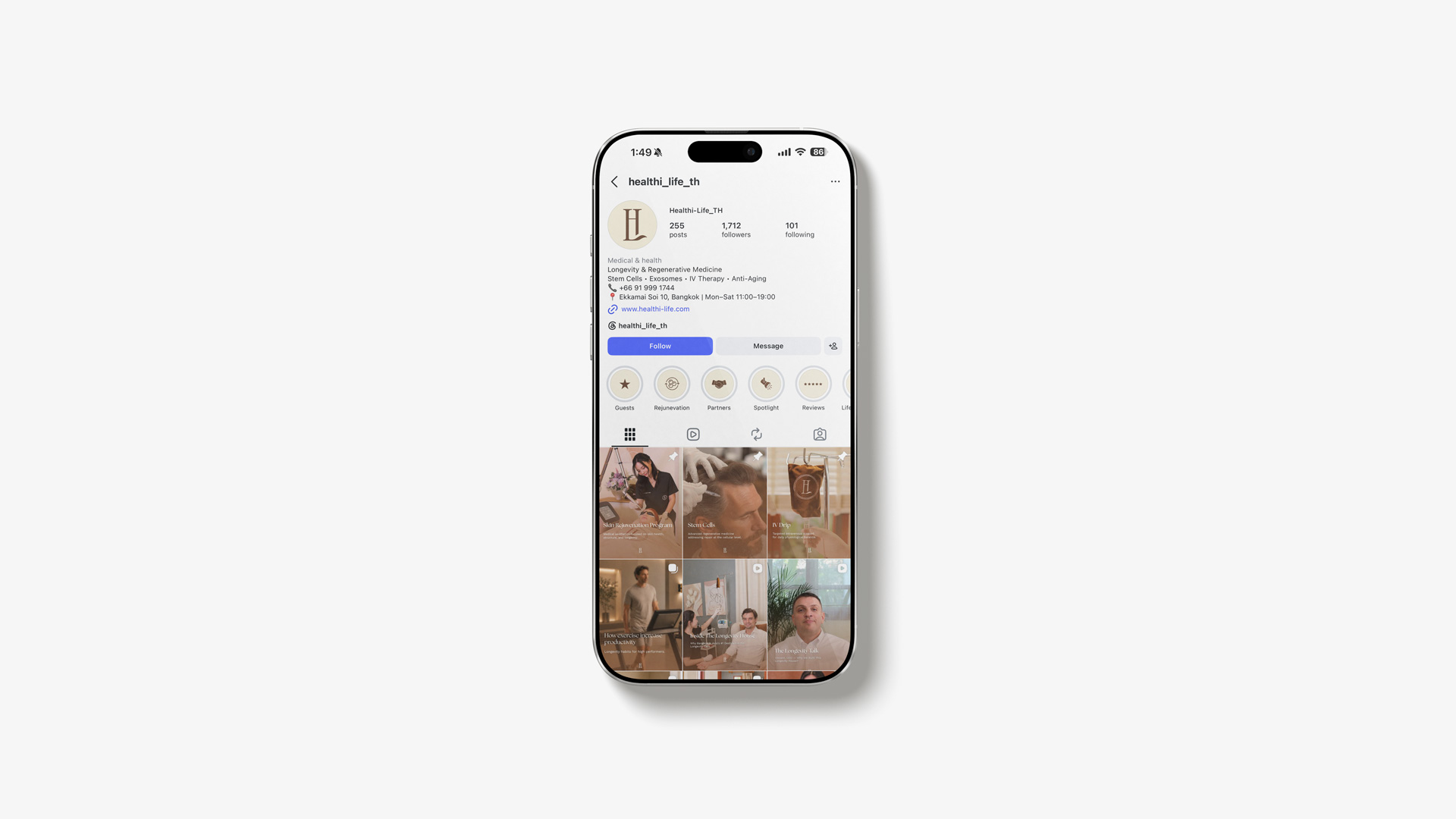
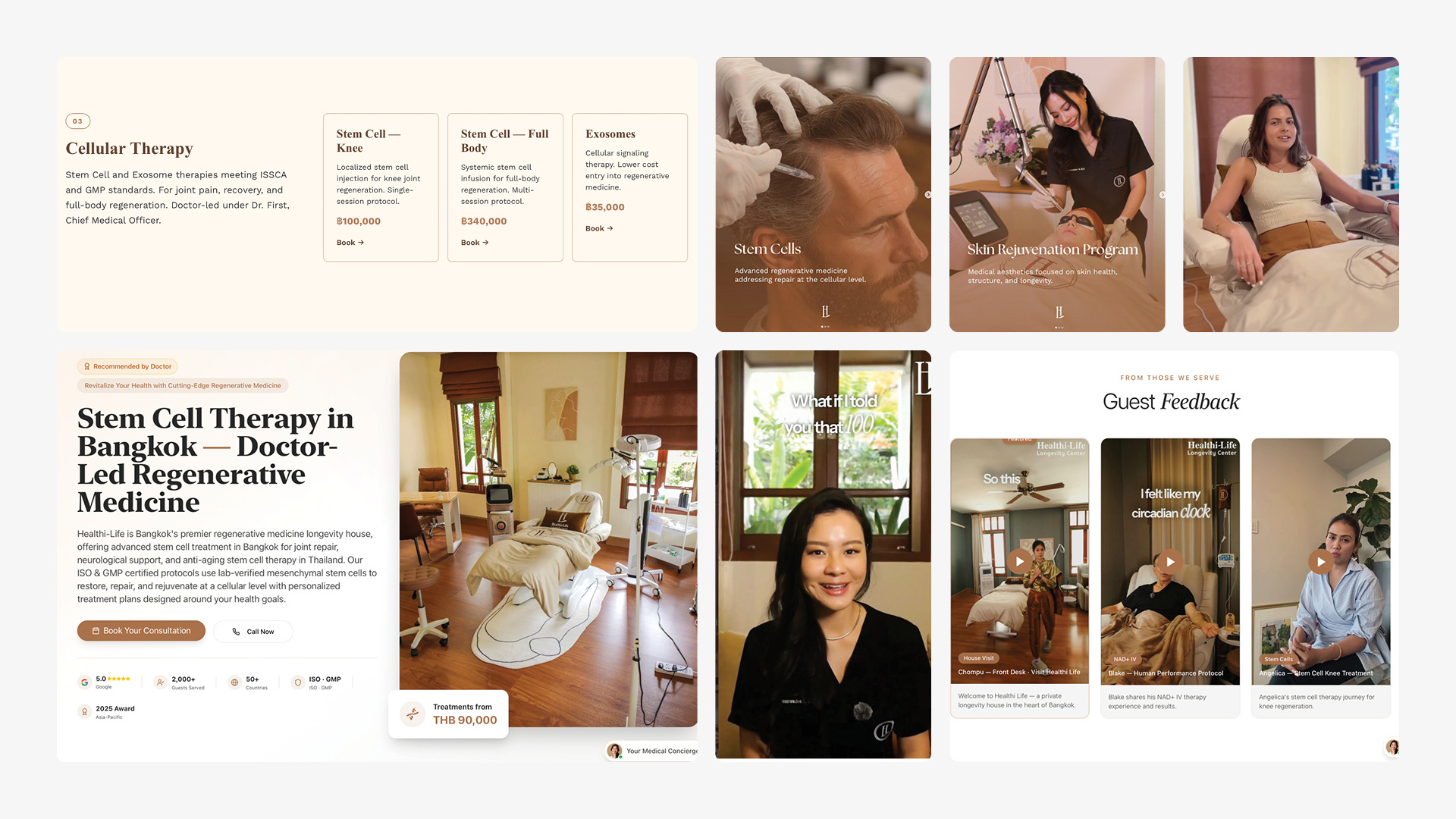
Healthi Life positions Thailand's deep medical tourism infrastructure for the wellness-oriented global traveler, combining advanced regenerative treatments with a luxury health retreat setting. Thailand's long-established reputation as a medical tourism destination — built on dental, cosmetic, and surgical excellence over three decades — gives Healthi Life a geographic credibility runway that newer markets lack. The retreat model changes the entire product frame: bundling regenerative therapy with luxury accommodation, spa, nutrition, and recovery protocols creates an offering that competes with destination wellness resorts, not just other clinics.
The retreat model makes price comparison irrelevant. When a clinic becomes a destination, it's no longer competing on cost per treatment — it's competing on total experience value. Cancun's existing resort infrastructure gives Rehealth a natural opportunity to develop a retreat-adjacent offering: a 3–7 day "Cellular Optimization Program" that packages treatment, recovery, and the Cancun experience into a single aspirational purchase decision.


Additional Cabo competitors — brief observations
A location-forward brand that leads with the Cabo destination appeal before the clinical offering. The name itself does the geographic heavy lifting, targeting patients drawn to Baja as a medical tourism corridor. Positioning is accessibility-first, science-second — a serviceable market position for volume but not premium patient acquisition.
Consumer-forward brand name that prioritizes the emotional outcome ("Forever Young") over clinical specificity. Targets the anti-aging and longevity consumer rather than the chronic illness patient — a distinct psychographic with different content needs. The brand name travels well on social media but may create credibility friction with research-literate patients who are skeptical of outcome-promise messaging.
A corporate-structured medical clinic brand with a broader healthcare services positioning that includes regenerative therapies within a wider offering. The "Inc" suffix signals a US-registered business entity, which functions as a cross-border trust signal. Breadth of services creates a different patient acquisition funnel — patients may enter through other healthcare offerings before encountering regenerative options.
The "Proactive" framing shifts patient identity from reactive (seeking treatment for a problem) to proactive (investing in future health optimization) — a subtle but powerful reframe. This is the longevity biohacker's preferred self-image, and naming that identity directly is effective brand strategy. The brand competes in the optimization and prevention segment rather than the treatment and recovery segment — a different patient, different content, different conversion journey.
Brands outside the category that are setting the standard for what premium wellness looks and feels like.
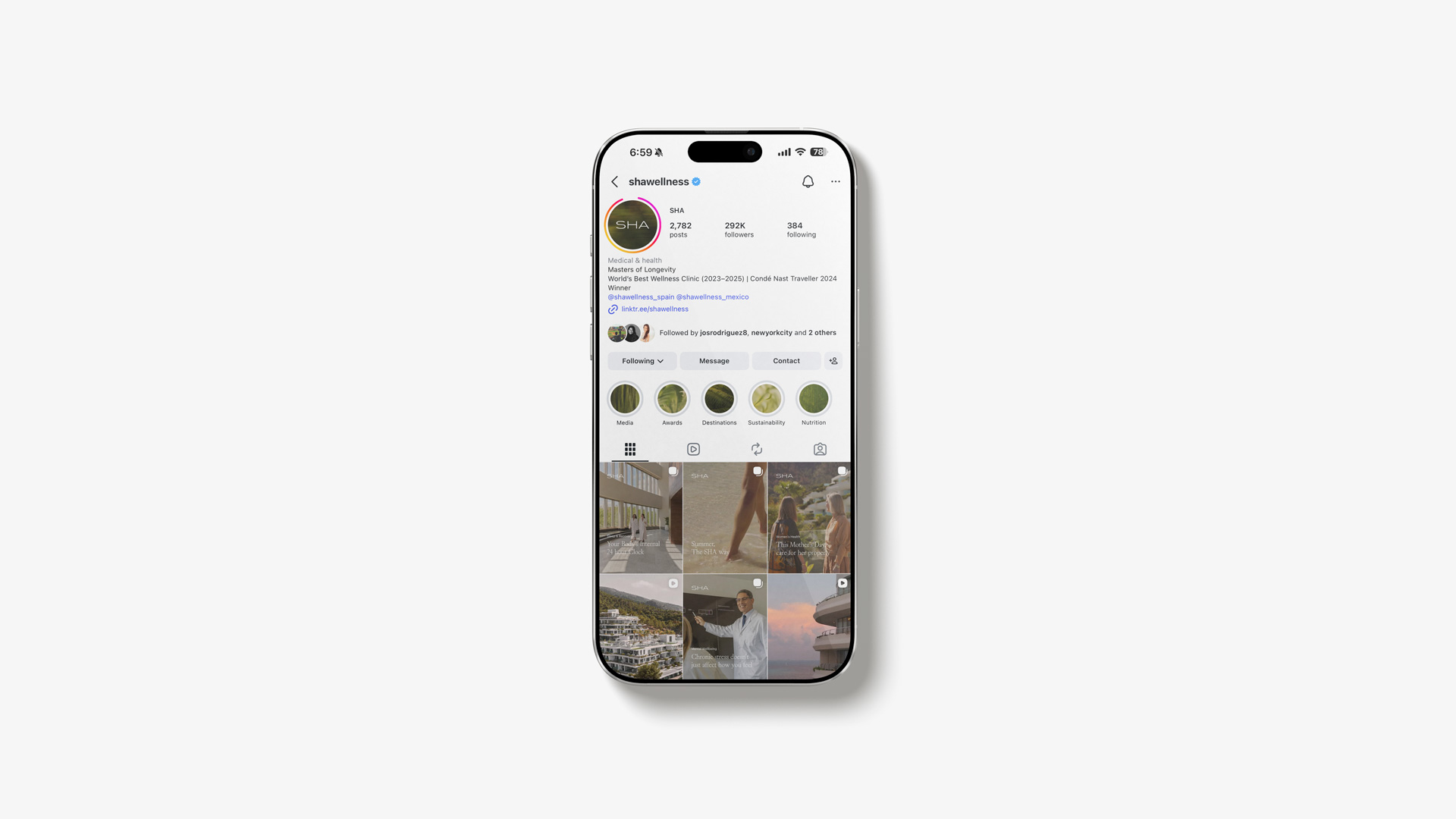
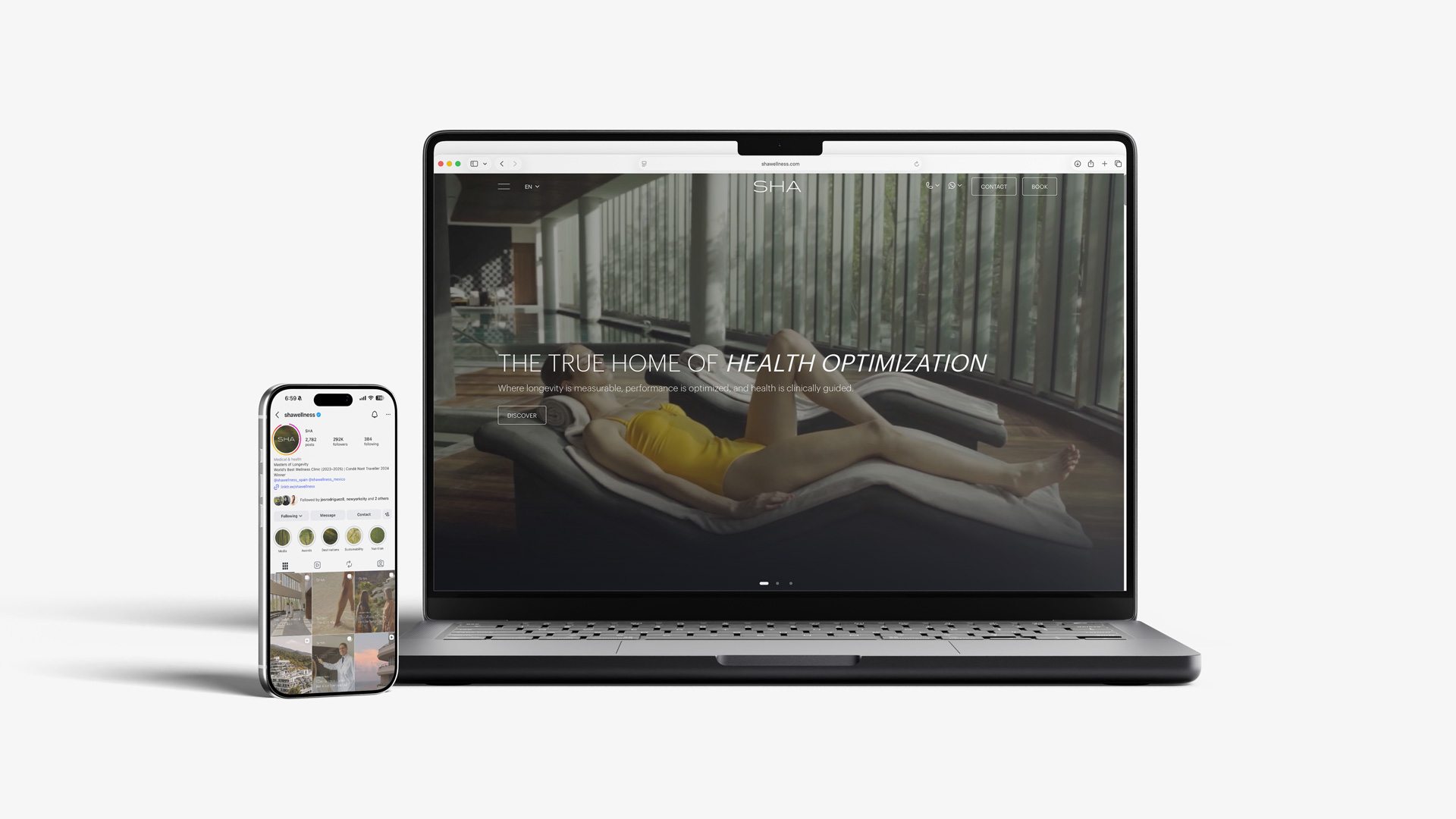
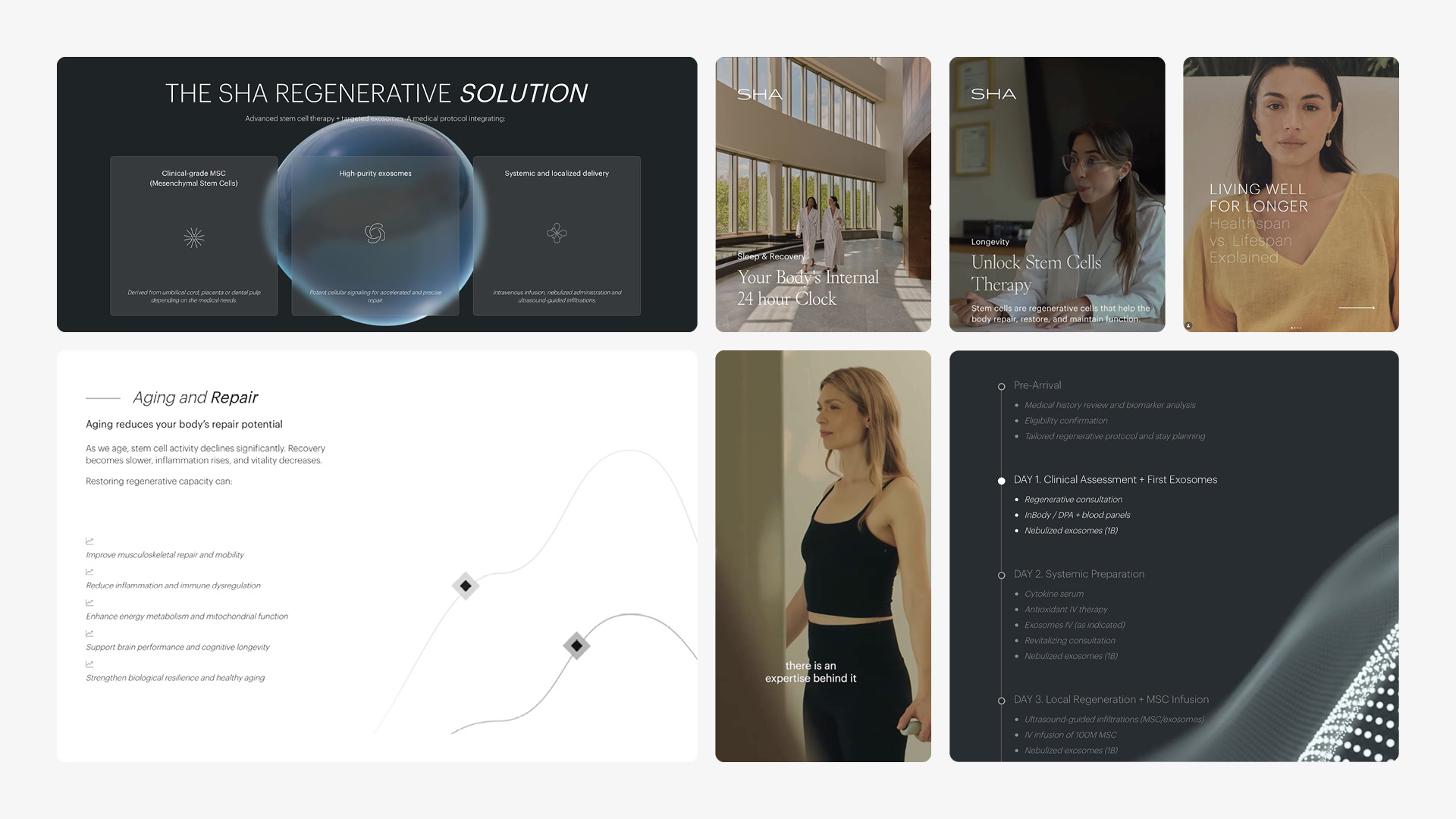
SHA Wellness operates at the intersection of cutting-edge medicine, nutrition science, and Mediterranean lifestyle — the brand has built a global wellness authority position by treating health as an editorial subject as much as a clinical one. SHA's content strategy produces recipes, longevity philosophy, expert profiles, and program narratives that feel like content worth seeking out, not advertising to scroll past. The brand has successfully made a wellness destination feel like a media brand — an editorial voice that earns attention rather than buying it.
The editorial voice model transforms marketing into content. SHA's approach demonstrates that a premium wellness brand can build authority by publishing consistently high-quality content that stands alone as valuable — not just describing the product. Rehealth's scientific depth is raw material for the same approach: clinical research made readable, treatment protocols explained as patient stories, the science of cellular medicine communicated as genuine editorial content.


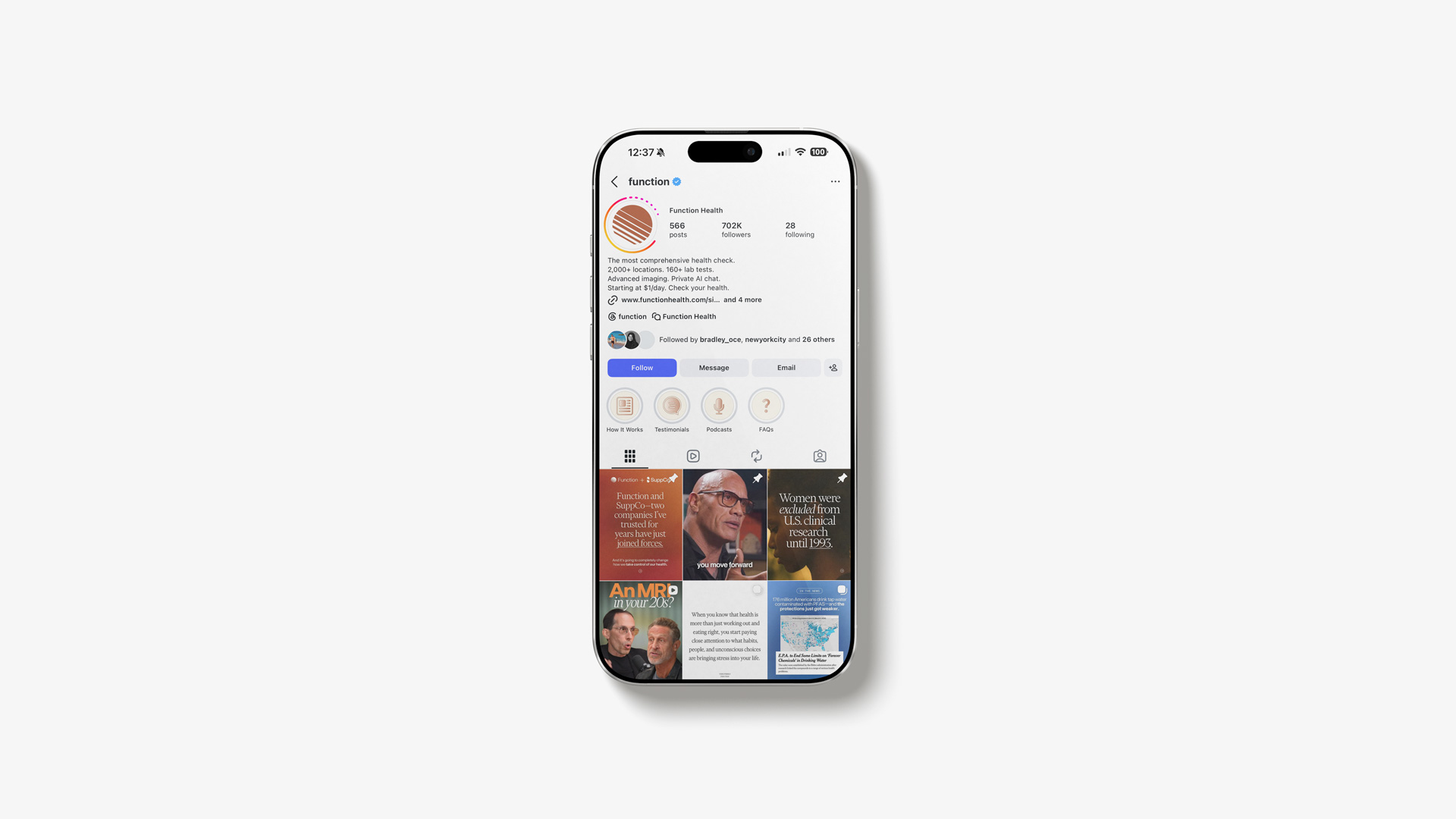
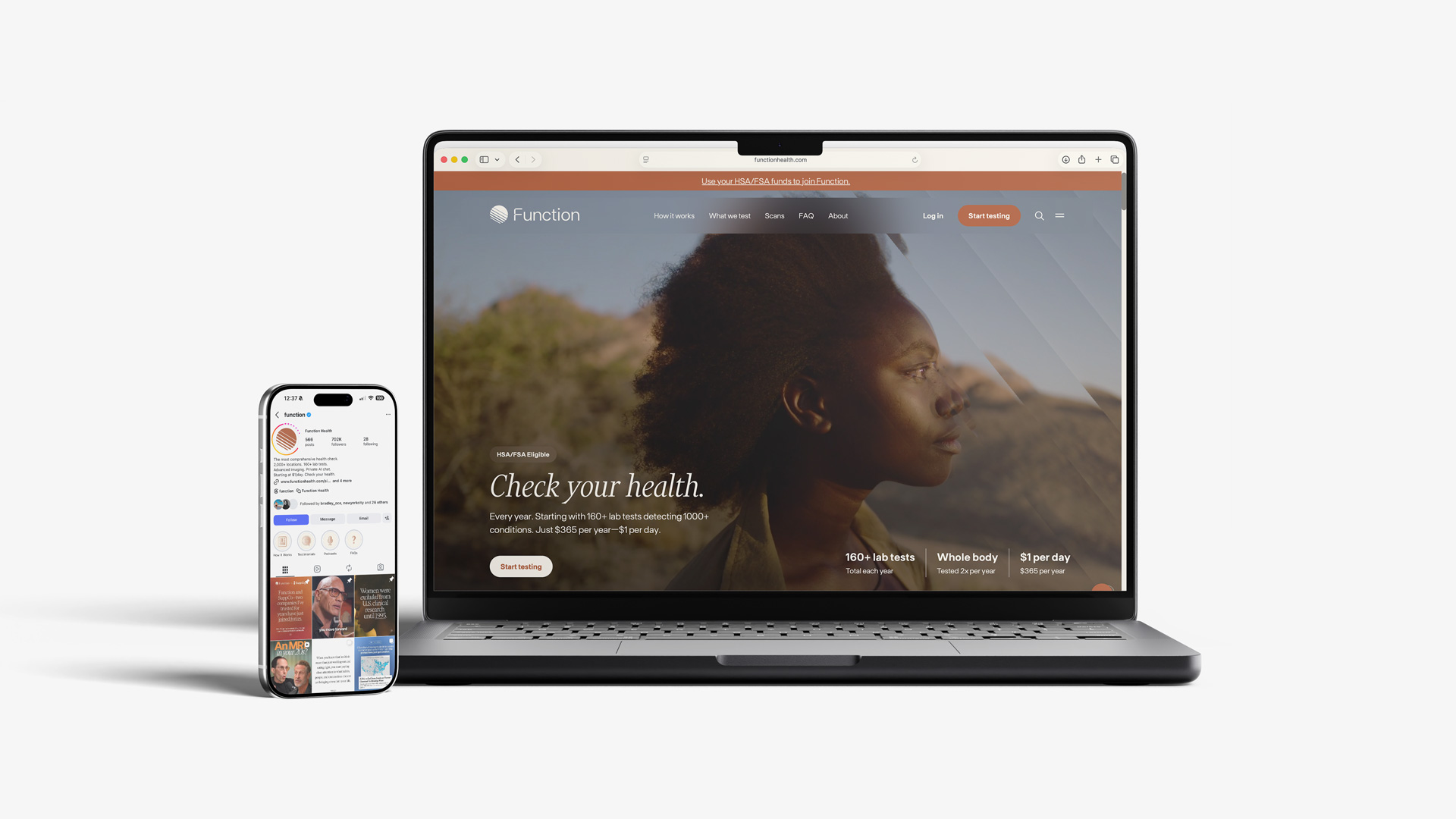
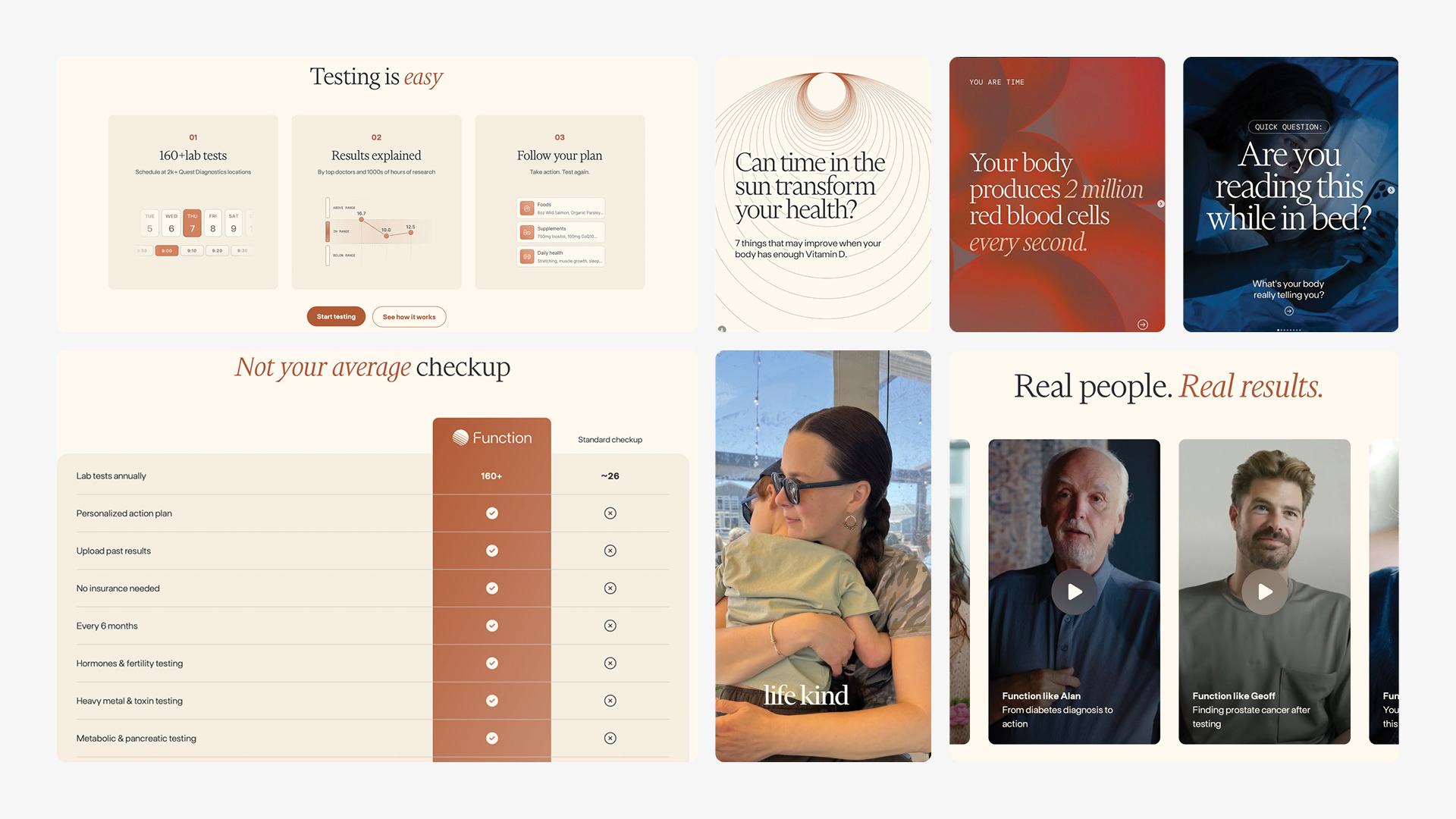
Function Health is a comprehensive lab testing platform built around the insight that data transparency creates patient engagement and loyalty — "Know your health before you have symptoms." The UX is built around showing patients their actual numbers, interpreting them in plain language, and creating a sense of agency over health trajectory. Function has demonstrated that giving patients access to their own data is a product, not just a feature — the data dashboard is itself the reason patients stay engaged with the platform between lab cycles.
Data transparency builds trust and retention simultaneously. Rehealth administers clinical therapies backed by measurable biomarkers. Making those measurements visible to patients — before, during, and after treatment — could transform the patient relationship from a one-time clinical visit to an ongoing health optimization partnership. The patient who sees their own data improving becomes both a retained customer and a credible advocate.


Sollis Health is concierge urgent and primary care positioned as the Four Seasons of the healthcare experience — members receive white-glove service across every touchpoint, from after-hours access to a dedicated care coordinator. The membership structure is the product: it reframes the patient-provider relationship from transactional (pay per visit) to relational (ongoing partnership). Sollis has demonstrated that there is a large, underserved market for healthcare that simply treats patients the way luxury hospitality treats guests.
The member model reframes the patient relationship. Sollis's membership structure converts patients from one-time buyers into retained relationships with lifetime value. Rehealth's follow-on treatment protocols (booster infusions, annual NK cell programs, ongoing monitoring) create the natural infrastructure for a similar model — a "Rehealth Membership" that packages ongoing care, priority scheduling, and biomarker tracking into a recurring patient relationship.


Prenuvo has done something remarkable: it transformed full-body MRI screening — a procedure most people associate with medical anxiety and insurance pre-authorization — into an aspirational wellness ritual for the proactive health consumer. The brand's narrative arc moves patients from fear ("what might they find?") to empowerment ("now I know") through clean, reassuring design, celebrity endorsements, and copy that consistently positions scanning as an act of self-care rather than disease surveillance. Prenuvo's commercial success demonstrates that even intimidating clinical procedures can be made aspirational with the right brand framing.
The fear-to-empowerment narrative is a model for Rehealth. Stem cell and cellular therapy carries its own patient anxieties — about the unknown, about legitimacy, about outcomes. Prenuvo's playbook is directly applicable: design, copy, and testimonials that consistently move the patient from hesitation to agency. The question Rehealth's marketing should answer is not "what is this therapy?" but "what is your health capable of when you give it the tools it needs?"


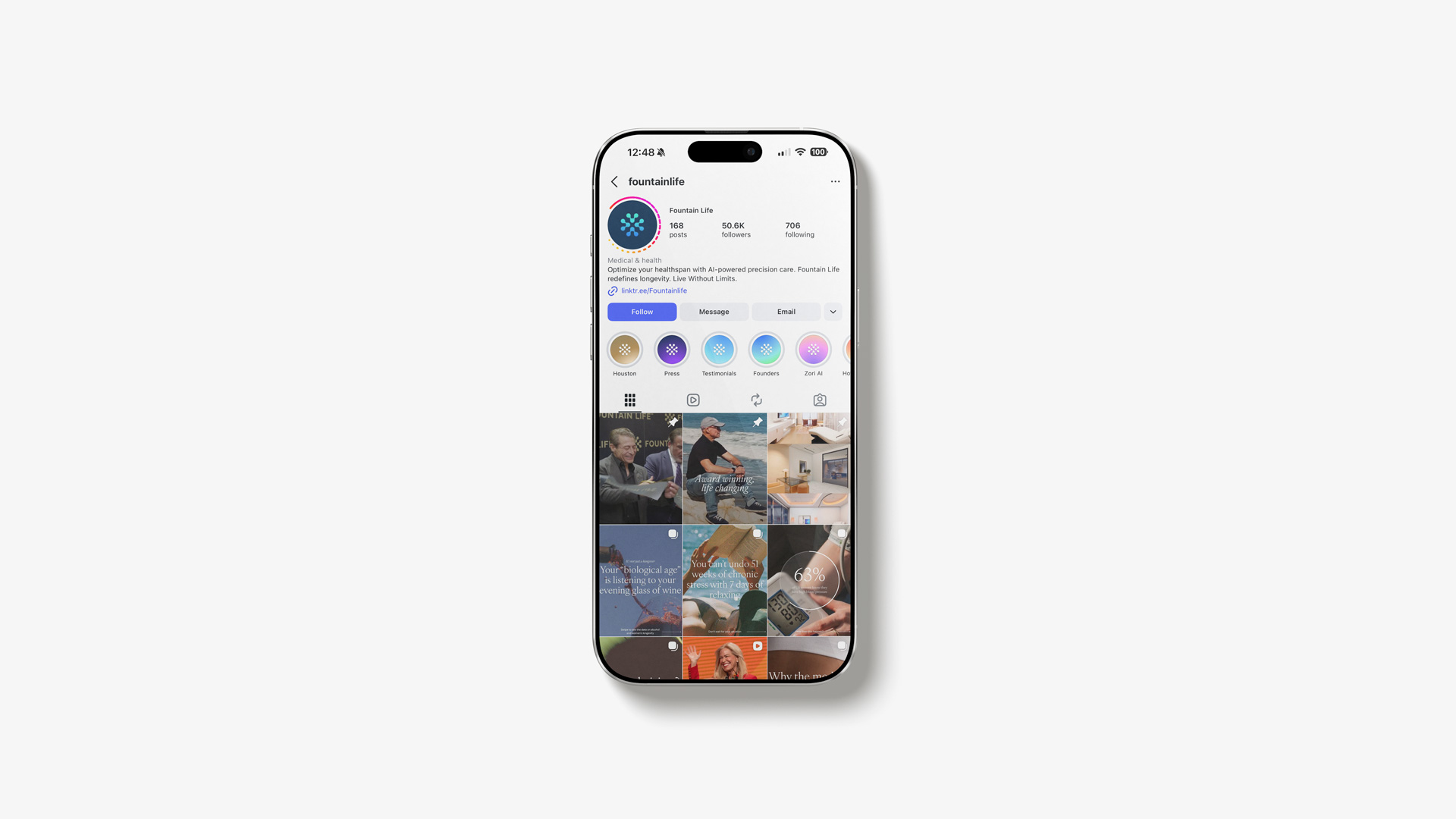
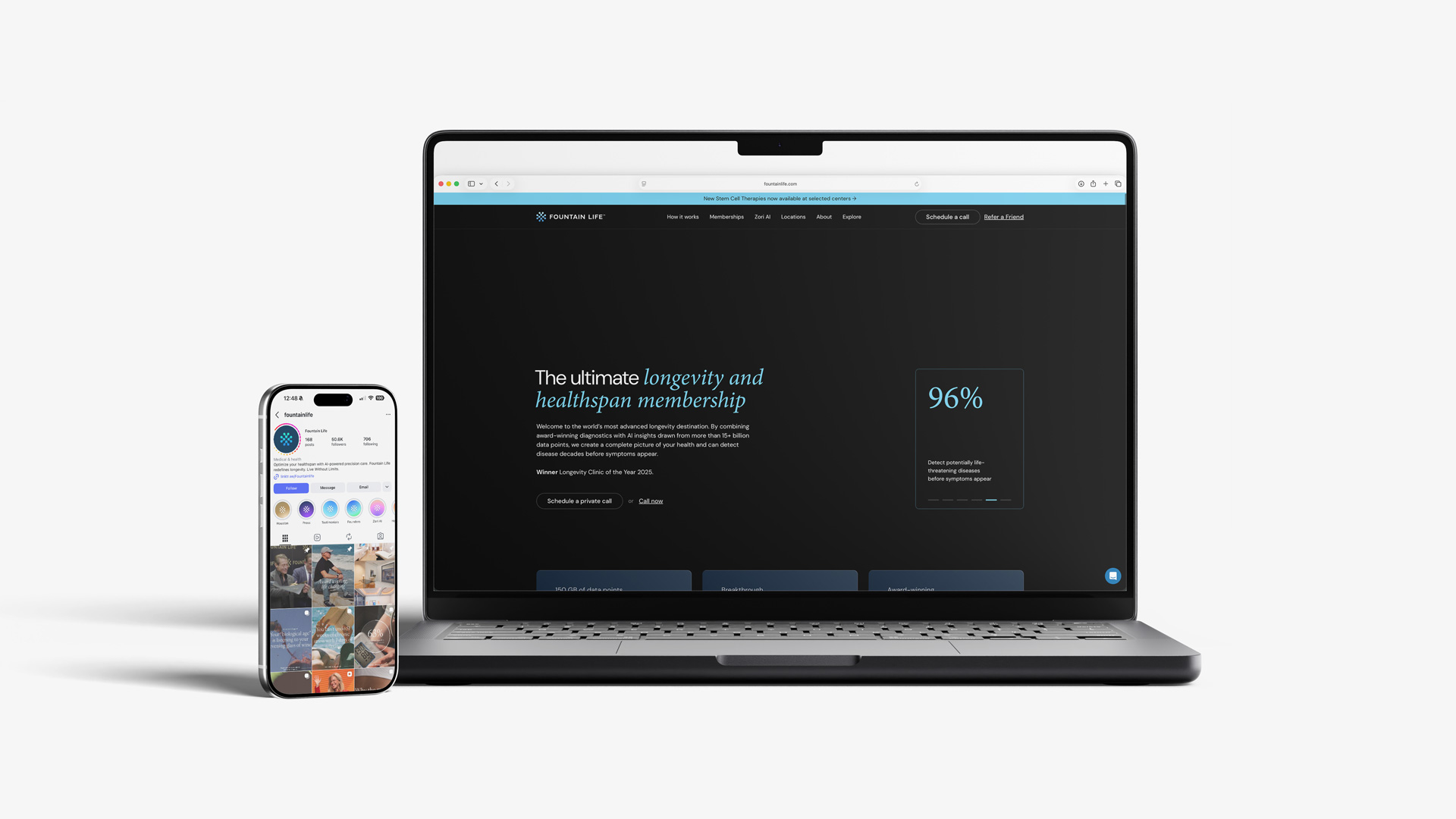
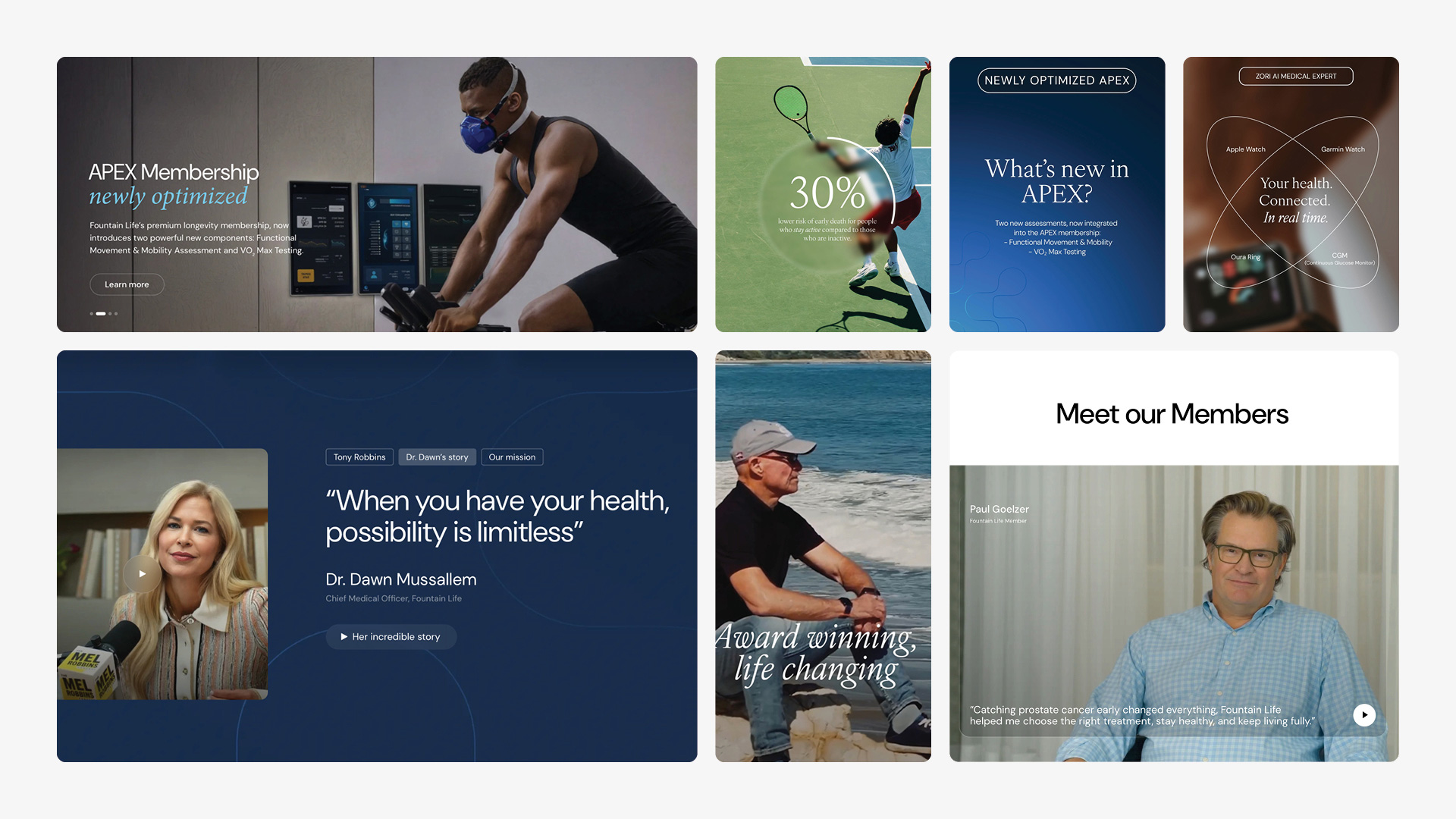
Peter Diamandis's longevity diagnostics platform — "We are the pit crew for your body" — combines exponential technology credibility with accessible, non-clinical language. Fountain Life's entire brand is built on the scientific authority of its founders and advisors: Diamandis's Singularity University profile, Craig Venter's genomics credentials, Tony Robbins's cultural reach. The platform's credibility is structurally inseparable from the scientific authority figures it has assembled — remove the founders and the brand has nothing to stand on. This makes their model both powerful and instructive: founder credibility, deployed systematically, is compounding brand capital.
Founder credibility at scale is a compounding asset. Diamandis's profile amplifies every piece of Fountain Life content produced. Rehealth's scientific leadership — the clinical expertise, the published research, the decade of patient outcomes — is a credibility asset that is currently underpublished. A systematic content program that consistently surfaces Dr. González and Rehealth's clinical team as visible scientific voices would build the same compounding authority over time.


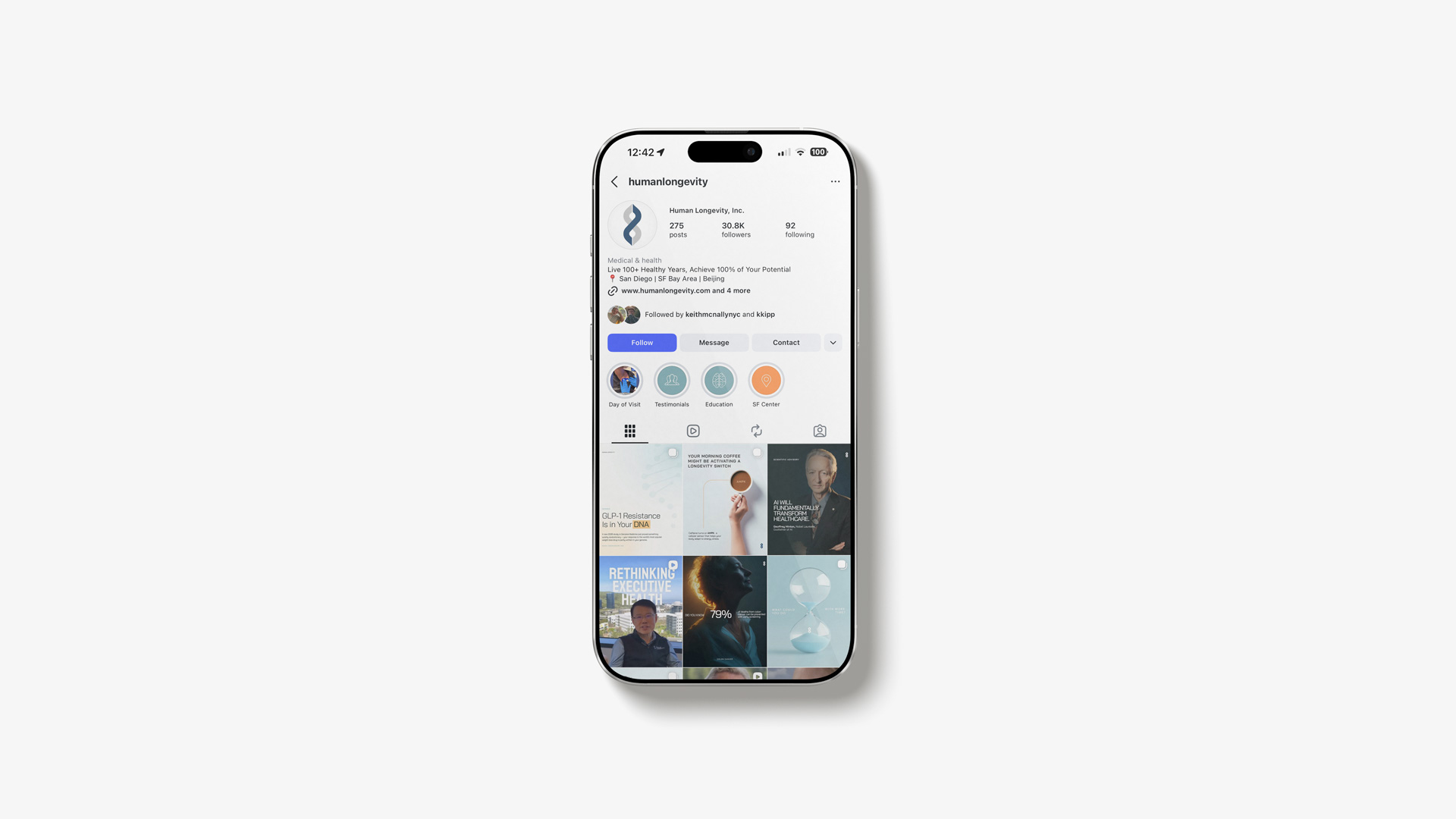
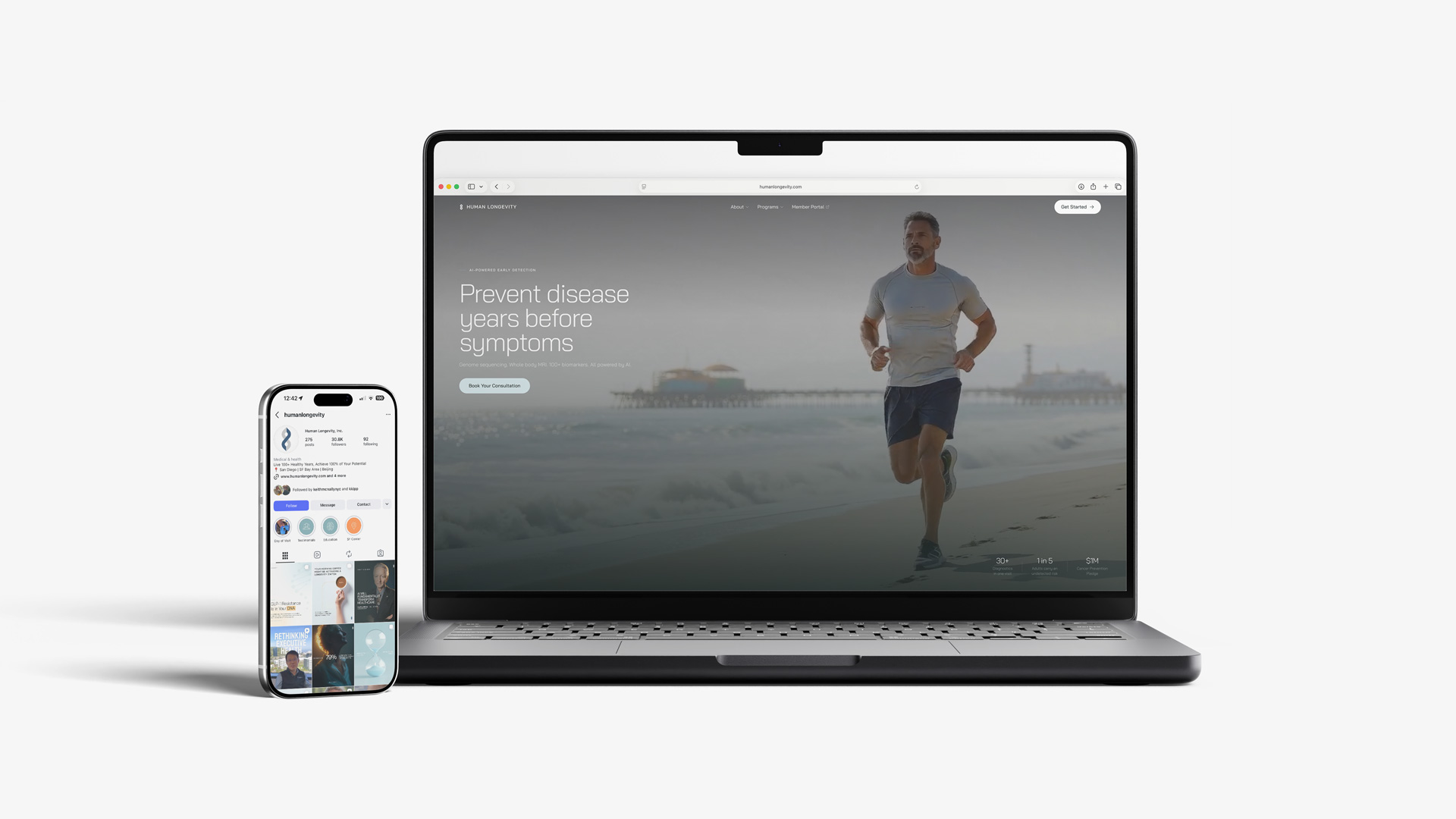
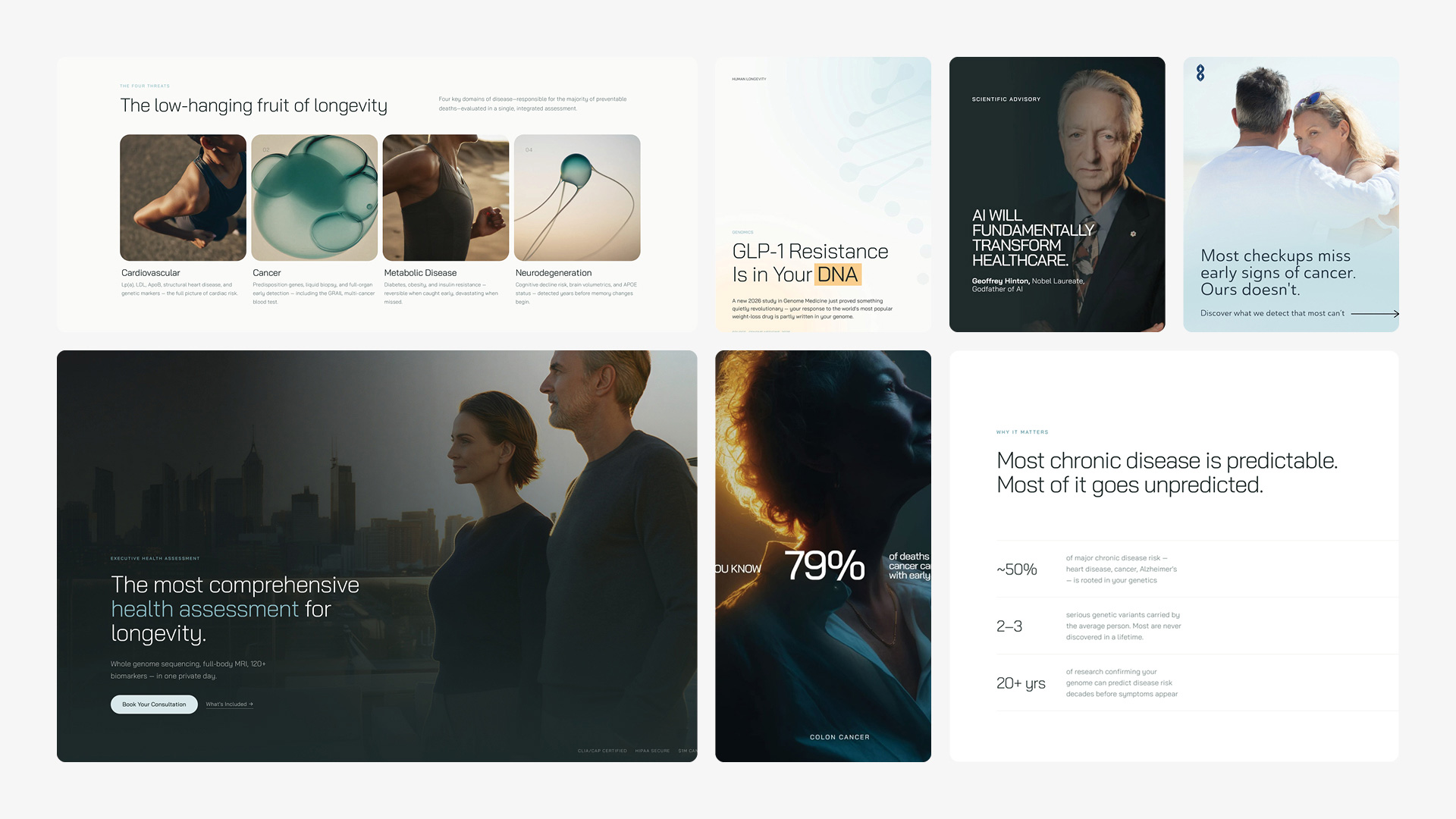
Craig Venter's genomics-driven longevity clinic — "the most comprehensive health assessment in the world" — where Nobel-adjacent scientific credibility meets premium executive health positioning. Human Longevity targets a specific patient psychographic: high-net-worth executives and entrepreneurs who apply the same data-driven optimization mindset to their health that they apply to their businesses. The brand's scientific credibility is so embedded in its origin story that it functions as a moat — a competitor cannot simply claim the same authority without the equivalent research pedigree behind it.
Published research is underleveraged brand capital. Human Longevity demonstrates how academic credibility translates directly into premium positioning and premium pricing. Rehealth's clinical publications, research partnerships, and internal study data are assets currently sitting below the marketing surface. Making that research visible — in accessible language, not academic abstracts — could transform Rehealth's credibility positioning in the eyes of exactly the patient demographic most likely to invest in premium cellular therapy.